Oct 14, 2025

By Stephanie Simons,
Head Pharmacist,
Lindo’s Pharmacy in Devonshire
Ladies! When was the last time you took a good long look at your breasts?
Forgive me if that sounds a bit rude. But October is Breast Cancer Awareness Month. And no matter what your relationship is with your body – and let’s face it, most of us do not consider the mirror our friend – if you don’t already have a routine in place to check for lumps and bumps, you need to start now.
In 2022, the last year for comprehensive global cancer statistics, there were 2.3 million new cases of breast cancer detected around the world. And according to the International Agency for Research on Cancer, in that same year, 670,000 women died from the disease. (It’s worth noting that men can get it too; and it’s believed that between 0.5 and 1 per cent of all breast cancer cases occur in men.)
The most recent figures in Bermuda – from 2019 – show that if you’re a woman, and if you get cancer, it’s most likely going to be breast cancer. Thirty-eight per cent of all cases recorded between 2010-2019 (excluding non-melanoma skin cancer) were breast cancer. The silver lining is that we have a very high rate of early detection. More than two-thirds of Bermudian women (67 per cent) diagnosed with breast cancer between 2010-2012 had it picked up at Stage 1. Seven years later, that figure rose to 77 per cent.
At the risk of stating the obvious, spotting cancer early gives you and your doctors a much better chance of defeating this dreadful disease. In the UK, almost 100 per cent of women whose breast cancer is detected at Stage 1 will now survive for at least five years. At Stage 4, that rate plummets to 25 per cent. So early detection is incredibly important. But it requires YOU to be vigilant. You are your own best early warning system – after all, nobody knows your breasts like you do.
 WHEN…
WHEN…
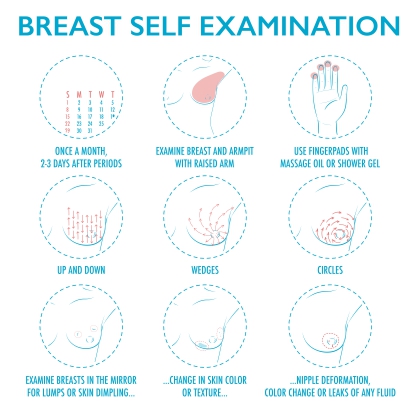
The trick is to make your breast self-exam part of your routine. Do it once a month. When your breasts are not sore – the week after your period has finished, say.
If you’re post-menopausal, pick a date you’ll remember (the first of the month, maybe), and make that The Day.
Even women who are breastfeeding (which research indicates may slightly reduce the risk of breast cancer) should do it. Though there’s so much going on at this exciting time it does make detecting the ‘unusual’ trickier. Checking monthly means if something DOES change, you’ll be more likely to spot it.
WHERE…
Somewhere you feel comfortable – and where there’s a mirror. The bathroom is a good idea (because you can do some of the check in the shower).
HOW…
It’s easy! Stand in front of the mirror with your arms at your side and have a good long look at your chest. Notice anything different? A change in the texture of your skin – a sort of ‘orange peel dimpling’?
What about size? Most of us are not symmetrical, worse luck. But what you’re looking for is a lopsided look that’s new for you.
Don’t forget the nipples. Any warning bells here? Any indentation? If you’re not nursing, is there a discharge?
Then, put your palms on your hips – with attitude! – and stick your chest out. Look again for anything untoward.
Of course, the number one sign of breast cancer is a lump. To check for that, lift your right arm up, and rest your palm on the back of your head or neck, so your elbow is pointing up at the ceiling).
Then, using the three middle fingers of your left hand like a paddle, and moving in little circles, press gently but firmly around your right breast and nipple. You need to cover the whole right side… along the ribs, right into your armpit and up to the collarbone. Finally, give your nipple a little squeeze – not too hard! – to check for discharge.
When you’re done, repeat on the other side.
You can do this hands-on bit of the check in the shower, if that feels better. You can also do it while lying on your back in bed (if you go for this option, place a pillow under your shoulder on the side you’re checking).
WHAT TO DO…
…if you find something that worries you? Well, if you have a lump or swelling in your breast, chest or armpit; if you see any change that you’re not happy with – or if you have pain in your breast or armpit that does not go away – call your doctor!
There are MANY completely normal explanations for all of the above. Cysts, for instance. But your GP would much rather see you, and be able to put your mind at ease, than have you suffer in silence – and risk missing something.
AND ANOTHER THING…
Home breast checks are a great idea – but they’re not a replacement for a mammogram. The Bermuda Cancer and Health Centre has two digital mammography units, and their experts recommend that women aged 40 and over should have a mammogram once a year (you can book one yourself, over the phone or online).
The good news is that if you are insured, 100 per cent of the cost is covered. If you’re not, the cost may still be covered by the Centre’s Equal Access Fund. So, check it out.
If you have any other questions, feel free to come and ask us at the Pharmacy at Lindo’s!
Stephanie Simons is the head pharmacist at Lindo’s Pharmacy in Devonshire. She earned her Bachelor of Science in Pharmacy at Massachusetts College of Pharmacy and has been practicing for over 20 years. She is a registered pharmacist with the Bermuda Pharmacy Council and is a member of the Bermuda Pharmaceutical Association.
Sep 19, 2025
By Stephanie Simons,
Head Pharmacist,
Lindo’s Pharmacy in Devonshire
VACATION is over, and I’m going back to school. Generations of Bermudians are still haunted by the W.J. Boyle’s advertising jingle, which gleefully proclaimed that the end (of fun) was nigh for the Island’s schoolchildren – usually with weeks of the holidays still left to go.
But now that the new school year really is upon us, it might be worth making a detour into Pharmacy Corner next time you’re in Lindo’s. After all, what’s the worst that can happen…
COVID
After a summer spent outdoors, the shift to a classroom setting – with lots of kids, trapped indoors together – means homework is not the only thing they’ll be bringing back with them at the end of the day.
Covid is making a comeback all over the world at the moment. And it makes sense to have some tests ready, in case someone in your family starts exhibiting the telltale signs. Ditto masks. If you’re like most of us, the lockdown reserves have now dwindled to…next to nothing.
Hand sanitiser is a good idea, too – who knows, your children might actually use it, if you tuck some in their backpack. We have a wide range of pocket-sized products in store.
HEAD LICE
Students putting their heads together – often literally – to work on a joint project…or just share gossip at break time…means that head lice often make an unwelcome appearance at this time of year, too.
The perceived wisdom used to be that Pediculus Humanus Capitis were attracted to dirty hair; and getting them reflected (badly) on the state of your home, and your person. But modern research has shown that they actually seem to prefer clean hair.
Over the years, treatments to combat these tiny, wingless insects have ranged from home remedies – mayonnaise, to ‘smother’ the blighters – to harsh chemicals. And back again.
Now, a more natural approach appears to be gaining the upper hand.
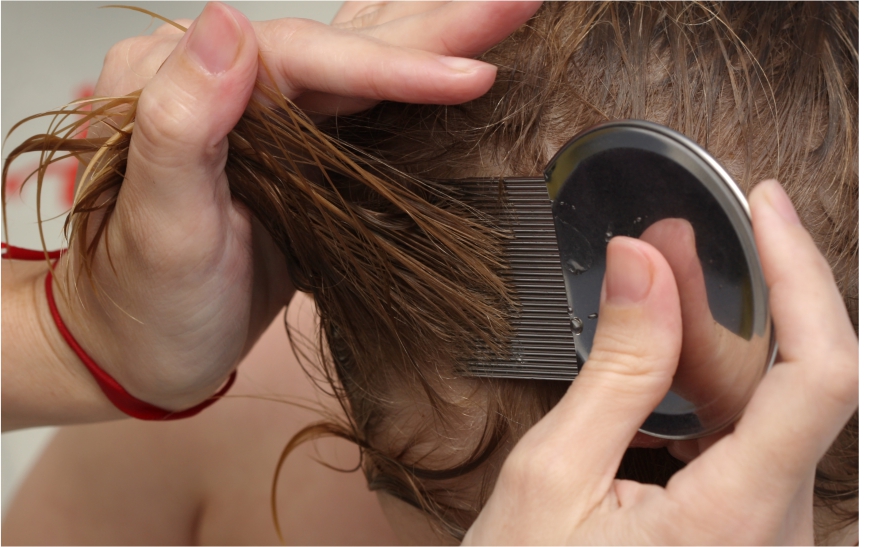
Most schools recommend checking your child’s hair regularly. There are three culprits to look for: the eggs (‘nits’), the immature lice, which are white (‘nymphs’), and the dark adults. If you spot any/all of the above, try ‘wet combing’. This involves washing your child’s hair, slathering it with conditioner – ones containing coconut and lavender may have some deterrent qualities, and also smell delicious – and then, using a ‘detection comb’, working from root to end to tease them out.
We have everything you’ll need for this unwelcome but necessary bonding exercise, right in Pharmacy Corner. For stubborn cases, an over-the-counter remedy – a medicated lotion or spray like Lyclear or Hedrin Treat & Go Spray – may be necessary. Thankfully, these are much milder nowadays, and designed to harm the lice, not your child (or you, if they have helpfully ‘passed it on’). Talk to one of our pharmacists if you need guidance in deciding which is the best form of attack.
EXHAUSTION
This is sort of linked to item number one. After the lazy days of summer, getting back into a routine for school – with early starts – can leave everyone in the family feeling shattered. And exhausted people are prone to catching bugs. Again, prevention is better than cure. So maybe now’s the time to start you and yours on a regime of probiotics – to boost your immune systems.
Olly do a Kids Immunity gummy – Cherry Berry flavour – which your little ones will need no persuading to take. There are adult versions, too (including – yes – gummies, because it’s not just kids who like them). But remember: if you are pregnant or have any underlying health issues (or are just unsure of what’s OK for you to take) please ask one of our helpful pharmacists.
BLISTERS
W.J. Boyle were trying to boost sales of their school shoes with that annoying jingle, all those years ago. And it’s true that getting new shoes for school is one of the silver linings of the holidays coming to a close. But often kids don’t have the time (or the inclination) to break them in properly first. Which means blisters. Why not grab a couple of packs of Compeed or Scholll heel plasters, so you’re ready for the first blister of term?
Stephanie Simons is the head pharmacist at Lindo’s Pharmacy in Devonshire. She earned her Bachelor of Science in Pharmacy at Massachusetts College of Pharmacy and has been practicing for over 20 years. She is a registered pharmacist with the Bermuda Pharmacy Council and is a member of the Bermuda Pharmaceutical Association.
Aug 21, 2025

Morning sickness is very common in pregnancy and usually occurs between the 4th and 7th week.
By Stephanie Simons,
Head Pharmacist,
Lindo’s Pharmacy in Devonshire
PREGNANCY is a weird and wonderful time. Wonderful, because…you’re having a baby! Weird, because your body – which normally answers only to you – suddenly answers to something the size of an olive.
Luckily, your friendly neighbourhood Pharmacy Corner can help with many of the annoying little things that can make this time seem less like ‘blooming’ and more like ‘blooming hell’.
Naturally, if you have any doubts or worries about taking or using anything during your pregnancy, check with a medical expert. Our pharmacists are always happy to help; and you can (and should) also speak to your doctor if you have any concerns.
BLOOMING MARVELLOUS
Doctors recommend that pregnant women (and those trying to conceive) take 400 micrograms of folic acid a day, until the 12th week of term. Why? Because it’s important for the healthy development of your baby’s brain and spinal cord.
Folic acid is found naturally in dark green leafy veg (like spinach and kale…found right outside our pharmacy corner in the fruit and veg aisles). But to get 400 micrograms you need a lot of kale (five cups of the cooked stuff).
Why not have a look at our supplements aisle? Vitabiotics’ Pregnacare range provides folic acid – and vitamin D, which in small doses is also important (for healthy bones and teeth). Olly’s Prenatal gummies are another good way to make sure that you, and your growing baby, are getting everything you need.
Do ask a pharmacist, though, before you start popping lots of pills and potions. Some vitamins – such as Vitamin A – are not good for mom or baby. Err on the side of caution!

Hydration is key when treating stretch marks during pregnancy. Opt for a moisturiser that is formulated for sensitive skin and safe for use during pregnancy.
MORNING SICKNESS
In the early stages of pregnancy, one in three women will experience nausea and sickness. Scientists at Cambridge University think this is caused by your unborn baby producing a hormone called GDF15. This is already present in our bodies – but in much smaller amounts than your little bundle of joy is now pumping out into your system.
The result? Big-time nausea. Usually this will disappear by the 20th week – though in some women it will continue, and be so extreme that medical attention is needed, to stop mother and baby from becoming dangerously dehydrated. That condition is called hyperemesis gravidarum and luckily it is pretty rare.
If your ‘morning sickness’ (which can actually strike at any time of the day, worse luck) is unpleasant but not dangerous, your doctor may prescribe an antiemetic (anti-nausea) pill. This works by blocking the neurotransmitter receptors in the brain and stomach which, when triggered, make you feel sick. (In the same way an antihistamine blocks the neurotransmitter receptors that cause allergic reactions.)
Otherwise, you can try to quell those queasy feelings by using…ginger. Yes, when we were growing up, our moms sometimes used to give us ginger ale when we felt nauseous.
And it turns out it’s not just an old wives’ tale. Ginger does seem to have properties that can help soothe the savage stomach. Britain’s NHS guidelines recommend that if you have mild morning sickness, you could try sipping ginger tea, nibbling on ginger biscuits – or (kudos Mom) nursing a ginger ale. Here in Pharmacy Corner, we have a number of supplements containing ginger, such as Gravol Ginger Lozenge or Dramamine Natural, which might be worth checking out, too.
INDIGESTION
This is a big issue for a lot of moms-to-be. Again, some of it is down to hormones – which are relaxing muscles all over your body, including those in your digestive system…allowing acid reflux to occur. And some is down to the simple fact that your baby is taking up more and more space as it grows…and pressing against your stomach. Net result: indigestion.
There are lots of tricks for dealing with this: have lots of little meals rather than one or two whoppers. Sit up straight while you are eating; and afterwards, while you are digesting.
Prop yourself up slightly in bed when you settle down for the night (a prime time for indigestion to strike). Or try to sleep on your left side. Gravity is your friend here, for once. If you lie on your left side, your stomach is below your oesophagus – and it’s harder for stomach acid to back up and cause trouble.
If you’re still feeling uncomfortable, ask your pharmacist to recommend an antacid that is safe for pregnant women. There are lots! And make sure you follow the instructions, when it comes to dosage.
THE NINE MONTH STRETCH
Stretch marks. Not everyone gets them, but they are unsightly. And there’s not much you can do about them, until after you’ve had your baby.
But massaging your baby bump won’t hurt. It may help to ease feelings of tightness. And it could also help you and your partner bond with the new addition to your family.
Medical experts recommend you hold off until the third month. And keep your strokes soft and light – particularly toward the end of your pregnancy.
Choose a gentle cream or oil. Something containing vitamin E is good, because that will soothe any itchiness you may be feeling.
Many big-name brands – like Palmer’s or Vaseline – do their own belly bump formulas. There’s Palmer’s Stretch Mark cream and Bio-Oil is also excellent for stretch marks and scars.
You can also use a gentle carrier oil, like jojoba or sweet almond (we have a good selection in store. But please check with your doctor or one of our pharmacists if you want to add aromatherapy oils, because not all are safe for pregnant moms.
Stephanie Simons is the head pharmacist at Lindo’s Pharmacy in Devonshire. She earned her Bachelor of Science in Pharmacy at Massachusetts College of Pharmacy and has been practicing for over 20 years. She is a registered pharmacist with the Bermuda Pharmacy Council and is a member of the Bermuda Pharmaceutical Association.
Jul 14, 2025
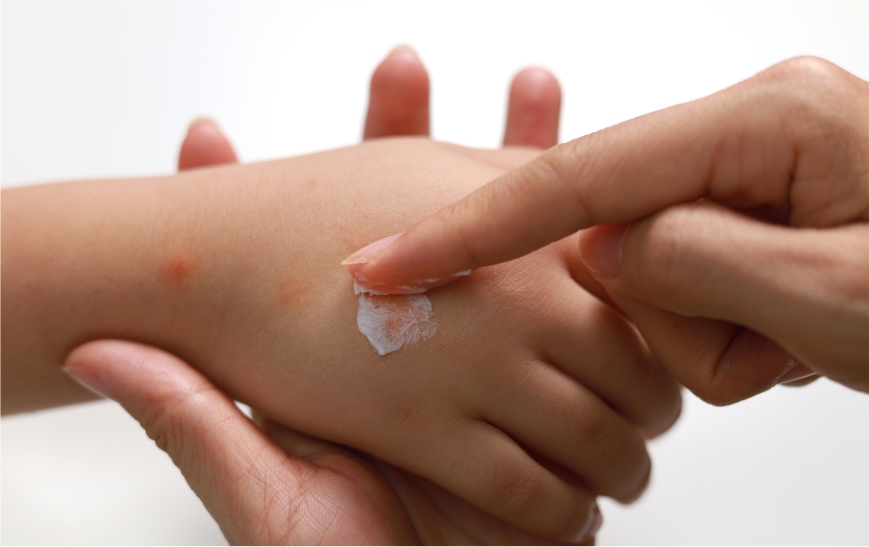
Itchy mosquito bites? Over-the-counter antihistamines can help relieve itching. A hydrocortisone cream can also help reduce itching and inflammation.
By Stephanie Simons,
Head Pharmacist,
Lindo’s Pharmacy in Devonshire
Ah, summer. School holidays. Family vacations. Cup Match. Plenty of good excuses (if you need any) to have fun in the sun. A day at the cricket, or the beach, or the campsite, can leave you feeling relaxed and happy. But there can be less positive after-effects, too.
Sunburn, for starters. Obviously, everyone who hasn’t been living under a rock for the past 20 years knows that you should wear a good sunscreen (minimum SPF30) when spending time outdoors and reapply every two hours and after swimming.
We have a wide range to choose from, including ones specifically designed for babies and children, from market leaders Coppertone, Blue Lizard and Banana Boat, to mention just three. (And by the way, now’s a good time to check the expiry date on your old sunscreen. The FDA requires manufacturers to ensure their products last for three years, but after that it’s wise to replace.)
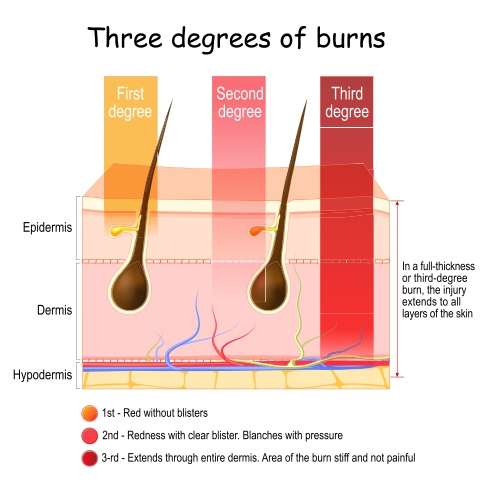
Every sunburn, no matter the degree of burn, damages your skin and increases your risk of developing skin cancer. Remember to slip, slop, slap, seek, slide and limit your sun exposure on high UV index days.
Still, sometimes, no matter how prepared we are, mistakes are made. We nod off in a hammock. We forget to reapply our sunscreen. Or forget it altogether. What to do then? Well, first off, if you are experiencing any of the following symptoms – blistering or swelling of the sunburned area, a high temperature, dizziness or nausea, shivering, headache or muscle cramps – speak to a doctor right away.
If you just feel tender, and look like a lobster, you can probably help yourself. Drink plenty of water, to prevent dehydration. Oral Rehydration products like Nuun, Liquid IV and Pedialyte which are available in numerous flavours will also help to prevent and treat symptoms of dehydration. Take some pain relief – either an acetaminophen (Tylenol, Paracetamol) or an NSAID (Advil, Nurofen); all available in our pharmacy corner.
Have a cool shower. Or a tepid bath with a little bit of baking soda in it (about 60g per tub; available in Lindo’s baking aisle!). Remember, though, if you are treating a child or baby, do not let them get too cold.
Wear loose fitting clothes – any contact with your sunburnt skin will be excruciating. Apply an after-sun product that contains aloe vera, like Solrx’s Aftersun or Panama Jack’s Burn Relief. Good old calamine lotion can also be very soothing. If you pop these items into the fridge before applying, they will feel even better on your sensitive skin.
Medical experts sometimes recommend using a 1 per cent hydrocortisone cream a couple of times a day, for up to three days – check with one of our pharmacists on what’s right for you. Again, storing the cream in the refrigerator will increase the ‘Aaaaah’ factor.
There are other kinds of fallout from a great day in the great outdoors, too. Mosquitos are often uninvited guests at these gatherings. We have a new product; mosquito repellent bracelets and stickers which contain essential oils that are great for adults and small children. But, if you get bitten, what should you do? Reassuringly, most bites will get better on their own after a couple of days.
Clean the affected area well, to prevent infection. If you have some handy, apply an antihistamine cream like Benadryl or Anthisan or over-the-counter hydrocortisone cream (see above). Applied early, it may help to stop the swelling in its tracks.
You can also try using an ice pack, or cold compress, for 20 minutes. If the bite continues to itch, ask one of our pharmacists about an oral antihistamine. Ones containing chlorphenamine (Piriton) or diphenhydramine (Benadryl) will work quickly but can cause drowsiness while loratadine (Clarityn) will not make you drowsy, so you can still drive safely, and carry on with your daily routine.
And what if it’s not your outsides that are bothering you, but your insides? Too much picnicking can lead to indigestion and/or heartburn. Again, we have a wide range of products to ease your pain.
Mild indigestion is usually nothing to worry about – particularly if it follows on after a blowout al fresco feast. If your indigestion re-occurs frequently, or persists for more than two weeks, please consult your doctor.
Otherwise, ask one of our pharmacists which is the best treatment for your tummy trouble. We have everything from old favourites like Alka Seltzer and ENO salts, to help settle your stomach; to our Gas-X range, to deal with that ‘I can’t believe I ate the whole thing’ bloated feeling. Plus, many other options. Check us out, and make sure your summer memories are good ones!
Stephanie Simons is the head pharmacist at Lindo’s Pharmacy in Devonshire. She earned her Bachelor of Science in Pharmacy at Massachusetts College of Pharmacy and has been practicing for over 20 years. She is a registered pharmacist with the Bermuda Pharmacy Council and is a member of the Bermuda Pharmaceutical Association.
Jun 13, 2025

By Stephanie Simons,
Head Pharmacist,
Lindo’s Pharmacy in Devonshire
June 9-15 is Carers’ Week in the UK. June 16 is, of course, our own Heroes’ Day – and the proximity made me think about those unsung heroes in our lives. The carers (or caregivers).
Britain’s National Health Service (NHS) describes a carer as ‘anyone – including children – who looks after a family member, partner or friend who needs help because of illness, frailty, disability, a mental health problem or an addiction’. Crucially, these carers are unpaid. And, interestingly, most of them don’t even recognise the fact that they ARE carers…until they’ve been doing the job for two years, according to the NHS. Before that, it’s just lending a hand.
We all know someone who qualifies as a carer, based on these criteria. Maybe we are a carer ourselves.
It’s a tricky job and can also sometimes feel like a thankless one – we are not getting paid, after all. And while our reward may be in heaven, even the most generous soul likes to get a bit of praise here on earth.
The NHS points out that carers’ roles are sometimes made even more difficult by the very closeness (and complexity) of their relationship with the person they are looking after. Your mother. Your child. Your husband. It’s complicated, as they say.
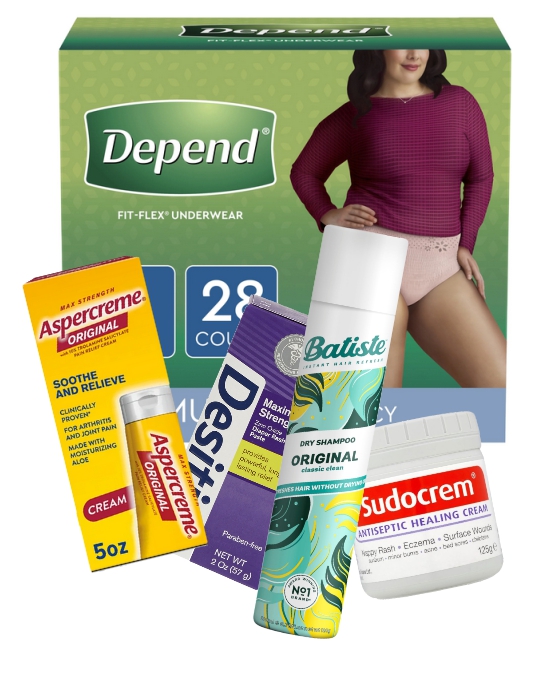 So, this month, let us celebrate these community heroes. Heroes who don’t get medals, but without whom we would struggle. What can we do to make their lives a tiny bit easier? Well, here at pharmacy corner we stock a wide range of products for those folks you may be caring for – things like disposable incontinence pants, for men and women (by Depend, Poise and the Honey Pot company…available on dropit.bm, too). Or barrier cream – over the counter items (like Sudocrem or Desitin) – to help with the beginnings of pressure sores. If you are worried about a potential bed sore, though, make sure to talk to one of our pharmacists – or your GP.
How about dry shampoo Batiste and Garnier Fructis are two brands that we carry – for those in-between-showers days, when a bit of freshening up is called for. We also have massage oil, if lack of movement is an issue and a physiotherapist thinks this will help. Plus, standard staples like cotton buds and pads.
And what about the carers themselves? Sometimes, in order to carry on being one of life’s helpers, you need to take time out to help yourself. We have pain relief for back issues – no matter how strong you are, helping your special person in and out of bed or their favourite chair can take its toll. Clearly, if you have serious back issues, speak to your doctor. But if it’s a twinge, we stock a great selection of NSAIDs (non-steroidal anti-inflammatories) that can help: in pill form (Advil and Aleve, to name just two), and also gels or rubs like Aspercreme, Salonpas and Voltarol. Prolonged use of these tablets can cause stomach or kidney issues, so if your backache persists, speak to your doctor. But for the occasional ache and pain, we are a great first port of call.
And for some old-fashioned pampering, after a long and possibly fraught day, what about a fragrant bath soak? We have some delicious products from Aura Cacia, Dr. Bronner’s and EO. How about a relaxing lavender foaming bath in the evening? Or if baths are not your thing, then an aromatherapy shower tablet? Assuming you have a bit of water pressure, then pop it in the shower, where the water spray will hit it, inhale, and wash away the cares of the day. Bliss.
Stephanie Simons is the head pharmacist at Lindo’s Pharmacy in Devonshire. She earned her Bachelor of Science in Pharmacy at Massachusetts College of Pharmacy and has been practicing for over 20 years. She is a registered pharmacist with the Bermuda Pharmacy Council and is a member of the Bermuda Pharmaceutical Association.
May 13, 2025

Athlete’s foot is a common skin infection of the feet caused by a fungus. It causes itchy white patches and cracked skin, usually between the toes.
By Stephanie Simons,
Head Pharmacist,
Lindo’s Pharmacy in Devonshire
As any self-respecting Bermudian can tell you, May 24 marks the true start of summer. Time to get ready for the water – be that the beach or the boat. Which means…exposing your feet. Gulp.
As James Brown once sang, you got to get on the good foot. But, honestly? Many of us have feet that we would rather keep hidden. Not so much the good foot as the bad foot. Fear not, though. There is still time to treat your tootsies, before you have to bare them in public. And no matter what the problem, if ‘this little piggy’ goes to our Pharmacy corner, help may be at hand…
GOODBYE FUNGUS, HELLO FUN…
Small wonder that our feet are perfect targets for fungal infections. For one thing, each one contains approximately 250,000 sweat glands. That’s a lot of sweat. Then, we keep them swaddled in socks and shoes. And even when they’re liberated, they’re often exposed to places (changing rooms, school or public showers) which are hotbeds of fungus. Result: trouble.
Take athlete’s foot. Despite the name, this is an equal opportunity pain in the extremity, affecting couch potatoes as well as jocks. It usually starts between the toes – fungal infections love moist, warm conditions – but can then spread, causing itching, flaking and discolouration.
An antifungal medication called ‘Terbinafine’, sometimes known by the brand name Lamisil, has been shown to be effective in combating this unwelcome development.
Talk to one of our pharmacists about the best treatment for you. Anti-fungal medications come in many forms – creams, gels, sprays and powders. And we stock a wide range, from brand leaders like Canesten, Lamisil and Daktarin.
Sadly, it’s not just the skin on your feet that fungus tackles. It can attack the toenails, too: turning them yellow, sometimes thickening them; or causing them to chip. Luckily, nail fungus can also usually be cleared up with over-the-counter products like medicated varnish or creams.
Again, flag down one of our pharmacists for advice. Be warned that nail and skin fungus infections can take a while to disappear (weeks to months or longer). So, persevere – and if at first you don’t succeed, talk to your doctor. They may suggest upping the ante and using an oral medication.
HELP FOR HEELS
Sometimes it’s not moist clammy feet that are the problem, but the opposite. The skin on the bottom of our feet is thicker than anywhere else on our bodies – because there is an extra layer of epidermis (the Stratum Lucidum) which helps to protect our long-suffering soles from friction and retain moisture. But for a number of reasons – ill-fitting shoes, prolonged periods of standing, or even just getting older (our heels tend to become less padded over time) – the skin there can become dry and eventually start to crack and split. Which is not a good look – and also hurts like the dickens. We have some solutions for this, too. A wide range of heel balms: super moisturising and softening products which you can massage in at night (and then leave to work, under cover of a pair of bed socks). Flexitol, Dr. Scholl’s and Eucerin all offer treatments which will leave your feet softer, and ready for a barefoot summer stroll along a sandy pink beach.
PREVENTION IS BETTER THAN CURE
Outside of summer sandal season, it’s often a case of ‘out of sight, out of mind’ with our feet. Which means we can be in for a shock when it’s time to peel off. Why not pay a bit more attention to them, given how important they are to us? Take time to give them some TLC…all year round.
A foot file, used after you’ve soaked your weary dogs in warm water – or after a shower or a bath – can work wonders, leaving your feet feeling and looking beautifully buffed. We have a selection in store. Check them out.
We also stock other items to help you put the final touches to your tootsies: nail clippers, files and emery boards. And wax – in case you are one of the lucky people who have hair on their feet (it’s not just for hobbits). The good news is that hairy feet usually means you have good circulation. Silver lining!
And now, time to put your best foot forward…
Stephanie Simons is the head pharmacist at Lindo’s Pharmacy in Devonshire. She earned her Bachelor of Science in Pharmacy at Massachusetts College of Pharmacy and has been practicing for over 20 years. She is a registered pharmacist with the Bermuda Pharmacy Council and is a member of the Bermuda Pharmaceutical Association.