Apr 21, 2025
 By Stephanie Simons,
Head Pharmacist,
Lindo’s Pharmacy in Devonshire
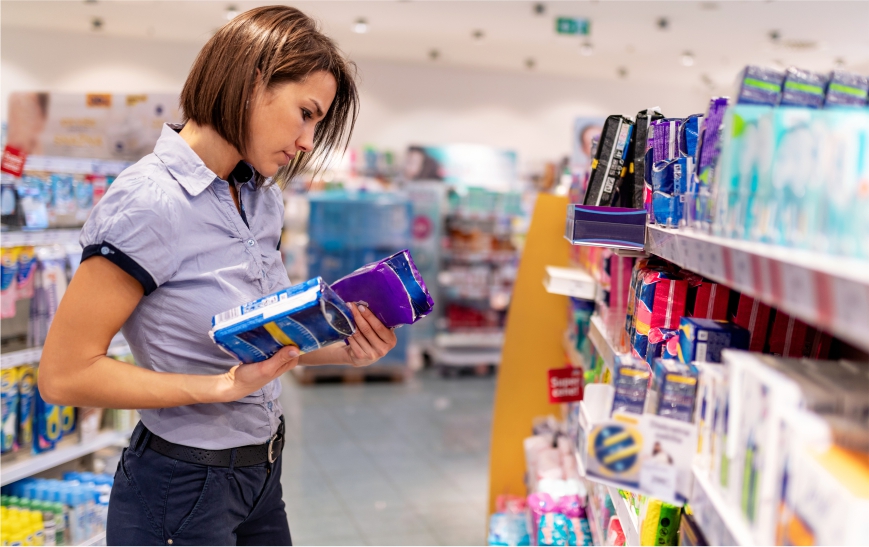
PHARMACY SHAME: The feeling of shame which comes over you when you are spotted by someone you know (a friend, a neighbour, or heaven help you, your boss) popping something embarrassing into your trolley.
We’ve all felt it. Because while there are lots of fun things in our little corner of Lindo’s, there are also items which nobody would describe as fun. But which are, nonetheless, vital to keeping our lives on track.
Let’s look at some of the top entries in the Hall of Shame…
 SANITARY PADS
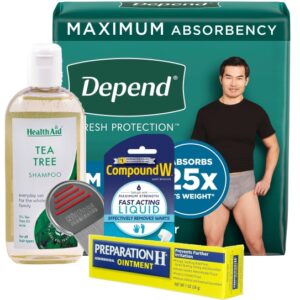
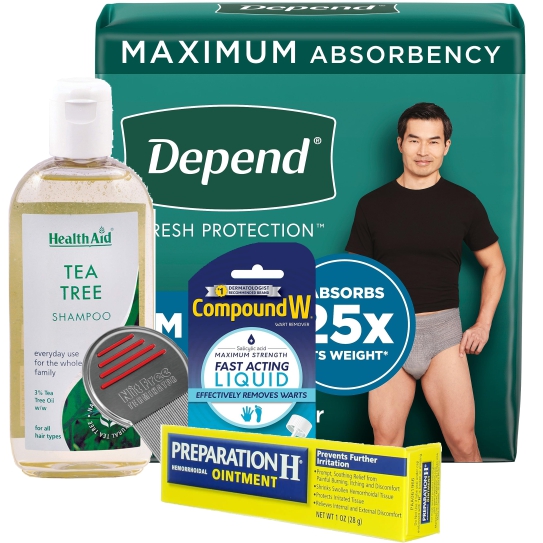
If you’ve ever sidled into this aisle looking furtive, then stop and stand tall. When you think about it, at any moment many – MANY – other people in the shop will be wearing pads of some sort or another. Diapers, sanitary pads, incontinence protection. Where would we be without these things? Stuck at home for most of the time, that’s where.
Think of these items as liberating, not shaming.
We have a great range of products, whatever your needs. Check it out next time you’re in the store. Proudly!
NUTS TO NITS
Kids and head lice. They go together like love and marriage, or a horse and carriage, while not being nearly so nice as any of the above.
Head lice, or nits, are transmitted most easily by head-to-head contact – and children are always putting their heads together, literally. Bless them.
Remember: if your child has head lice, it’s not a sign that you are a slovenly parent. It’s a sign that you are a parent, full stop. Nits happen. So don’t panic. We have lots of different treatments, including Tea Tree Shampoo (Healthaid is a good brand) or a few drops of Tea Tree oil in your favourite shampoo, to deal with the problem. And our team will be happy to guide you towards the right solution for you and your child.
Many people find that teasing a fine-toothed comb through hair after shampooing and conditioning (lice dislike the smell of coconut, apparently, so that’s a good option) works well. This technique is gentle on your babies’ hair, does not involve chemicals (or strong smells). And helps keep track of your progress – body count – in the battle against the little blighters.
THE BOTTOM LINE
It’s a fact of life that pharmacy shame is often associated with our nether regions. You can get haemorrhoids, or piles, for any number of reasons, including pregnancy, being overweight, getting older (and losing muscle tone), or having a bad bout of diarrhoea – as in, Norovirus. Maybe there’s not enough fibre in your diet. As you can see, it’s a pretty big group.
We stock medicated wipes and creams to shrink haemorrhoids and ease your pain, including Anusol and Preparation H – though if the problem persists you should really speak to your doctor.
And if your troubles are related to a lack of fibre, you may find that using a gentle supplement – like Metamucil, or Miralax – can help.
Ask our helpful pharmacists for advice – and if you’re too embarrassed to do it face to face, you can always ring us we’ll be more than happy to answer your questions.
WARTS AND ALL
Plantar Warts – sometimes called Verrucas – are no fun. They pop up on the bottom of your foot, are round, sensitive to touch – and have a little black dot in the middle. Like an evil eye. They are caused by the human papilloma virus (HPV), which can be picked up more easily if your feet are wet.
In children, they will usually go away fairly quickly on their own. But when passed on to other, older members of the family, whose immune systems are not quite so sporty, help may be required. We’ve got a number of products, from field leaders Scholl and Compound W, which can tackle the problem, while easing the pain.
Remember, some of these items can be ordered on dropit.bm, if you can’t get to the pharmacy.
Stephanie Simons is the head pharmacist at Lindo’s Pharmacy in Devonshire. She earned her Bachelor of Science in Pharmacy at Massachusetts College of Pharmacy and has been practicing for over 20 years. She is a registered pharmacist with the Bermuda Pharmacy Council and is a member of the Bermuda Pharmaceutical Association.
Mar 11, 2025
By Stephanie Simons,
Head Pharmacist,
Lindo’s Pharmacy in Devonshire
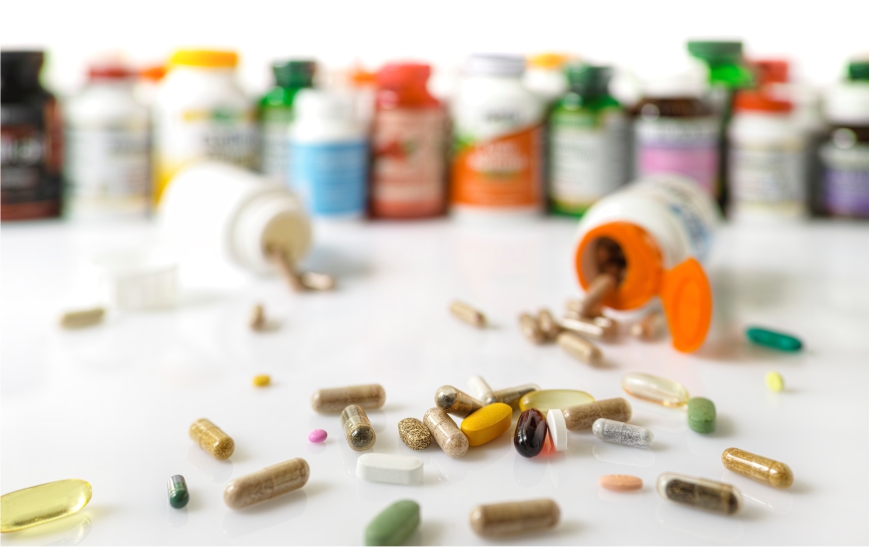
I’m sure we’ve all been encouraged (or ordered) at some point in our lives to: ‘Take your vitamins!’ And we’ve probably told our own children the same thing. Not to boast, but you may have noticed that we have a pretty impressive range of supplements in our pharmacy corner.
But what, exactly, do we know about these essential nutrients?
THEY’RE NEWER THAN YOU THINK…
The first vitamin pills first started popping up on pharmacy shelves from around 1916. One of the leading brands was Mastin’s Yeast Vitamon Tablets – which contained vitamins A, B, C, Calcium, Iron and ‘Nux Vomica’. Which sounds kind of scary – and was. A homeopathic remedy for heartburn, it was made from the seeds of the strychnine tree. Yes, that strychnine.
THE VITAMIN STAKES…
There were plenty of scientists who might claim to have discovered vitamins: a Japanese professor of agricultural chemistry called Umetaro Suzuki; an Englishman called Sir Frederick Gowland Hopkins and a Dutch doctor called Christiaan Eijkman.
But the ‘father’ of the vitamin is generally considered to be a Polish biochemist called Kazimierz Funk, who was born in Warsaw in 1884. Maybe because, in 1912, he came up with the name.
The son of two doctors – and Jewish (which helps to explain why he wound up relocating permanently to America in the 1940s) – he had hip dysplasia as a child. But there was nothing wrong with his brain: he set off for university in Switzerland at 16 and graduated with a PhD in organic chemistry at 20.
CHICKEN AND RICE…
In the early 1900s, Funk became fascinated by the work of Christiaan Eijkman.
The Dutchman, who was 26 years older than Funk, had been trying to find the ‘toxin’ responsible for beriberi – a common disease at the time which caused nerve damage and heart failure.
He did experiments on chickens, exposing them to the disease (don’t ask how) and sure enough, they all died. But when he got a new batch, and changed their diet, a strange thing happened. The chickens that ate white rice died. Again. But the ones that ate brown rice did not. And when some sick birds were given brown rice, they got better.
FUNK FOLLOWS THE TRAIL…
Picking up the beriberi baton, Funk did his own experiments – this time on pigeons. With the same results.
But unlike Eijkman (who remained fixated on the toxin theory), Funk began to think that beriberi was a ‘deficiency disease’. Something in the brown rice was protecting the birds; and its absence was making them sick.
In 1912, in a lab in London, Funk (who by this time had anglicised his name to ‘Casimir) found that something. He called it a ‘vitamine’: a mash-up of ‘vital’ and ‘amine’ (the name of a compound containing nitrogen).
Funk believed his ‘vitamine’ was B1 (thiamine). Turns out it was actually B3 (niacin). Which doesn’t cure beriberi. And isn’t an amine. But never mind: vitamin research was underway. And when it became obvious that not all vitamines were ‘amines’, that final ‘e’ was quietly dropped and they became plain old vitamins.
THE GANG’S ALL HERE… 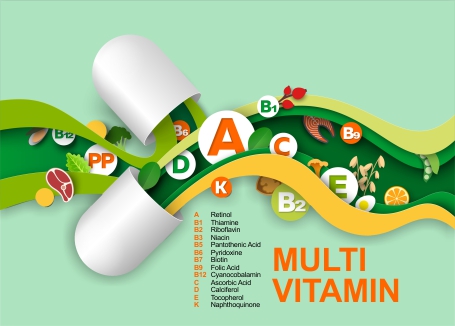
By 1948, the last of the ‘essential’ vitamins had been discovered. There are 13 in all: A, C, D, E and K – plus eight B vitamins. They were named roughly in order of discovery (though some of the Bs came limping in later, with B12 bringing up the rear).
Vitamin K is out of step because when scientists realised it was involved in blood clotting, they gave it the German name for coagulation (‘koagulation’). Which is lucky, since vitamin C was already taken.
VITAMANIA…
By the early 1940s, vitamins and supplements were not just on the scene – they were becoming household staples. Magazines like Good Housekeeping were promoting them. Advertisers extolled their powers (‘sunshine in a bottle!’) – and even President Franklin Delano Roosevelt got on the bandwagon. Concerned about the weediness of many GIs enlisting for service in the war in Europe, he encouraged awareness of the benefits of a balanced diet, including vitamins. Like most fads, it went too far – and in 1942 the term Vitamania was coined to describe the fashion for relying on pills and potions rather than good food, to stay healthy.
YUMMY GUMMIES…
The holy grail for vitamin manufacturers was to find some way of making their pills palatable.
Chewable vitamins arrived in the late 1960s – most popularly in the form of the Flintstones multivitamins. They looked cute but still tasted a bit meh.
The first gummy vitamins – Yummi Bears – were invented in 1997. Inspired by the Haribo Gummy Bears (created by German confectioners in Bonn in 1922), they were initially made with gelatine. But because that uses pig skin, the recipe was later tweaked – for ethical and dietary reasons – to use pectin instead.
Gummies were a game changer – so much so that today, they are the main way that Americans aged 35 and under get the vitamins, minerals and supplements they require. So, take your vitamins. And be glad your recommended daily allowance does not include Nux Vomica.
Stephanie Simons is the head pharmacist at Lindo’s Pharmacy in Devonshire. She earned her Bachelor of Science in Pharmacy at Massachusetts College of Pharmacy and has been practicing for over 20 years. She is a registered pharmacist with the Bermuda Pharmacy Council and is a member of the Bermuda Pharmaceutical Association.
Feb 14, 2025
By Stephanie Simons,
Head Pharmacist,
Lindo’s Pharmacy in Devonshire
Do you ever see something and think: ‘That does my heart good!’ Maybe it’s just an everyday sight – a particularly peachy sunset. Or a photo of loved ones, shared on social media. Or maybe witnessing a random act of kindness. Often, these moments occur when we stop and take the time to notice what’s going on around us. And they can make us feel irrationally but blissfully happy.
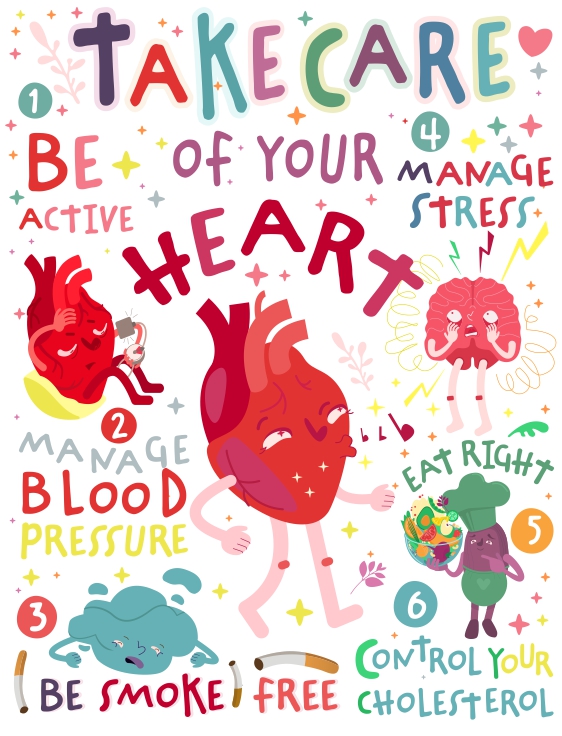 But what if we thought about it literally, rather than metaphorically? What does your heart good, in the medical sense? It seems a fitting question in February, which is international Heart Health month. And you’ll be pleased to know that there are some very easy things you can do to help your ticker…
DIET
One of the main ways to improve your heart health is to improve your diet. Are you getting enough of the good stuff? Like fish – which is full of Omega-3 oil. Medical experts recommend two helpings of fish a week. Preferably oily ones (like tuna, mackerel or sardines). We stock fresh fish in our supermarket – but tinned is good, too.
We also stock Omega 3 supplements – in case fish is not your dish – but talk to one of our helpful pharmacists about whether they are suitable for you. Some folks (those allergic to shellfish, for instance, and pregnant women) should not be taking them. There are also plant-based Omega-3 products as alternatives.
Nuts are also a great source of good fats and fibre – and hence a perfect heart healthy snack. But remember to keep those portions small. Just a handful. And avoid salty processed nuts (dry roasted, honey roasted). Plain roasted ones are best.
Finally – don’t faint – but dark chocolate could be your heart’s friend. Not just any old chocolate. It’s got to be at least 70 per cent cocoa content; and not full of sugar or other heart unhealthy bits (toffee!). Again, you’ll have to exercise some restraint. Doctors recommend 1-2 ounces a day. A morsel, not a mountain.
EXERCISE
Regular, gentle exercise is good for your heart, whatever your age. Nobody is saying you have to take up jogging at 92, but why not try to incorporate a bit more exercise into your daily routine? Take the stairs at the office, instead of the elevator. If it’s safe to do so (as in, there is a sidewalk or verge) get off the bus one stop earlier and walk a little bit further. Or take the first parking space you see, rather than aiming for the one right outside the door. Not only will you do your heart a favour; you may also see things you miss, when you’re stuck in traffic. Things that will lift your heart!
STOP SMOKING
We’ve been here before. If you don’t know by now that smoking is bad for just about every bit of your body, you’ve really not been paying attention.
But clearly the problem is that for most smokers, it’s not a lifestyle choice, but an addiction.
If you want to stop – and have tried and failed before – talk to your GP about how you can wean yourself off the habit. Or talk to one of our pharmacists. We stock a number of products that can help you in your fight.
LIMIT YOUR DRINKING
We have just escaped the clutches of Dry January. And unless you are planning to follow that with giving up alcohol for Lent – a rare double – you’ll no doubt be raising a glass to getting back to ‘normal’.
But like smoking, we all know that even ‘normal’ moderate drinking is not great for our health.
If you are determined to drink, why not think about replacing that Dark & Stormy, or bottle of beer, with a medium glass of red wine?
Studies have shown that in controlled amounts, red wine can help to lower sugar levels in your blood, and reduce cholesterol, too. Both good developments for your heart. There are conditions, though. Having a glass of red wine with a meal is better for you than having one on its own. Just saying.
LOOK AFTER YOUR TEETH!
Weird as it sounds, good oral care can also help your heart stay healthy. Many medical studies have shown that people with poor oral health – gum disease, for instance – have much higher rates of cardiovascular disease. Doctors are still trying to figure out why this might be. One theory is that bacteria from your mouth can travel through the bloodstream to your heart, and cause issues there. Whatever the reason, though, it makes sense to look after your teeth and gums. Make sure you like your toothbrush! We’ve got a large selection to choose from. Ditto your toothpaste. And don’t forget the dental floss – a major weapon in the fight against gum disease.
BE MORE CHILL
Yes, it’s an annoying expression, but the idea is a good one. Keeping stress levels low is a good way to look after your ticker, because stress – as the name suggests – puts strain on your heart. There are some easy ways to do this. Yoga, or mindfulness, is one. But if that’s a bit hippy dippy for you, what about a walk? Some bits of Bermuda are not designed for walking – and you don’t want to help your heart and wind up in ER after being clipped by a car. But we do have some lovely parks and nature reserves where you could spend a happy (and healthy) 20 minutes stretching your legs and enjoying some ‘That does my heart good!’ moments.
Stephanie Simons is the head pharmacist at Lindo’s Pharmacy in Devonshire. She earned her Bachelor of Science in Pharmacy at Massachusetts College of Pharmacy and has been practicing for over 20 years. She is a registered pharmacist with the Bermuda Pharmacy Council and is a member of the Bermuda Pharmaceutical Association.
Jan 6, 2025
By Stephanie Simons,
Head Pharmacist,
Lindo’s Pharmacy in Devonshire
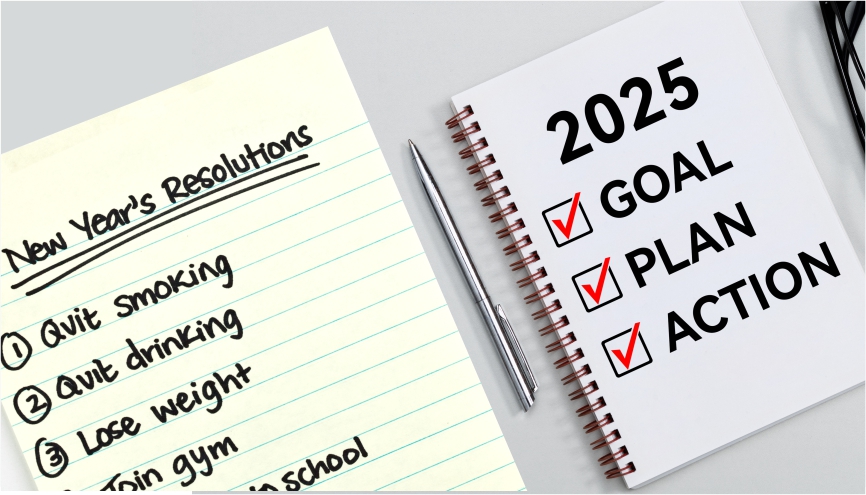
At this time of year, it often feels like we are being bombarded by ‘New Year – New You!’ messages. Dry January, Veganuary…where will it all end? Sadly, for most of us, it will end in…February. If not before.
Sometimes our resolutions are so ambitious they are doomed to fail. But it’s also true that (as Sheryl Crow almost sang) a change could do you good. Especially if you are realistic about what you want to achieve. Start small(ish) and give the ‘New You’ a better chance of survival…
NAIL THAT BAD HABIT
Are you still biting your nails? Don’t hang your head – nail biting is not just for kids. It’s something many of us do when we are stressed or depressed. But there are a couple of good reasons to stop – and not just the obvious one (that it’d be nice to have hands you could show off, rather than hide).
First, repeated nibbling can lead to nails growing back in a wonky fashion. Second, prolonged biting can actually damage another bit of your body – your teeth.
We stock a helpful – disgustingly bitter – nail varnish called Stop ‘N Grow, which once tasted, will put you off making that same mistake again.
If you’ve been worrying your nails for a while, they may be in bad shape. Slicking on a coat of nail strengthening polish (from Mavala, again, or Sally Hansen) will improve their appearance, and stop new growth from splitting. We stock a range of products by Nailtek that are very good. Keeping your hands (and cuticles) moisturised with hand creams by Cerave, Eucerin or Neutrogena will also help here.
Finally, keep your nails nice and short – to remove temptation (we have nail clippers and files).
Then, get ready to put those hands in the air!
SICK OF BEING SICK?
Are you tired of waking up in the morning feeling below par? Why not vow to make 2025 a healthier year all round. No need to go the full Veganuary. But getting more fruit and vegetables into your diet (check out the amazing fresh produce on display right outside our pharmacy) is a great idea when you feel like you are fraying at the seams.
And how about starting a new routine: kicking off the day with an age and lifestyle appropriate multi-vitamin. We stock a large selection from Centrum, One A Day, Nature’s Way and Vitabiotics, so whatever stage you’re at – expectant moms, senior citizens, wannabe athletes, teens – there is something for you.
Many now include a probiotic; among them the deliciously chewable Olly vitamins, which are so tasty you’ll actually look forward to taking them. Seriously!
GENTLY DOES IT
Setting an ambitious goal – like running in the May 24 Half Marathon – as you resolve to get fit in 2025 is admirable. But sometimes less is more. Particularly for those of us with joint issues, or more mileage on the clock.
So why not opt for a less terrifying target. The UK’s National Health Service recommends that we all do 150-300 minutes of ‘physical activity that raises the heart rate’ a week. That boils down to around 22-43 minutes a day. Which still sounds pretty daunting.
But physical activity that raises the heart rate could mean a walk – along the railway trail, or through Cooper’s Island Nature Reserve. Or some energetic gardening. (Both have the added stress-busting benefit of getting you out into the great outdoors.) Even better: a recent survey carried out by researchers at Cambridge University showed that doing just half that amount of exercise – as little as 11 minutes a day – can significantly reduce your chances of developing heart disease and cancer.
If you suffer from arthritis, or just aches and pains, then you may want to consider taking some gentle pain relief before, or after, your exercise. Talk to one of our pharmacists about what’s right for you. Acetaminophen – in the form of Tylenol, paracetamol or Panadol – is a good safe bet for an over-the-counter option, because there are few side effects.
You may also find that using a support bandage or brace – for your knee or ankle – helps stabilise the joint and allows you to move more freely, and with less discomfort. We stock a range from Ace and Futuro. Talk to your GP or one of our pharmacists if you’d like to know more.
THE SMOKING GUN…
So, this IS a big one… But smoking is so bad for you – a new survey by University College London estimates that men lose 17 minutes of life for every cigarette they puff…and women 22 minutes – it’s probably worth tackling.
If you really want to kick the habit, ask your doctor – or one of our pharmacists – about ways to wean yourself off the killer weed. We stock a number of Nicotine Replacement Therapies (NRTs), including patches, gum, inhalers and sprays (nasal or mouth) Nicorette and Nicotinell brands, which will give you a reduced level of nicotine without the dangerous side-effects of smoking.
Which NRT is right for you will depend on your age, body type and lifestyle. But we should be able to offer an option to suit you. So, you can stub out that cigarette habit once and for all.
Stephanie Simons is the head pharmacist at Lindo’s Pharmacy in Devonshire. She earned her Bachelor of Science in Pharmacy at Massachusetts College of Pharmacy and has been practicing for over 20 years. She is a registered pharmacist with the Bermuda Pharmacy Council and is a member of the Bermuda Pharmaceutical Association.
Dec 2, 2024
By Stephanie Simons,
Head Pharmacist,
Lindo’s Pharmacy in Devonshire
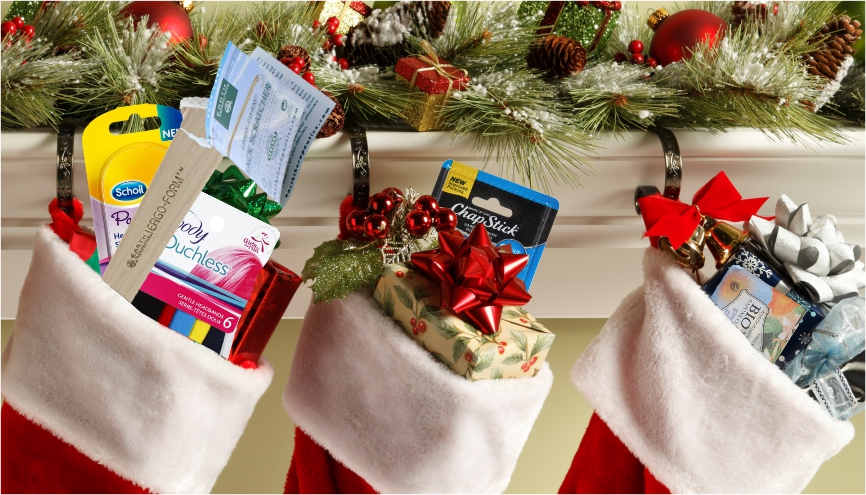
‘Tis the season to be on the lookout for quirky little items that can be popped into Christmas stockings. And funnily enough, your pharmacy can be a goldmine, when it comes to last-minute treats (plus, by shopping locally, you’ll be on Nice List, too).
SCENTSATIONAL GIFTS…
Essential oils are the classic good things that come in small packages – and a little goes a long way. We have a great selection, from Aura Cacia (who do actually stock the original Christmas scent, Frankincense & Myrrh), and also Now – whose offerings include cinnamon cassia oil, spearmint and cloves.
They can be used in diffusers (to make the whole house smell sweet), or even dubbed neat onto the tiles in your shower, to be activated by the steam. Never add undiluted essential oils to your bath – they won’t disperse and could burn your skin. Luckily, simply by adding a few drops to a neutral carrier oil (like jojoba or coconut) you can make your own fragrant bespoke bath oil. Ta da!
 SOAP OPERA…
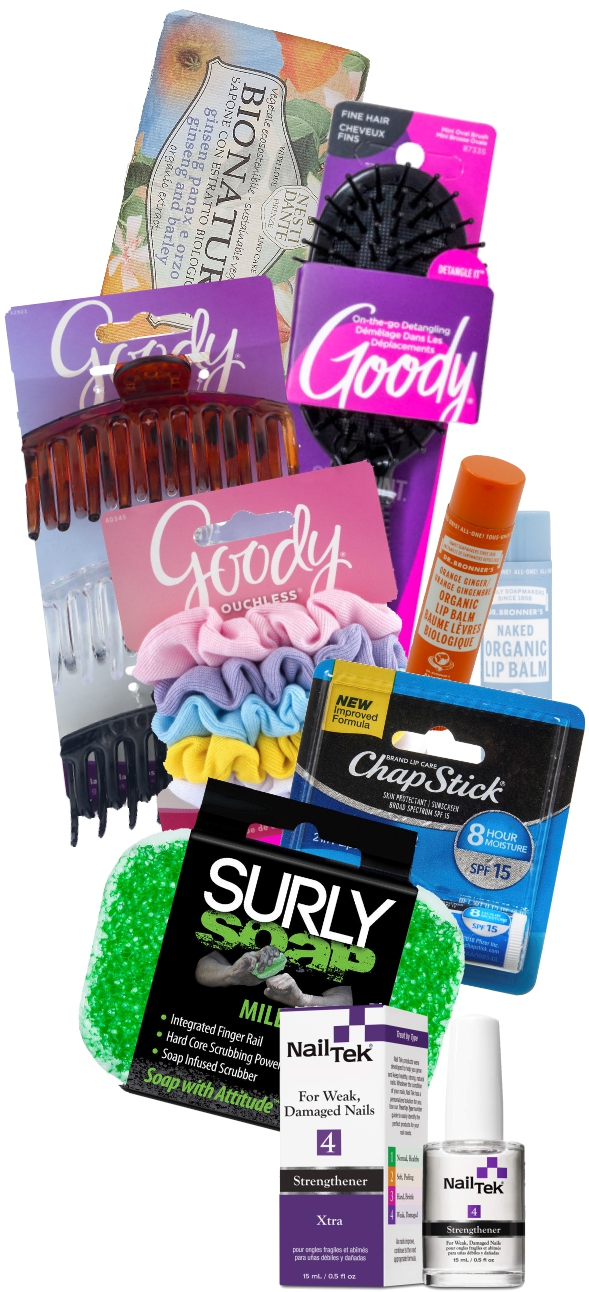
Looking for something (else) for the bathing beauty in your life? How about one of our Nesti Dante Bionatura soaps, made from only the finest ingredients…like argan oil and wild hay.
At the other extreme, there’s Surly Soap – for the worker in your midst. Surly’s ‘Mild’ bar is gently exfoliating, so the more you use it, the more dirt and grease you scrub off.
THE WINNER, HANDS DOWN…
Treats for the hands and nails are always welcome. Given how thoroughly we are all washing our hands these days – 20 seconds at the taps, people – who doesn’t need moisturiser? We stock handy (handbag sized) containers, from market leaders like Aveeno, Neutrogena, Cerave and Burt’s Bees, to keep your hands soft and supple. It’s also worth having a look at Nail Tek’s excellent range – like first aid for your nails! One little bottle can help transform damaged, brittle or soft nails into things of beauty. Next stop: the manicurist!
LIP BALM
Get ready to pucker up under the mistletoe with some lip salve. We’ve got some cute products from Blistex, ChapStick and Dr Bronner’s, to name just three. Choose from dinky pots, or the traditional lipstick format (in a range of flavours…like Blistex’s Fruit Smoothies, ChapStick’s Tropical Paradise trio or Dr Bronner’s orange and ginger). There are even some seasonal flavours.
CROWNING GLORIES
You don’t have to have a long-haired lover from Liverpool to appreciate that you can never have too many hair bands, or scrunchies, or barrettes in the house (assuming your house is not Warwick Camp). Check out our selection of hair accessories (from brand leaders Goody) – including soft towelling headbands in bright colours, and handbag sized brushes and combs – for the well-groomed guy or gal on your list.
GOOD FOR THE SOLE…
For the Cinderella in your life – who’s going to be cramming her feet into gorgeous (but pretty darned uncomfortable) shoes over the 12 days of Christmas, how about a pack of Scholl’s Party Feet? These gel inserts slip neatly into footwear, so instead of hobbling you’ll feel like you’re dancing on air.
YOU SCRATCH MY BACK…
In the shower, or the bath, a loofah massager can reach the parts that we mere mortals cannot. Earth Therapeutics’ all-natural back scratcher has a long handle, and comes with a loop, so you can hang it in your bath or shower. Ready to scratch that itch!
Stephanie Simons is the head pharmacist at Lindo’s Pharmacy in Devonshire. She earned her Bachelor of Science in Pharmacy at Massachusetts College of Pharmacy and has been practicing for over 20 years. She is a registered pharmacist with the Bermuda Pharmacy Council and is a member of the Bermuda Pharmaceutical Association.
Nov 12, 2024
By Stephanie Simons,
Head Pharmacist,
Lindo’s Pharmacy in Devonshire
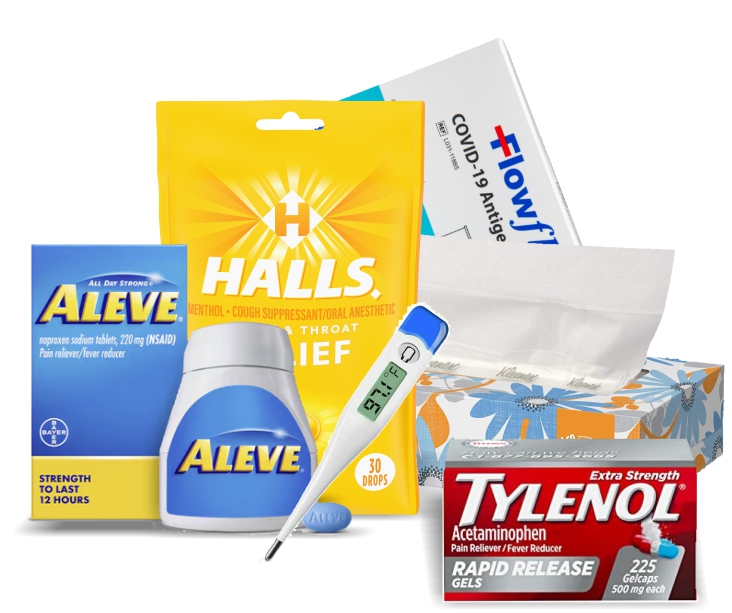
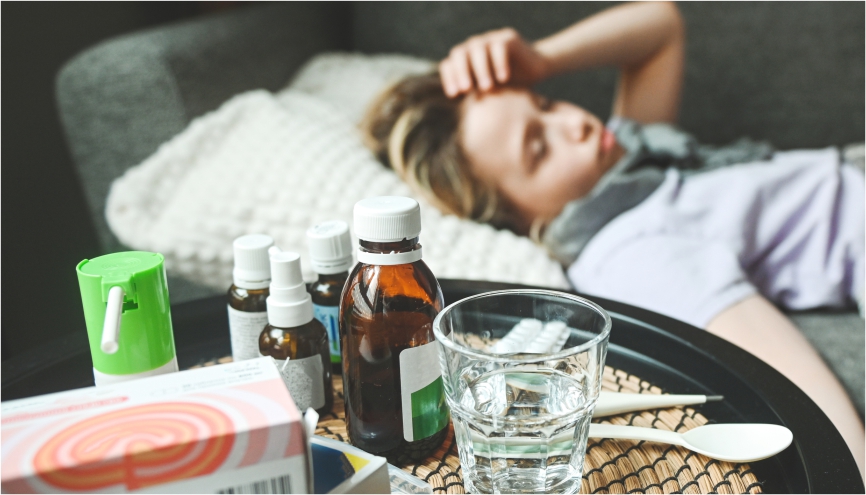
WINTER is coming, as some man in Game of Thrones once said. Luckily, In Bermuda, this probably won’t mean a new ice age. But it will certainly mean the return of seasonal viruses like Covid-19, the flu and our old friend, the common cold.
Now is the time to make sure that the ‘Sick Shelf’ in your medicine cupboard is shipshape and ready, before your hour of need arrives…
OUT WITH THE OLD…
Have a good look at your existing medical supplies – and be ruthless about pitching anything past its ‘best by’ date. Like everything else, drugs have a lifespan. And while most health experts agree that accidentally popping an out-of-date pain pill (or two) will not cause serious harm, they also agree that drugs lose their potency over time.
Once you’ve cleared some space, it’s time to restock. But with what?
TESTING, TESTING
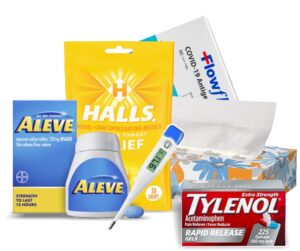
Make sure you have some Covid tests on hand, just in case (we stock individual tests for $6.95). The latest Government guidelines recommend that you stay at home until 24 hours after the fever and symptoms (sore throat, coughing, aches and pains) subside – without help from pain meds. You need to be particularly vigilant if you are going to come into contact with vulnerable groups – seniors, babies under six months, or anyone with a weakened immune system (cancer sufferers, for instance) – or attending an indoor gathering, where you don’t know who you will encounter.
FEVER PITCH…
Do you have a good thermometer in your house? If you still have an old-school mercury model, it’s worth investing in something easier to read – and safer (the consequences of a breakage and subsequent spill are not worth thinking about). An accurate temperature reading will help you tell if you’ve got a cold (which usually does not cause a high fever) and Covid or Flu. Which do. Keeping track of your temperature will also let you know when it’s safe to stop isolating. FYI, a fever is considered to be anything over 100.4 F (or 38 C).
We have a number of different, easy to read digital thermometers available for oral use that are very inexpensive.
 OH, THE PAIN
There should be TWO kinds of over-the-counter pain relief on your Sick Shelf. Acetaminophen (Tylenol or Paracetamol), and an NSAID (non-steroidal anti-inflammatory drug) like ibuprofen (Advil or Cuprofen), naproxen (Aleve), or aspirin. Both types tackle aches, pains and fever. But because they work in different ways, you can take them together (or better yet, stagger them): the recommended dose of paracetamol or Tylenol; followed (two hours later) by a similar dose of an NSAID (taken with food, to prevent risk of tummy upset or ulcers).
And remember: if you have children in the house, you will also need pain relief for them. Oral suspensions of paracetamol and ibuprofen are available in store – but ask the pharmacist for advice on what medication would be best for your child.
DON’T BE SNIFFY…
If it’s a cold you’ve got, a saline nasal spray can help to ease congestion. And because it’s all-natural, you don’t have to worry if you are taking other medication – blood pressure pills, for instance, or antidepressants (both of which WILL rule out decongestants, which can elevate your pressure). They are even safe for children (Calpol do a nasal spray and nasal drops which can be used on infants, but again, check with the pharmacist to find your best option).
READY FOR THE COUGH
One particularly annoying symptom of Covid is the cough you just cannot suppress. Not only is it maddening for you – it’s also not going to endear you to those around you. You can try to cough into your elbow, or a hanky, but having a supply of good cough lozenges on hand is another way to go. We stock cough drops by Halls, Ricola and Fisherman’s Friend, to name just three – and sugar-free versions are also usually available.
Stephanie Simons is the head pharmacist at Lindo’s Pharmacy in Devonshire. She earned her Bachelor of Science in Pharmacy at Massachusetts College of Pharmacy and has been practicing for over 20 years. She is a registered pharmacist with the Bermuda Pharmacy Council and is a member of the Bermuda Pharmaceutical Association.

 SANITARY PADS