

By Stephanie Simons,
Head Pharmacist,
Lindo’s Pharmacy in Devonshire
Welcome back, summer! Though we Bermudians are lucky to get sunshine throughout the year, we still look forward to the summer months and the glorious weather they bring. That said, as the days start to really heat up, it’s important to take care of ourselves in the sunshine – and look out for those for whom the hot weather can pose a serious health risk.
Heat exhaustion
Heat exhaustion is a common bodily response to losing significant amounts of water and salt, often due to excessive sweating. Spending too long in the hot sun can cause heat exhaustion in all of us, whatever our age or health – and the risk is heightened with strenuous exercise. If you’ve been too hot for too long, you’re likely to experience a headache, nausea, and dizziness. Some people may also experience cramps in the arms, legs, and stomach and an increased heart rate while others may feel weak, irritable, or highly thirsty.
Heat exhaustion isn’t a danger in most cases if addressed quickly. Someone showing signs of heat exhaustion should move to a cooler environment out of the sun, remove unnecessary clothing like hats or jackets and drink plenty of water. It’s best not to leave anyone alone in this situation – they may need help cooling down if they feel weak or disoriented.
Heat stroke
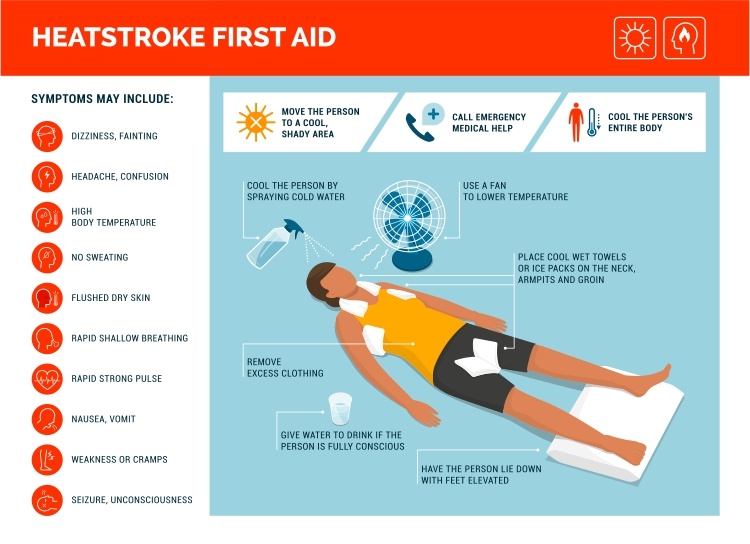
Most people will cool down and feel better in about half an hour. If they don’t – this may indicate heat stroke, which can have much more serious consequences. If suffering from heat stroke, you will have a very high temperature, hot skin that isn’t sweating and/or a rapid heartbeat. Many will also experience confusion, lack of coordination, seizures, or even loss of consciousness. If you suspect heat stroke, it’s important to seek emergency healthcare as soon as possible.
 Who is vulnerable?
Extremely hot weather can be a serious health risk, particularly to those most vulnerable. It’s important to take care of those who may be most affected and ensure they are able to keep cool. Older people, generally those over 75, are at particular risk of heat stroke, especially if they live alone. Those with a long-term health condition such as heart or lung issues, Parkinson’s, diabetes, or certain mental health problems are also at greater risk. If you or someone close to you is at particular risk during the hot weather, keep an eye out to make sure they can stay cool and access the support they need during hot periods.
Staying cool in the heat
While we all enjoy a bit of fun in the sun, it’s important to limit your time in the heat – particularly between 11am and 3pm when the sun is strongest. When you are outdoors, stick to low-intensity activities like walking or relaxing and be sure to wear light, loose clothing. If you prefer to exercise outdoors, stick to early morning and late evening to avoid exertion in the heat. Choosing cold food and drinks while avoiding alcohol and caffeine can also help you stay hydrated.
If you do experience difficulties, your pharmacist can help. Rehydration sachets like Dioralyte or Pedialyte or tablets like Nuun, which are mixed into water and drunk can help you stay hydrated, and your pharmacist can also advise on sports drinks like Gatorade or Powerade which boost your natural hydration during hot weather. If your cheeks are feeling flush, we can help with skin care like Thayer’s Witch Hazel toners and Limacol to see you through the hot spell, as well as the best SPFs like Coppertone, Panama Jack, or Alba Botanica brands with an SPF of at least 30 which protects both face and body from the sun’s rays.
If you’re concerned about yourself, a friend, or a family member during the summer months, you can always contact your pharmacist or GP – or if you suspect sunstroke, call 911 immediately.
Stephanie Simons is the head pharmacist at Lindo’s Pharmacy in Devonshire. She earned her Bachelor of Science in Pharmacy at Massachusetts College of Pharmacy and has been practicing for over 20 years. She is a registered pharmacist with the Bermuda Pharmacy Council and is a member of the Bermuda Pharmaceutical Association.