Oct 23, 2023

These cute marshmallow Krispie Monsters are a fun treat for Halloween.
Serve them on a platter, or pop them on a stick for easy snacking. Dip them in chocolate, or add sprinkles, or candy for fun variations.
INGREDIENTS
- 6 cups Kellogg’s Rice Krispies Cereal
- 6 tablespoons Salted Butter
- 6 cups Mini Marshmallows
- Food Coloring – green, purple, and black (or orange)
- Googly Candy Eyes – Large – get the recipe here.
DIRECTIONS
NOTE: You will have to make three batches of the Krispie Treats – one for each colour.
- Melt 1 tablespoon of the butter in the microwave in a microwave-safe bowl.
- Add the 2 cups of the marshmallows and microwave in 30-second increments (stirring in between each) until they are completely melted.
- Add 4 drops of the green food coloring. Stir until the marshmallow mixture is the green color that you desire.
- Gradually add in 2 cups of the Rice Krispies cereal. Mix until completely coated.
- Spread evenly into a large pan to cool slightly.
- Follow steps 1-5 two more times to make the black (or orange) and purple rice krispies.
- Allow the mixtures to cool at room temperature for about 30 minutes.
- Once cool enough to handle, using your hands, form the marshmallow Rice Krispies into small balls that are approximately 2 inches in diameter.
- Gently press the candy googly eyes into the side of the balls.
- Allow the monster treats to cool completely and then enjoy!
Oct 13, 2023


By Stephanie Simons,
Head Pharmacist,
Lindo’s Pharmacy in Devonshire
Breathing. It’s a simple thing, so natural we barely notice it – and yet we breathe in up to 30 thousand times a day! But for some people, this essential act can become difficult, and if this is the case, it’s time to think about your lungs.
October is Healthy Lung Month, a time for everyone to consider the health of their lungs. Many don’t consult their GP until symptoms are very concerning, but by keeping an eye on your lung health, you can catch any issues before they become serious.
What are lungs?
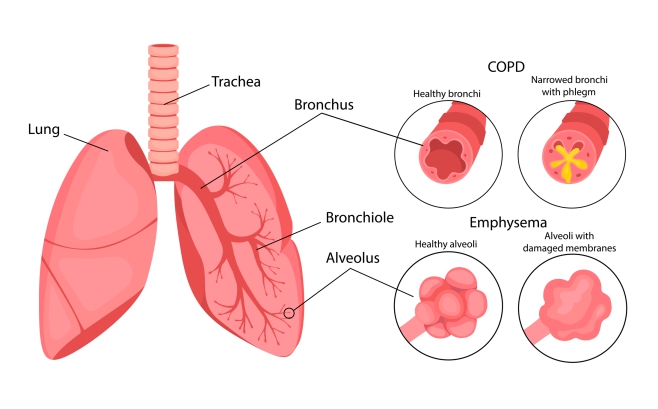
Your lungs are two organs that sit inside your chest, connected to your windpipe which brings air in and out as you breathe. Your windpipe or ‘trachea’ divides into smaller airways called bronchi inside the lungs which together make up the ‘bronchial tree’. Tiny airways called alveoli sit at the end of each airway and, to the naked eye, lungs look like a sponge.
Lung disease
Lung conditions include diseases that impact the airways, often blocking or narrowing the windpipe, such as asthma, bronchiolitis, and chronic obstructive pulmonary disease (COPD). Other diseases like pulmonary fibrosis and sarcoidosis impact the lung tissue itself, preventing the lungs from fully expanding – this can be caused by scarring or inflammation.
Diseases like pulmonary hypertension impact the blood vessels and circulation in the lungs and often impact the heart as well. Many lung conditions encompass several of these categories at once.
 How to maintain healthy lungs
Smoking cigarettes is the main cause of lung issues including lung cancer, COPD, and emphysema. By narrowing the air passages, it makes it more difficult to breathe, while smoke can also cause inflammation and/or swelling in the lungs, leading to chronic bronchitis.
Over time, these issues can destroy lung tissue and potentially trigger changes that lead to lung cancer. If you are looking to stop smoking, please speak to your pharmacist or GP who can offer support and advice to help you stop for good and recommend products like Nicorette Gum and lozenges, and Nicotinell patches which can be obtained without a prescription. If they have been ineffective, a prescription medication can be prescribed to ease the process.
That said, non-smokers can be impacted by lung disease too. Second-hand smoke, air pollution – both indoors and outside – mould and/or flu or pneumonia can also increase your risk of lung problems. Try to avoid people while they’re smoking and ask members of your household to smoke outdoors.
Where possible, you should also avoid outdoor areas with high air pollution such as roads with heavy traffic, and take precautions against viruses like the flu through vaccination, hand sanitiser like Germ-X, and keeping warm when out and about.
Regular exercise is key to maintaining healthy lungs. Aerobic activities work the heart muscle and lungs to help them function effectively – this could be walking, running, cycling, or jumping rope. Strength training is beneficial too – try weightlifting or Pilates to build your core strength and tone your breathing muscles. Exercise will help you maintain a healthy weight, which also supports healthy lungs and your well-being overall.
Even if you do have a lung condition, it’s still important to exercise. The right style and amount of exercise can help you feel better, even if only a short walk or some light stretching. Chat with your pharmacist or GP about what exercise could work for you while you manage or recover from your lung condition.
Check-in
It’s never too soon to check in about your lung health, especially if you’re over 60 and/or a smoker. Speak to your GP if you’re at all concerned, and head to the pharmacist if you’re encountering light symptoms – we can recommend OTC products like Sudafed or Mucinex which will help you breathe easy once more by clearing congestion in the nose or chest. Supplements such as Omega-3 fatty acids, CoQ10, Vitamin D, and Bromelain also support the immune system and help with lung health. Inhalers can also be used to help with breathing difficulties but must be prescribed by your doctor. If you want more support in managing asthma or COPD, please reach out to Open Airways at www.openairways.com.
Stephanie Simons is the head pharmacist at Lindo’s Pharmacy in Devonshire. She earned her Bachelor of Science in Pharmacy at Massachusetts College of Pharmacy and has been practicing for over 20 years. She is a registered pharmacist with the Bermuda Pharmacy Council and is a member of the Bermuda Pharmaceutical Association.
Sep 22, 2023
By Stephanie Simons,
Head Pharmacist,
Lindo’s Pharmacy in Devonshire
September can mean many things. Back to school. The start of fall. You might even see a festive advert or two! But September is also Urology Awareness Month. While perhaps less exciting, it’s a highly important time, especially because of the stigma that surrounds urological conditions.
Urology covers a wide range of conditions, across urological cancers, diseases, and infections. The discomfort or awkwardness many of us feel when discussing them can mean people don’t know what their symptoms mean or how to support a child or other family member who is struggling. However, it’s vital for our health that we understand these conditions and the impact they can have on our and others’ lives.
This year, Urology Awareness Month is focused on bladder health, specifically urinary tract infections (UTIs), urinary incontinence, and bladder cancer.
UTIs and incontinence
Both UTIs and urinary incontinence are more likely to affect women. Two-thirds of women and approximately 12% of men will have at least one UTI at some stage of their life, whilst urinary incontinence affects 13% of women and 5% of all men.
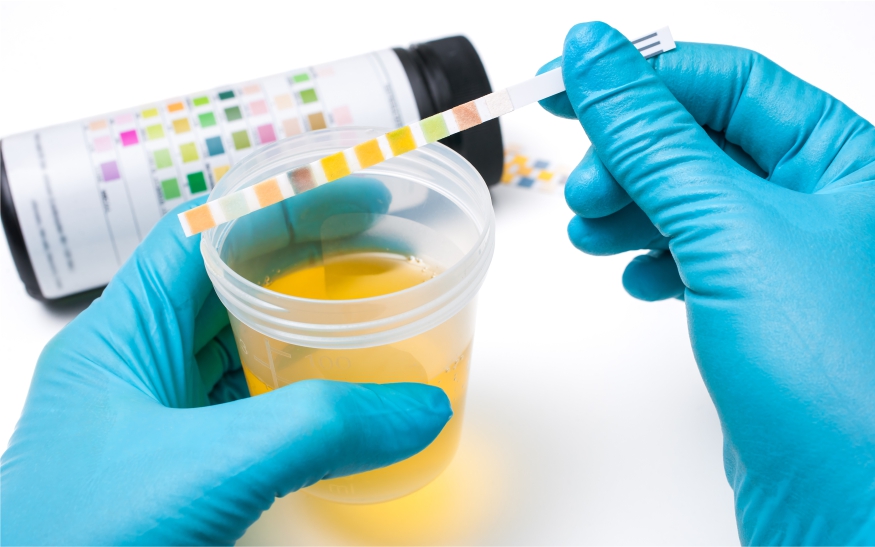
A UTI occurs when bacteria get into your urinary tract, bladder, or urethra, causing the lining to become red and irritated. This can cause burning pain when urinating, and/or the strong urge to urinate even when your bladder isn’t full. You may also experience lower abdomen or back pain. To lower your risk, ensure you drink plenty of fluids to stay hydrated and don’t put off urinating when you need to.
 You can ease the symptoms by using products containing sodium citrate or potassium citrate such as Cymalon or Care Cystitis Relief which reduce the acidity of your urine to help prevent burning or irritating sensations. Phenazopyridine can also help to reduce pain and the sense of urgency to urinate. You may also need antibiotics to combat the infection; speak to your pharmacist or GP for advice.
Like UTIs, incontinence impacts more women as they get older, due to lowering oestrogen levels. Childbirth, both caesarean and vaginal, also heighten risk, increasing with each additional baby. Older men, meanwhile, are also at higher risk of incontinence, especially those experiencing prostate issues. For both men and women, poor overall health can lead to incontinence, such as diabetes, high blood pressure, and smoking.
Many people suffer in silence, but incontinence can be treated – and there’s no need to be embarrassed. Your pharmacist or GP can help advise on lifestyle changes like reducing alcohol or caffeine intake, losing weight, pelvic floor exercises, or bladder training which can all significantly help. You may also find products like Poise or Depend pads or undergarments and Femfresh or Summer’s Eve wipes and washes to improve your daily experience.
Bladder cancer
Bladder cancer is the sixth most common cancer in the United States, impacting around 84,000 people every year. It affects three times more men than women, and results in nearly 17,000 deaths annually.
Bladder cancer is when cancer cells are found in the tissue that lines the inner surface of the bladder. As with many cancers, the quicker you are diagnosed the higher your chance of recovery. Look out for key symptoms such as blood in the urine, pain in your lower abdomen, lower back and/or when you pass urine, as well as frequent and urgent urination. These symptoms don’t necessarily mean you have cancer, but you should always consult your doctor if and when they arise.
Your risk of bladder cancer increases with age. Take note if anything ever feels strange or unfamiliar and keep up your regular check-ups with your GP. Smokers are also at higher risk – if you need support quitting smoking, speak to your pharmacist for advice, guidance, and useful products such as Nicorette or Nicotinell.
How we can help
We know it can be difficult to discuss urological issues. However, health professionals are more than happy to provide a safe and supportive space to explore your fears or symptoms and advise on next steps. Just ask your pharmacist for a quiet place to chat or book an appointment with your GP. Awareness of these issues could save lives.
Stephanie Simons is the head pharmacist at Lindo’s Pharmacy in Devonshire. She earned her Bachelor of Science in Pharmacy at Massachusetts College of Pharmacy and has been practicing for over 20 years. She is a registered pharmacist with the Bermuda Pharmacy Council and is a member of the Bermuda Pharmaceutical Association.
Sep 5, 2023

If you love cheese and bacon, you’ll definitely enjoy these Bacon Wrapped Pork Cutlets stuffed with cream cheese, sundried tomatoes, and spinach.
Prep time: 10 mins • Cook Time: 35 mins • Makes: 4 servings
INGREDIENTS
- 12 oz. bacon, center cut
- 2 lbs. boneless pork cutlets, or chops
- 8 oz. pkg. cream cheese, room temperature
- 1/2 teaspoon garlic powder
- 1/2 teaspoon onion powder
- 1 teaspoon salt
- 1/4 teaspoon black pepper
- 1/2 cup sundried tomatoes (packed in oil), cut into strips
- 1/2 cup baby spinach leaves
- toothpicks
DIRECTIONS
- Mix together the garlic powder, onion powder, salt, and pepper in a small bowl. Season pork cutlets with the mixture, on both sides. If you are using pork chops instead of cutlets, pound to about 1/4-inch thickness.
- Put cream cheese (1-2 tablespoons) onto the center of each flattened pork chop. Then layer strips of sundried tomato and baby spinach leaves over the cream cheese on each pork cutlet.
- Roll the pork cutlets closed.
- Wrap each pork cutlet win one or two pieces of bacon. Secure with a toothpick.
- Place pork cutlets seam-side down on a lightly greased baking dish. Bake for 30 minutes at 400°F.
- Broil for 5 minutes to crisp the bacon.
- Serve and enjoy!
Sep 5, 2023

Smoothies are a delicious go-to breakfast option or a nutritious anytime snack for kids. Packed with fruit, vegetables, and milk or yogurt, smoothies are full of vitamins and minerals.
Try these kid-friendly recipes!
Strawberry Banana Smoothie
Makes 1-2 servings
1 cup strawberries
1 banana
1 cup milk or milk substitute of choice
1 tablespoon peanut butter
Add ingredients together in a blender and blend until smooth.
Pina Colada Smoothie
Makes 2 servings
2 cups pineapple chunks
2 frozen bananas
½ cup vanilla Greek yogurt
2 tablespoons shredded coconut
1 ½ cups coconut milk
Add ingredients together in a blender and blend until smooth.
Mango Carrot Smoothie
Makes 2 servings
1 cup milk or milk substitute of choice
2 cups mango chunks (fresh or frozen)
¾ cup Greek yogurt
1 cup carrots, cut into 2-inch chunks
Add ingredients together in a blender and blend until smooth.
Triple Berry Smoothie
Makes 2 servings
1 cup raspberries or blackberries
1 cup blueberries
1/2 cup vanilla yogurt
1/2 cup frozen strawberries
1 cup sliced bananas
1 1/4 cup milk or milk substitute of choice
2-3 ice cubes
Add ingredients together in a blender and blend until smooth.
Apple Banana Smoothie
Makes 1-2 servings
1 cup applesauce, (preferably unsweetened)
dash of cinnamon
1 cup milk or milk substitute of choice
1 banana, cut into chunks
Add ingredients together in a blender and blend until smooth.
Orange Smoothie
Makes 1-2 servings
1 orange, peeled and separated
¾ cup sliced peaches
1 cup peach yogurt
½ cup ice cubes
Add ingredients together in a blender and blend until smooth.
NOTES:
- Add oat bran, almonds, flax seeds, kale, baby spinach leaves, or wheat germ for an extra burst of nutrition.
- For smoothies, frozen fruit is best. It blends up thicker than fresh fruit and gives you a really cold smoothie to enjoy after blending.
- Avocados, peanut or almond butter, and yogurt are great for thickening smoothies and add nutritional benefits like protein.
- Add a burst of flavour with fresh mint, vanilla extract, cinnamon, or honey.
Sep 5, 2023
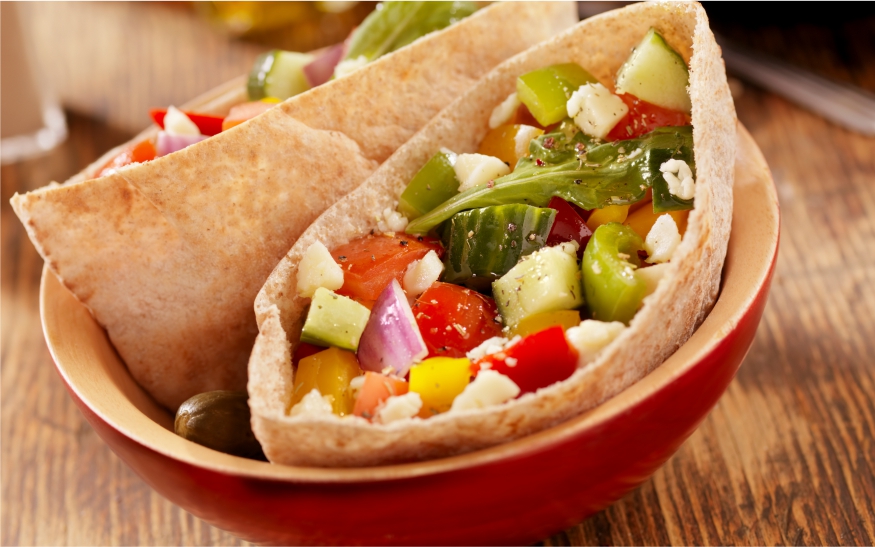
These pita pockets are crammed full of fresh vegetables.
Seasoned just right, they’re a great way to get your kids to eat more veggies!
Prep time: 15 mins • Makes: 4-6 servings
INGREDIENTS
-
- 1 pkg. spring mix salad
- 1 tomato, diced
- 1 small cucumber, diced
- 1 small red pepper, diced
- 1 small yellow pepper, diced
- 1/2 small red onion, diced
- 3/4 cup feta crumbles
- 2 tablespoons chopped fresh dill
- Pita bread, for serving
For the seasoning
- 1/4 cup olive oil
- 2 tablespoons red wine vinegar
- 1/2 teaspoon dried Italian seasoning
- 1/2 teaspoon salt
- 1/4 teaspoon black pepper
DIRECTIONS
- In a large bowl, add the dressing ingredients. Whisk until combined. Add the chopped salad ingredients to the bowl and stir until everything is mixed together.
- Spoon chopped salad mixture into pita bread.
Additions/Substitutions – Kalamata or black olives make a great addition. For added protein, include chickpeas, nuts, tuna, grilled chicken, or chopped egg.