October 3rd Specials

Vegetarians the world over are celebrating today. October 1st is the official World Vegetarian Day and kicks off an entire month of awareness campaigns and celebrations.
According to the Mayo Clinic, “a well-planned vegetarian diet is a healthy way to meet your nutritional needs”, whether it is Lacto, Ovo, Lacto-Ovo, or pure Vegan. Most people commonly believe that all dairy and meats are excluded from a vegetarian diet but it depends on which type of diet is preferred. There are some important differences as defined below:
Probably the most important key in a vegetarian diet is making sure you consume a nutritious and varied diet that includes all your daily recommended requirements. Because a strict vegetarian diet excludes dairy – an excellent source of calcium, and meats and poultry – which are good sources of vitamin B12, it is important to consume foods that can replace those sources.
Dark green leafy vegetables like kale, broccoli, and collard greens along with soy milk, soy yogurt, and vitamin-fortified cereals are an excellent alternative to dairy sources of calcium. Vitamin B12 is difficult to replace naturally as it is found almost exclusively in animal products. B12 is essential for building red blood cells, and a lack of this vitamin can lead to anemia and associated neurological effects. For this reason it is recommended vegetarians take a daily multivitamin and eat vitamin-fortified soy and cereals to avoid any deficiency.
Iron is also an important mineral that helps in building and maintaining red blood cells. Although there are numerous sources of vegetable-based sources of iron, such as legumes, whole grain products, and dark leafy vegetables such as spinach, vegetable sources of iron are not easily absorbed for use by the body. Again, it is recommended vegetarians take a multivitamin, eat fortified foods, and consume lots of fruits and vegetables containing large amounts of vitamin C which aids in absorption of iron.
Other important minerals and vitamins to ensure are included in a vegetarian’s diet are iodine, zinc, omega-3 fatty acids, and vitamin D. All can be replaced by natural plant sources, and Vitamin D is plentiful under Bermuda’s bright, sunny skies. Just make sure you get outside to soak it up!
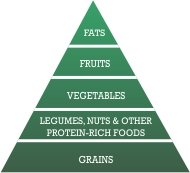 It is recommended that vegetarians eat 2 servings of fats, 2 servings of fruits, 4 servings of vegetables, 5 servings of legumes, nuts, and other protein-rich foods, in addition to 6 servings of grains to meet daily nutrition requirements.
Lindo’s is especially proud of our produce section, and believe it is second to none. We partner with local growers to bring you the freshest local produce, and where not we import from only the finest distributors in the U.S. With 2 servings of fruits, and 4 servings of vegetables recommended as part of a healthy vegetarian diet we’re confident that our produce department has your needs all wrapped up!
Remember, a vegetarian diet doesn’t have to be bland and boring. Most vegetarians enjoy a variety of delicious meals. Try sourcing interesting recipes from bookstores or online, and especially try different ethnic recipes. Some cultures naturally consume more fruits, grains, legumes, whole grains and vegetables in their diets and you may find their recipes to be excellent sources for flavourful, satisfying dishes for you to try and enjoy.



The feel good song “Walking on Sunshine” was originally performed by 80’s pop stars Katrina and the Waves, and we think it is appropriate because helping the environment sure makes us “feel good”! There’s nothing more satisfying than knowing we have contributed a little bit to reducing our carbon footprint.
In May 2011, Lindo’s Group of Companies installed a photovoltaic (PV) system on the roof of our Devonshire store in an effort to reduce the environmental impacts of fossil fuel consumption. The project, undertaken by Alternative Energy Systems (AES) (Bermuda) Ltd, primarily focused on the long-term environmental benefits of harnessing the power of the sun, and to date those benefits are already adding up!
“The results are what we were hoping to achieve, in terms of what we could do for the environment” – Zach Moniz, Manager Lindo’s Family Foods
In the past 12 months, the 141,116 kWh of renewable energy produced by our solar power system has improved air quality by avoiding carbon dioxide emissions by an estimated 223,374 pounds, nitrogen oxide emissions by 360.55 pounds, and sulfur dioxide by 832.73 pounds – all are harmful gases that contribute to global warming. The savings also add up in reducing environmental impacts. Our system conserved approximately 2,598 trees (grown for 10 years), saved 233,331 car miles not driven, and conserved crude oil by 273 barrels.
Each 100 kWh generated by our photovoltaic system conserves 1.8410 trees, 165.3467 miles not driven, 0.1936 barrels of crude oil, and avoids 158.2947 pounds of carbon dioxide emissions, 0.2555 pounds of nitrogen oxide emissions, and 0.5901 pounds of sulfur dioxide emissions.
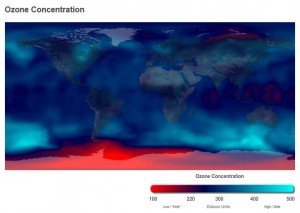
Real-time data imagery of ozone concentrations from NOAA – September 24, 2012.
DID YOU KNOW? The process of burning fossil fuels releases a variety of gases and particulates. In any combustion, carbon dioxide (CO2) and water (H2O) are released, but when fuels containing nitrogen are burned (such as fossil fuels), nitrogen dioxide (NO2) is also released. Nitrogen dioxide is a toxic compound, often associated with an orange-brown color, and is a major air pollutant, especially in industrial areas. In the lower atmosphere (the troposphere), NO2 is responsible for the formation of ozone (O3). While stratospheric O3 (upper atmosphere) protects the Earth from harmful ultraviolet energy, tropospheric O3 causes many health and breathing difficulties. The National Oceanic and Atmospheric Administration (NOAA) monitors global NO2 concentration using the GOME-2 sensor onboard the MetOp-A satellite launched by the European Space Agency. To view real-time images of the Earth’s ozone concentrations and other climate data click here.