Jul 19, 2016

By Stephanie Simons,
Head Pharmacist,
Lindo’s Pharmacy in Devonshire
As summer in Bermuda continues, with temperatures regularly in the 80’s, we are able to enjoy the many outdoor activities that our climate allows, including tennis, golf, gardening or simply taking a walk on our lunchtime break. While these activities benefit our minds and bodies, the risk of dehydration increases, especially for the younger and senior members of our population.
Dehydration takes hold when our bodies lose more fluid that they take in. You may have heard the recommendation to drink eight glasses of water a day, but the actual amount of fluids that you need to consume could be more, depending on your lifestyle, health and environment.
Why We Need to Hydrate
Our systems (skeletal, nervous, cardiovascular, endocrine and muscular, and integumentary – skin and its appendages) depend on water to function. Water also serves to flush toxins from our organs, which are comprised mostly of water, and also helps carry nutrients to cells.
In hot and humid weather, and when we are exercising, our bodies may sweat more than normal. During our humid Bermuda summers, it is difficult for sweat to evaporate and cool us off, thereby increasing our body temperature. When we breathe, sweat and urinate, we lose water. We also lose fluids when we are ill, especially when suffering from fever, vomiting or diarrhoea.
Higher Risk for Dehydration
Infants and young children, pregnant and breastfeeding mothers, and older adults need to be especially cautious of their fluid intake, as they can become dehydrated quickly, wit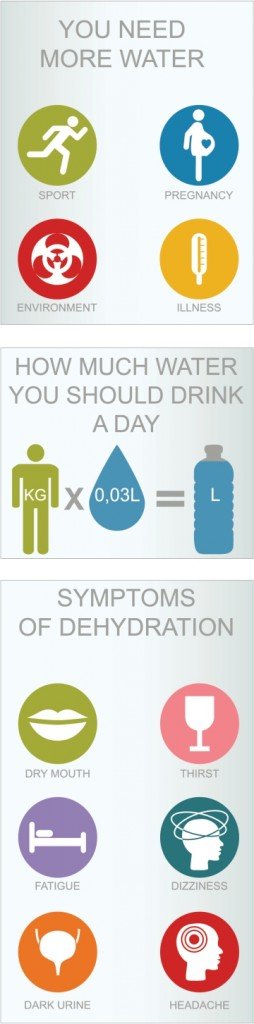 h potentially serious outcomes.
As we age, the water content in our body decreases, as does our sense of thirst. People who have incontinence or mobility issues may be inclined to reduce their fluid intake, without knowing how quickly their bodies can become dehydrated.
Symptoms of Dehydration
Mild to moderate symptoms of dehydration include a dry mouth, fatigue, thirst, dry skin, headache, constipation and dizziness. In infants and toddlers, fewer wet diapers is a common indicator.
Severe dehydration shows itself with sunken eyes, extreme thirst, rapid heartbeat and breathing, fever and low blood pressure. Infants may be extremely fussy and the soft spots on their heads may appear shrunken in. Senior citizens may become very confused and irritable.
The most straightforward way to know if someone is dehydrated is to consider the colour of his or her urine. If it is pale or clear, he or she is likely well-hydrated. If the amount of urine output has significantly decreased, or if it is dark yellow or amber, dehydration may be to blame.
Water Isn’t the Only Option
Regardless of how fluids are lost, it is important that we compensate for the loss, and rehydrate.
Most fluids will help hydrate our bodies, including milk, juice, tea and coffee; however, the additional calories, caffeine and sugar may not be desirable. Caffeine has a diuretic effect, so watch the amounts of tea and coffee consumed as they can actually cause you to become dehydrated. For optimal hydration, opt for low sugar, low sodium beverages.
Coconut water has become a popular beverage in Bermuda, with brands including Vita Coco Coconut Water, Coco Libre and Harvest Bay Flavoured Coconut Water. Coconut water has natural electrolytes (including potassium, sodium and magnesium) but the actual amounts will vary by brand. This beverage may be a consideration for those who do not like plain water, but want to consume less sugar that what is found in most sports drinks.
For those of us on the go, a reusable water bottle may be the best choice. Rubbermaid Filler Fresh Water Bottles come equipped with a built in filter and are designed to remove chlorine.
Hydration can also be achieved through consuming common fruits and vegetables with high water content. Watermelon, cucumber, lettuce and spinach, celery, tomatoes, cauliflower, strawberries and broccoli are all comprised of at least 90% water.
In some cases, health professionals may recommend rehydrating with sports drinks such as Gatorade and Powerade, or an oral rehydration solution (such as Dioralyte, Pedialyte and Nuun) following extreme exercise or when suffering from certain health conditions.
As with many health issues, preventing dehydration may be easier than recovering from it. When the weather is warmer and more humid, or when activity levels will be higher, plan to consume more fluids and snack on fruits and vegetables with high water contents.
Stephanie Simons is the head pharmacist at Lindo’s Pharmacy in Devonshire. She earned her Bachelor of Science in Pharmacy at Massachusetts College of Pharmacy and has been practicing for over 20 years. She is a registered pharmacist with the Bermuda Pharmacy Council and is a member of the Bermuda Pharmaceutical Association.
Jun 1, 2016

By Stephanie Simons,
Head Pharmacist,
Lindo’s Pharmacy in Devonshire
Bermudians are travellers. We like to get off the Island and explore the world. But the disruption to routine; change in diet, drinking water and climate; different sleep patterns; and new activities can all contribute to possible health issues. Whether you are returning to favourite haunts or discovering new lands, you don’t want to get sick, and there are some simple ways to protect against common travel illnesses.
Before you leave, stay healthy, exercise regularly, eat a balanced diet and get plenty rest. If there will be a time change at your destination, try to gradually shift your schedule to match it.

Research your destination to find out what travel immunizations you should get and what vaccine-preventable diseases you should prepare for.
If you will be visiting a country that requires vaccinations, ensure that you get them in plenty of time. Check the Bermuda Government website at gov.bm/health-clinics-bermuda or call 278-6460 or 278-6461 for more information regarding any required vaccinations for the area you are visiting and when they need to be gotten. There is also a trip planning questionnaire that can be downloaded and completed before your visit to the travel clinic.
Travel from Bermuda often requires at least one flight. In the air, drink plenty of water, eat regularly and avoid alcohol, caffeine or large meals. If you are on a long flight, get up and walk around the plane every hour or two to prevent blood clots.
If your trip takes you across several time zones, you could suffer from fatigue, poor concentration, disturbed sleep, an overall feeling of unwell and even diarrhea or constipation due to jet lag. These symptoms can last for several days: up to one day for every hour difference in time. To avoid having jet lag ruin your plans, adjust your meals and sleep schedule to local time as soon as you arrive. Exercise, eat healthy foods and drink plenty of water. Take a hot, relaxing bath before bed and sleep in a dark and quiet room. If sleep is still a problem, taking melatonin one to two hours before bed can help.
Those who suffer from motion sickness know that it can make travel miserable. If you are prone to motion sickness, move your head as little as possible during travel, don’t eat or drink and avoid reading or watching videos. On a plane, try to sit over the wings; if you are on a cruise, try to get a central cabin; sit in the front seat in a car. Many travellers find that a scopolamine patch placed behind the ear helps to limit the effects of motion sickness. Other remedies include Gravol or other anti-nausea medication, including natural ginger tablets. Some people find that acupressure wristbands can help to ease symptoms.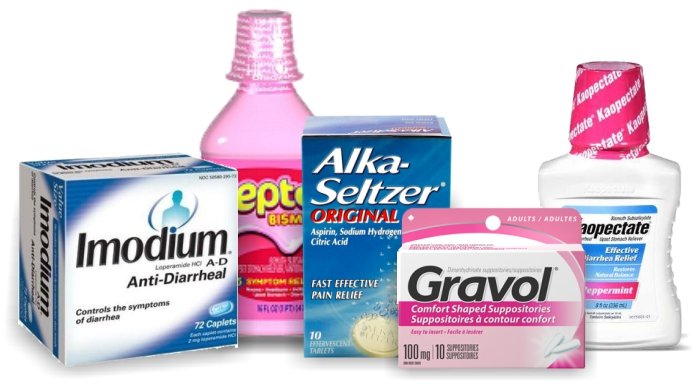 According to the CDC, traveller’s diarrhea is the top travel related illness around the world and affects up to half of all travellers. Fortunately, it is also avoidable. Avoid tap water and ice; canned or bottled drinks are the safest bet. Food should be fresh, fully cooked and eaten hot. Don’t purchase food from street vendors and never eat raw or undercooked meat or seafood. Peel fruits and vegetables yourself. And always keep hands clean with soap and water or an alcohol-based sanitizer, and keep hands away from your face and mouth.
Despite your best efforts you could still get diarrhea, so pack an antidiarrheal medicine such as Imodium, Kaopectate or Pepto-Bismol just to be safe.
Before you leave, throw a few other items into your suitcase that could help to keep you comfortable while away from home: an antihistamine, like Benadryl or Piriton; a hydrocortisone cream such as Cortizone-10; a pain reliever like Advil, Tylenol or Aspirin; a laxative such as Metamucil or Dulcolax; sunscreen; insect repellant with DEET; antacids; and eye drops are a few common travel items.
As you take to the road this summer, take some easy precautions to avoid becoming ill. Stay healthy while you wander the globe and have fun! Bon voyage!
Stephanie Simons is the head pharmacist at Lindo’s Pharmacy in Devonshire. She earned her Bachelor of Science in Pharmacy at Massachusetts College of Pharmacy and has been practicing for over 20 years. She is a registered pharmacist with the Bermuda Pharmacy Council and is a member of the Bermuda Pharmaceutical Association.
May 9, 2016
By Stephanie Simons,
Head Pharmacist,
Lindo’s Pharmacy in Devonshire
First aid is the act of helping a person who has become suddenly sick or injured. We will all require – or administer – first aid at some point: it’s part of life’s unexpected bumps and scrapes along the way.
Anyone is able to give first aid. In fact, the majority of those who help with first aid are simply people who happen to be nearby.

Serious injuries require medical assistance. Dial 911 for assistance.
The best way to approach first aid is to stop, take a deep breath and assess the situation. Do not put yourself in danger, and if the injured or ill person is in danger, remove them if they can be moved. Always wash your hands before and after giving first aid and wear gloves if available.
Serious injuries require medical assistance but there are many common injuries that can be treated with basic first aid.
Cuts and scrapes
Apply pressure with a clean cloth or dressing to stop the bleeding. Once bleeding stops, clean the wound and remove any debris with tweezers. Apply an antibiotic such as Neosporin or Polysporin and cover with a bandage.
Stings
Provided the person is not allergic to an insect sting, simply remove the stinger by scraping across the skin with a fingernail or credit card. Stings from plants such as poison ivy require immediate and thorough washing. As a rash appears, apply a cold compress to alleviate discomfort and administer antihistamine such as Benadryl or Piriton. For both plant and insect stings, apply Calamine lotion or hydrocortisone cream such as Cortizone-10 or a generic Hydrocortisone Cream to the site.
Burns
Immediately hold a burn under cool running water, or apply a cool, wet cloth. Cover blisters with a loose gauze. Do not break blisters; if they break on their own, apply an antibiotic cream like Polysporin.
Shock
An injured person might show signs of shock, such as pale, clammy skin, rapid breathing, dizziness or nausea or vomiting. If you suspect a person might be in shock, lay them down and elevate their legs. Keep the person still, loosen their clothing and cover with a blanket. Stay with them until help arrives.
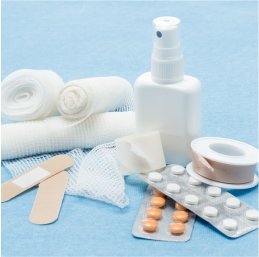
A well-stocked first aid kit is a necessity.
An important tool in first aid is a properly equipped first aid kit. For personal use, a first aid kit should be kept at home, in the car, on your boat or anywhere else you spend time. Also be aware of where first aid kits are stored at work, your gym or other places you regularly visit. And keep one in your suitcase for travel.
It is easy and inexpensive to assemble your own first aid kit. Use any bag that will allow items to be visible and easily accessible, such as a make-up bag or a clear plastic container with a lid. Sort items according to type and organize in re-sealable plastic bags. A first aid kit should contain at least the following items:
- Adhesive and non-stick bandages in various sizes
- Sterile gauze pads in various sizes
- Adhesive first aid tape – waterproof or cloth
- Tweezers to remove dirt, splinters or thorns
- Antiseptic wipes or spray, such as Bactine or Dettol
- Hydrocortisone cream and antibiotic cream such as Neosporin, Polysporin
- Pain relievers such as Ibuprofen (Advil), Acetaminophen (Tylenol) or Aspirin (do not give Aspirin to children)
- Thermometer
- Antihistamines like Benadryl, Piriton or Claritin for allergic reactions
- Absorbent compress dressings
- Elasticized (Ace) bandage for support for sprains
- Instant cold compress (or, if at home, an ice pack in the freezer)
If family members have specific needs such as prescribed medication, store that in the kit as well. Other good additions are a flashlight, latex or rubber gloves and hand sanitizer. Check your kit every six months for expiration dates.
With any luck, your first aid kit will sit untouched. But when mishaps occur, a properly stocked kit and some basic first aid knowledge can come to the rescue.
Stephanie Simons is the head pharmacist at Lindo’s Pharmacy in Devonshire. She earned her Bachelor of Science in Pharmacy at Massachusetts College of Pharmacy and has been practicing for over 20 years. She is a registered pharmacist with the Bermuda Pharmacy Council and is a member of the Bermuda Pharmaceutical Association.
Apr 11, 2016
By Stephanie Simons,
Head Pharmacist,
Lindo’s Pharmacy in Devonshire
Spring is officially here, bringing us longer days, warmer weather, fragrant flowers, and those dreaded seasonal allergies. Itchy, watery, red eyes, sneezing, itchy throat, congestion and a runny nose are just a few of the symptoms that those with seasonal allergies may suffer from at this time of the year. The good news is that the symptoms are manageable, so to keep the ‘spring’ in your step let’s look at what can cause these allergies, and how we can all nip them in the bud.
What Causes Seasonal Allergies?
Seasonal allergies, also known as hay fever and allergic rhinitis, typically occur between March and May. They are caused by triggers or allergens that are carried in the air. Grass, pollen and mold are the most common causes, but in Bermuda, the main culprits at this time of the year are cedar trees, casuarina trees, rye grass and Bermuda grass. The reason that these plants can cause allergies to flare up is because of the way that they reproduce. Instead of relying on birds and insects to carry their pollen, they produce large amounts of tiny, wind-borne pollen.
The island’s warm and humid climate is also the perfect breeding ground for mold. Much like pollen, outdoor mold spores release into the air. Once airborne, the pollen and mold spores can get into our eyes, noses, skin, clothes, and into our houses. Keep in mind that pollen counts thrive during cool nights, warm days, and after rainfall. (more…)
Mar 7, 2016
By Stephanie Simons,
Head Pharmacist,
Lindo’s Pharmacy in Devonshire
It’s March, which means that it is National Nutrition Month. It’s a great time to focus on ways that you can ensure you are getting the daily nutrients you need and more for optimal health.
However, this month brings awareness to much more than what we should and shouldn’t eat. Let’s break it down with some top tips to combine good nutrition and a healthy lifestyle.
Get outside more.
The weather is warming up now and we are gearing up for summer. If you have been inside most of the winter, or if you have a job that keeps you in an office all day, it’s time to get yourself outside to enjoy some of Bermuda’s national parks.
Take a bike ride or a walk along the railway trails, feel the sand between your toes at a beach you haven’t been to in a while, explore Tom Moore’s jungle or climb the lighthouse for a spectacular view of our island.
Adults should aim for 30 minutes of moderate-intense activity five times per week. If you are busy, you can spread it out throughout the day by doing ten minutes at a time. Lunch breaks are the perfect excuse for a walk, or even a few light stretches to ease any tension from sitting at a desk.
Fitness events are a great way to get motivated. The Lindo’s to Lindo’s 5K run and 4-mile walk is coming up on Sunday, March 13. For more information on how to sign-up, visit the Lindo’s website: https://lindos.bm/lindos-10k-run-4-mile-walk-2016/.
Take a break.
Did you know that how, when, why and where you eat are just as important as what you eat? Take the time to enjoy your surroundings while you eat, and you will enjoy your food even more. At times it is impossible to avoid eating on-the-go, but generally you should avoid multitasking while you eat. (more…)
Feb 8, 2016
By Stephanie Simons,
Head Pharmacist,
Lindo’s Pharmacy in Devonshire
February is Oral Health month, a month set aside to spread awareness of chronic mouth pain, throat cancer, oral sores, birth defects of the lip and palate, gum disease, tooth decay and all other diseases relating to the oral cavity. Clearly, oral health includes a variety of ailments. In this article, I will focus on the things we all can do to improve our oral health, in an effort to stave off disease.
Cavities
Perhaps the most well-known and most prevalent oral ailment is a cavity. Cavity is a term for tooth decay, which results from bacteria. The mouth is commonly filled with bacteria that mix with saliva to form plaque on the teeth. Plaque is removed by brushing your teeth, but in the event that it is not removed, the acids in plaque damage the enamel protecting the teeth. This can create holes in the teeth, known as cavities, which lead to tooth decay.
Symptoms
Cavities are visible to the eye and range from yellow to black. Small cavities may not hurt, but large ones, especially those affecting nerves, are painful. Cavities are diagnosed by a dentist, which is why regular visits to a dental hygienist is important.
Prevention
Diet plays a role in oral health. Having a well-balanced diet helps prevent tooth decay. As importantly, decreasing your sugar intake will help avoid the formation of cavities. Likewise, sticky foods are more harmful as they remain on the teeth longer. However, dental cavities can be prevented by regularly brushing and flossing, and using toothpaste with fluoride.
Treatment
Treatment for cavities require a visit to the dentist and include fillings, crowns and/or root canals. Fillings, as the name implies, involves removing all decay from the tooth with a drill and filling the space, for example with gold, silver alloy or porcelain. Crowns, also known as caps, are used in more serious cases where the majority of the tooth is weak. Here, a fitted crown or cap, usually made of gold or porcelain, is placed over the teeth. For cavities that result in nerve injury or decay, a root canal is required. This involves removing the centre of the tooth, including the nerve and filling the root with a sealing material. Root canals often are accompanied by crowns. (more…)