Apr 8, 2025
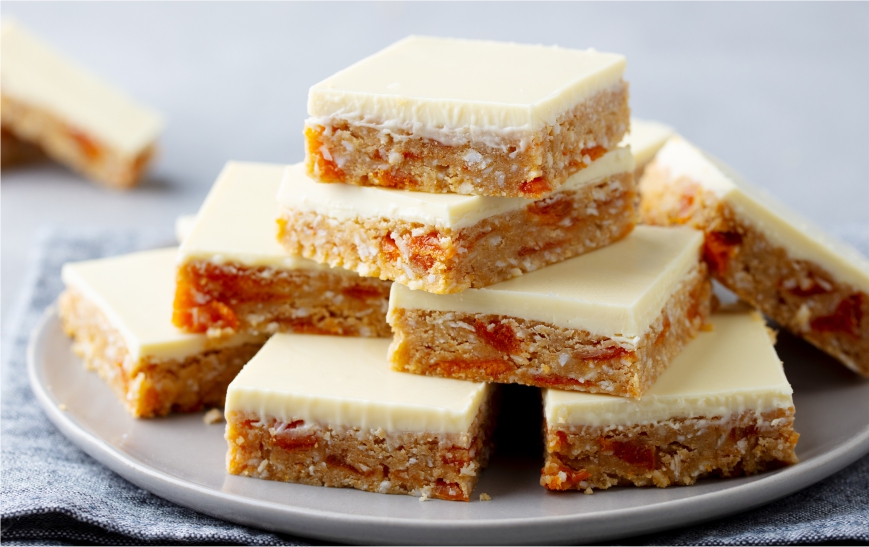
These delicious, chewy bars are filled with dried apricots, oats, and coconut and topped with a white chocolate buttercream frosting.
Prep time: 15 minutes • Cook Time: 25 mins • Total Time: 40 mins • Makes: 20 bars
INGREDIENTS
- 1 cup quick oats
- 1 cup all-purpose flour
- 2/3 cup brown sugar
- 2/3 cup flaked coconut
- 1/2 butter, chopped
- 2 tablespoons light corn syrup
- 2 tablespoons water
- 1/2 teaspoon baking soda
- 1/2 cup dried apricots chopped
White Chocolate Frosting
- 6 ounces white chocolate, chopped
- 1 cup unsalted butter, softened
- 3 1/2 to 4 1/2 cups icing sugar
- 2 to 4 tablespoons heavy cream
- 1 teaspoon pure vanilla extract
DIRECTIONS
- Preheat oven to 325°F.
- Grease and line a 8″ X 11″ baking pan with baking/parchment paper and set aside.
- Combine the rolled oats, plain flour, brown sugar and coconut in a bowl.
- Place the butter, corn syrup and water in a microwave-safe bowl. Microwave in 30 second bursts, stirring each time, until melted. Stir in the baking soda.
- Stir the butter mixture into the oat mixture. Allow to cool slightly.
- Fold in the chopped dried apricots.
- Place the mixture into the baking pan and press down firmly.
- Bake for approximately 25 minutes or until lightly golden brown.
- Leave in the baking tray to cool for 10 minutes before transferring to a wire rack to cool completely.
- When cooled completely, frost with the white chocolate frosting, then refrigerate for 2 hours before slicing.
For the Frosting
- Place the white chocolate in a microwave-safe bowl and heat 30 seconds at a time, stirring between each 30 seconds, until melted. Set aside to cool.
- Using an electric mixer, beat butter on medium-low speed until smooth and creamy, about 1 minute.
- Add the 3 ½ cups of icing sugar, 2 tablespoons of cream, and vanilla. Begin mixing on low speed until the ingredients come together – scraping the bowl occasionally.
- Add the melted white chocolate and mix until smooth.
- Add in the last cup of powdered sugar, a ½ cup at a time, and gradually turn up the speed of the mixer. Mix at medium speed for 2 to 4 minutes, until the buttercream begins to thicken and get fluffy. If needed, add the additional cream until desired consistency is achieved.
Mar 11, 2025

By Stephanie Simons,
Head Pharmacist,
Lindo’s Pharmacy in Devonshire
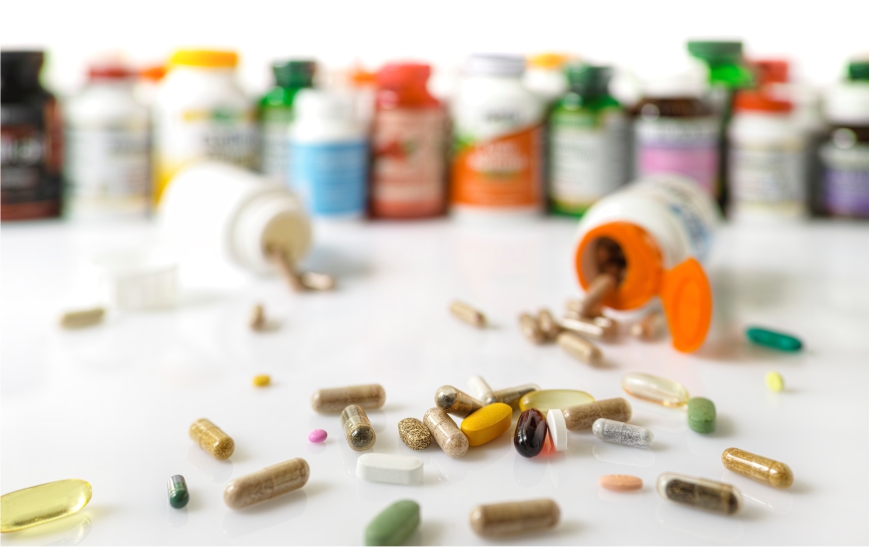
I’m sure we’ve all been encouraged (or ordered) at some point in our lives to: ‘Take your vitamins!’ And we’ve probably told our own children the same thing. Not to boast, but you may have noticed that we have a pretty impressive range of supplements in our pharmacy corner.
But what, exactly, do we know about these essential nutrients?
THEY’RE NEWER THAN YOU THINK…
The first vitamin pills first started popping up on pharmacy shelves from around 1916. One of the leading brands was Mastin’s Yeast Vitamon Tablets – which contained vitamins A, B, C, Calcium, Iron and ‘Nux Vomica’. Which sounds kind of scary – and was. A homeopathic remedy for heartburn, it was made from the seeds of the strychnine tree. Yes, that strychnine.
THE VITAMIN STAKES…
There were plenty of scientists who might claim to have discovered vitamins: a Japanese professor of agricultural chemistry called Umetaro Suzuki; an Englishman called Sir Frederick Gowland Hopkins and a Dutch doctor called Christiaan Eijkman.
But the ‘father’ of the vitamin is generally considered to be a Polish biochemist called Kazimierz Funk, who was born in Warsaw in 1884. Maybe because, in 1912, he came up with the name.
The son of two doctors – and Jewish (which helps to explain why he wound up relocating permanently to America in the 1940s) – he had hip dysplasia as a child. But there was nothing wrong with his brain: he set off for university in Switzerland at 16 and graduated with a PhD in organic chemistry at 20.
CHICKEN AND RICE…
In the early 1900s, Funk became fascinated by the work of Christiaan Eijkman.
The Dutchman, who was 26 years older than Funk, had been trying to find the ‘toxin’ responsible for beriberi – a common disease at the time which caused nerve damage and heart failure.
He did experiments on chickens, exposing them to the disease (don’t ask how) and sure enough, they all died. But when he got a new batch, and changed their diet, a strange thing happened. The chickens that ate white rice died. Again. But the ones that ate brown rice did not. And when some sick birds were given brown rice, they got better.
FUNK FOLLOWS THE TRAIL…
Picking up the beriberi baton, Funk did his own experiments – this time on pigeons. With the same results.
But unlike Eijkman (who remained fixated on the toxin theory), Funk began to think that beriberi was a ‘deficiency disease’. Something in the brown rice was protecting the birds; and its absence was making them sick.
In 1912, in a lab in London, Funk (who by this time had anglicised his name to ‘Casimir) found that something. He called it a ‘vitamine’: a mash-up of ‘vital’ and ‘amine’ (the name of a compound containing nitrogen).
Funk believed his ‘vitamine’ was B1 (thiamine). Turns out it was actually B3 (niacin). Which doesn’t cure beriberi. And isn’t an amine. But never mind: vitamin research was underway. And when it became obvious that not all vitamines were ‘amines’, that final ‘e’ was quietly dropped and they became plain old vitamins.
THE GANG’S ALL HERE… 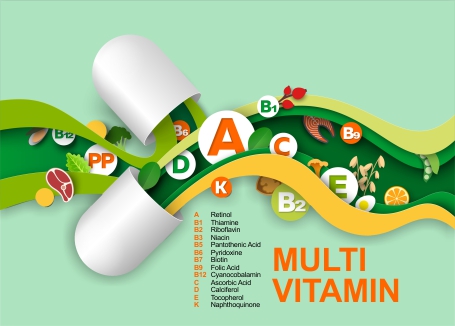
By 1948, the last of the ‘essential’ vitamins had been discovered. There are 13 in all: A, C, D, E and K – plus eight B vitamins. They were named roughly in order of discovery (though some of the Bs came limping in later, with B12 bringing up the rear).
Vitamin K is out of step because when scientists realised it was involved in blood clotting, they gave it the German name for coagulation (‘koagulation’). Which is lucky, since vitamin C was already taken.
VITAMANIA…
By the early 1940s, vitamins and supplements were not just on the scene – they were becoming household staples. Magazines like Good Housekeeping were promoting them. Advertisers extolled their powers (‘sunshine in a bottle!’) – and even President Franklin Delano Roosevelt got on the bandwagon. Concerned about the weediness of many GIs enlisting for service in the war in Europe, he encouraged awareness of the benefits of a balanced diet, including vitamins. Like most fads, it went too far – and in 1942 the term Vitamania was coined to describe the fashion for relying on pills and potions rather than good food, to stay healthy.
YUMMY GUMMIES…
The holy grail for vitamin manufacturers was to find some way of making their pills palatable.
Chewable vitamins arrived in the late 1960s – most popularly in the form of the Flintstones multivitamins. They looked cute but still tasted a bit meh.
The first gummy vitamins – Yummi Bears – were invented in 1997. Inspired by the Haribo Gummy Bears (created by German confectioners in Bonn in 1922), they were initially made with gelatine. But because that uses pig skin, the recipe was later tweaked – for ethical and dietary reasons – to use pectin instead.
Gummies were a game changer – so much so that today, they are the main way that Americans aged 35 and under get the vitamins, minerals and supplements they require. So, take your vitamins. And be glad your recommended daily allowance does not include Nux Vomica.
Stephanie Simons is the head pharmacist at Lindo’s Pharmacy in Devonshire. She earned her Bachelor of Science in Pharmacy at Massachusetts College of Pharmacy and has been practicing for over 20 years. She is a registered pharmacist with the Bermuda Pharmacy Council and is a member of the Bermuda Pharmaceutical Association.
Feb 14, 2025
By Stephanie Simons,
Head Pharmacist,
Lindo’s Pharmacy in Devonshire
Do you ever see something and think: ‘That does my heart good!’ Maybe it’s just an everyday sight – a particularly peachy sunset. Or a photo of loved ones, shared on social media. Or maybe witnessing a random act of kindness. Often, these moments occur when we stop and take the time to notice what’s going on around us. And they can make us feel irrationally but blissfully happy.
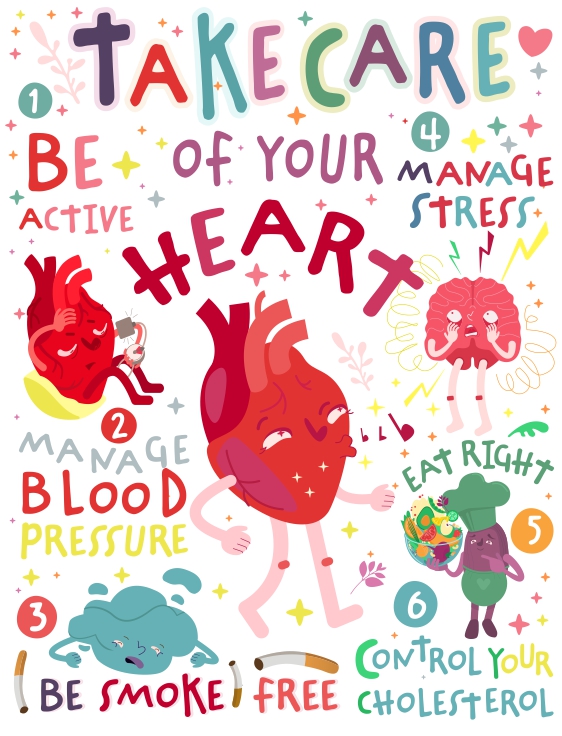 But what if we thought about it literally, rather than metaphorically? What does your heart good, in the medical sense? It seems a fitting question in February, which is international Heart Health month. And you’ll be pleased to know that there are some very easy things you can do to help your ticker…
DIET
One of the main ways to improve your heart health is to improve your diet. Are you getting enough of the good stuff? Like fish – which is full of Omega-3 oil. Medical experts recommend two helpings of fish a week. Preferably oily ones (like tuna, mackerel or sardines). We stock fresh fish in our supermarket – but tinned is good, too.
We also stock Omega 3 supplements – in case fish is not your dish – but talk to one of our helpful pharmacists about whether they are suitable for you. Some folks (those allergic to shellfish, for instance, and pregnant women) should not be taking them. There are also plant-based Omega-3 products as alternatives.
Nuts are also a great source of good fats and fibre – and hence a perfect heart healthy snack. But remember to keep those portions small. Just a handful. And avoid salty processed nuts (dry roasted, honey roasted). Plain roasted ones are best.
Finally – don’t faint – but dark chocolate could be your heart’s friend. Not just any old chocolate. It’s got to be at least 70 per cent cocoa content; and not full of sugar or other heart unhealthy bits (toffee!). Again, you’ll have to exercise some restraint. Doctors recommend 1-2 ounces a day. A morsel, not a mountain.
EXERCISE
Regular, gentle exercise is good for your heart, whatever your age. Nobody is saying you have to take up jogging at 92, but why not try to incorporate a bit more exercise into your daily routine? Take the stairs at the office, instead of the elevator. If it’s safe to do so (as in, there is a sidewalk or verge) get off the bus one stop earlier and walk a little bit further. Or take the first parking space you see, rather than aiming for the one right outside the door. Not only will you do your heart a favour; you may also see things you miss, when you’re stuck in traffic. Things that will lift your heart!
STOP SMOKING
We’ve been here before. If you don’t know by now that smoking is bad for just about every bit of your body, you’ve really not been paying attention.
But clearly the problem is that for most smokers, it’s not a lifestyle choice, but an addiction.
If you want to stop – and have tried and failed before – talk to your GP about how you can wean yourself off the habit. Or talk to one of our pharmacists. We stock a number of products that can help you in your fight.
LIMIT YOUR DRINKING
We have just escaped the clutches of Dry January. And unless you are planning to follow that with giving up alcohol for Lent – a rare double – you’ll no doubt be raising a glass to getting back to ‘normal’.
But like smoking, we all know that even ‘normal’ moderate drinking is not great for our health.
If you are determined to drink, why not think about replacing that Dark & Stormy, or bottle of beer, with a medium glass of red wine?
Studies have shown that in controlled amounts, red wine can help to lower sugar levels in your blood, and reduce cholesterol, too. Both good developments for your heart. There are conditions, though. Having a glass of red wine with a meal is better for you than having one on its own. Just saying.
LOOK AFTER YOUR TEETH!
Weird as it sounds, good oral care can also help your heart stay healthy. Many medical studies have shown that people with poor oral health – gum disease, for instance – have much higher rates of cardiovascular disease. Doctors are still trying to figure out why this might be. One theory is that bacteria from your mouth can travel through the bloodstream to your heart, and cause issues there. Whatever the reason, though, it makes sense to look after your teeth and gums. Make sure you like your toothbrush! We’ve got a large selection to choose from. Ditto your toothpaste. And don’t forget the dental floss – a major weapon in the fight against gum disease.
BE MORE CHILL
Yes, it’s an annoying expression, but the idea is a good one. Keeping stress levels low is a good way to look after your ticker, because stress – as the name suggests – puts strain on your heart. There are some easy ways to do this. Yoga, or mindfulness, is one. But if that’s a bit hippy dippy for you, what about a walk? Some bits of Bermuda are not designed for walking – and you don’t want to help your heart and wind up in ER after being clipped by a car. But we do have some lovely parks and nature reserves where you could spend a happy (and healthy) 20 minutes stretching your legs and enjoying some ‘That does my heart good!’ moments.
Stephanie Simons is the head pharmacist at Lindo’s Pharmacy in Devonshire. She earned her Bachelor of Science in Pharmacy at Massachusetts College of Pharmacy and has been practicing for over 20 years. She is a registered pharmacist with the Bermuda Pharmacy Council and is a member of the Bermuda Pharmaceutical Association.
Feb 14, 2025
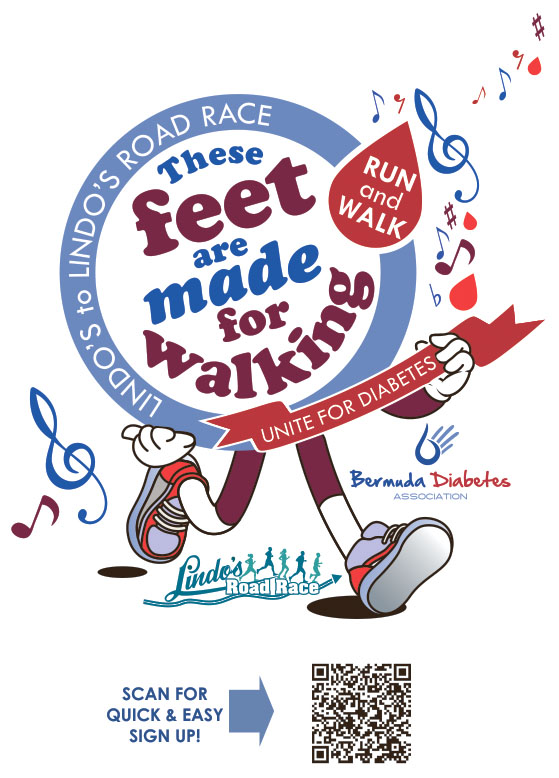
Join us on
Sunday, March 9, 2025
for the
Lindo’s to Lindo’s
10K Run and 4-Mile Walk
The Lindo’s to Lindo’s event goes beyond a mere race; it’s a community-driven initiative aimed at raising awareness about diabetes, promoting a healthy lifestyle, and supporting those in need.
More event details and signup at racedayworld.com
Part of the race proceeds to support the
Bermuda Diabetes Association
Goodie bags and t-shirts available at Saturday number pickup for first 1,000 participants.