

By Stephanie Simons,
Head Pharmacist,
Lindo’s Pharmacy in Devonshire
The body’s largest organ is the skin. Just as crucial as the heart or brain, our skin protects the rest of the body from the external world, from harsh temperatures to harmful bacteria. However, it isn’t without its own vulnerabilities. Whether we’re battling skin disease or worried about premature ageing, it’s critical that we understand our skin – and how to take care of it.
Structure
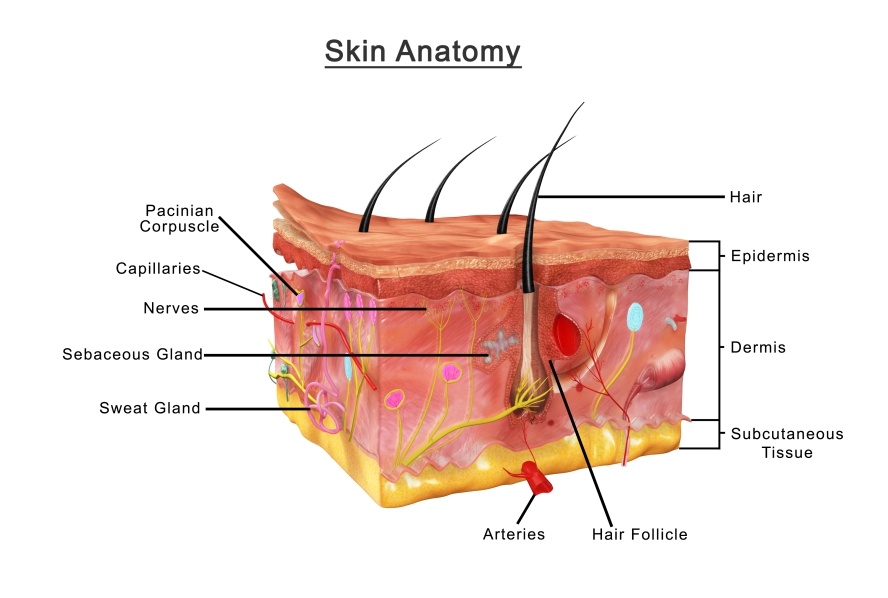
Our skin is made up of three layers, the epidermis, subcutis, and dermis.
Keratinocytes are the main building blocks of the epidermis and produce the protein keratin. The epidermis is also home to sweat glands, sebaceous (oil) glands, hair follicles and melanocytes which produce a pigment called melanin that protects us from UV rays.
Below the epidermis, the subcutis – or hypodermis – is made up of fibrous tissue and adipose (fat) and varies according to your size and weight. The dermis underneath is much thicker. Formed of collagen and elastin, it insulates the body while cushioning it against external trauma.
Function
The skin is not only the biggest organ, but also one of the most important, with several critical functions.
Its main function is to prevent water loss and shield the body from physical and chemical harm. A key part of the immune system, the skin fights off bugs, allergens and other toxins in our surroundings. It also enables the absorption of Vitamin D from sunlight, helping our bodies protect against numerous diseases like osteoporosis and cancer.
The skin enables our sense of touch so we can interact with the physical world, sense danger and injury, and enjoy pleasurable sensations. It’s also key in terms of physical attraction. The skin’s appearance, texture and quality play a significant role in our perception of health and beauty, though this tends to vary across cultures.
Skin care
Taking care of our skin is good for bodily health and our appearance. A simple, consistent routine can keep your skin comfortable and healthy while more advanced products can tackle a wide range of issues, from acne and pigmentation to wrinkles and collagen loss.
To maintain general skin health, it’s important to wash your face morning and night. For oilier skin types, try a face wash like Neutrogena Oil-Free Pink Grapefruit wash or scrub, while dry or sensitive skin might prefer a creamy cleanser like Cerave Hydrating Cleanser. Reinforce your skin’s barrier function with a layer of moisturiser – Cerave Facial Moisturiser AM and PM formulas are a great all-rounder, and Eucerin works wonders for sore or dehydrated skin. In the daytime, be sure to apply – and reapply – sunscreen of SPF 30+ such as Neutrogena Daily Moisture or Cerave AM Moisturiser lotion. This greatly lowers risk of skin cancer and helps prevent premature ageing.
There are a few key ingredients that can help you get even better results. For anti-ageing, there’s nothing better (and more scientifically proven) than Vitamin A, ranging from over-the-counter retinol products like Neutrogena Rapid Wrinkle to full strength tretinoin available only on prescription. Whatever strength, these products can irritate skin if used too often – start once a week and build up from there.
For spots or acne, a helpful ingredient is Salicylic Acid, an exfoliant that dives deep into pores and clears them out. Try a cleanser like Neutrogena Acne or Cerave Acne or a targeted spot treatment like Neutrogena Rapid Clear or Neutrogena Stubborn Marks. Products containing antioxidants like Vitamins C and E can also help protect your skin from external aggressors – try applying a serum like Avalon Organics Intense Defence Vit. C Face serum before your moisturiser.
Inside and out
You can also support your skin through your diet. Vitamin D plays a key role in building healthy skin cells: try oily fish, mushrooms or a supplement like Olly Glowing Skin Gummies or Alive Hair, Skin and Nails. Vitamin C can help to repair skin and retain its moisture. Citrus fruits, broccoli, and supplements like Nature’s Bounty Vit. C can boost your levels. Reducing your sugar intake is also proven to significantly improve your skin.
We’ve come a long way in understanding the skin and how to care for it. If you’re worried about your skin or simply want to make sure it is healthy, you can always talk to your GP or pharmacist. By protecting your skin, you’re protecting your whole body.
Stephanie Simons is the head pharmacist at Lindo’s Pharmacy in Devonshire. She earned her Bachelor of Science in Pharmacy at Massachusetts College of Pharmacy and has been practicing for over 20 years. She is a registered pharmacist with the Bermuda Pharmacy Council and is a member of the Bermuda Pharmaceutical Association.