
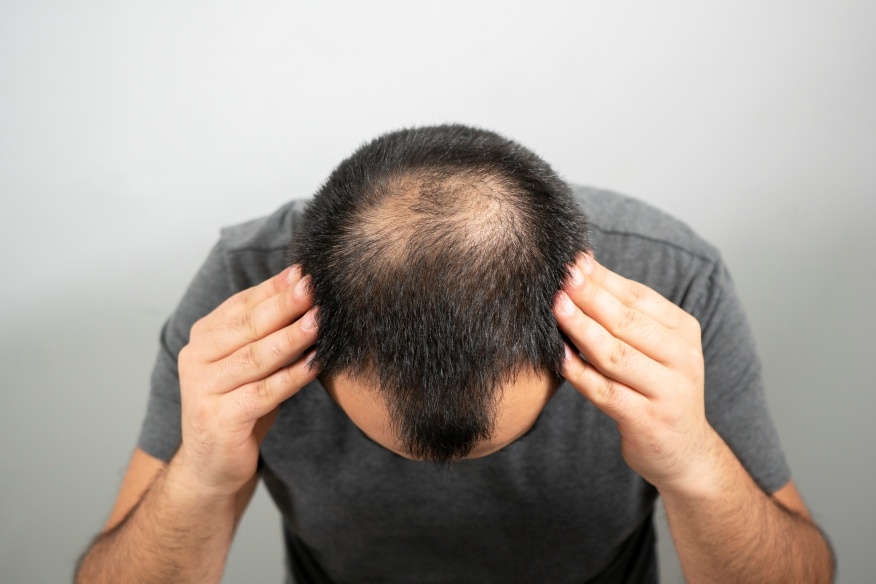
Male pattern baldness – androgenic alopecia – is a genetic condition when men as early as their teens experience a receding hairline and gradual hair loss from the crown.

By Stephanie Simons,
Head Pharmacist,
Lindo’s Pharmacy in Devonshire
From Goldilocks to Rapunzel, we’ve always been obsessed with our hair. So integral to our lives, it’s not surprising that the loss of our hair can be an incredibly difficult experience. From stress to serious health conditions, there are numerous causes behind hair loss – but how can we help prevent it? And how do we treat it when it happens?
We have hair everywhere on our skin except for a few specific places like the palms of our hands. Hair is made of keratin, a protein produced in hair follicles. As new hair cells are produced, old cells are pushed out through the surface of the skin – this is the visible hair we see. Each follicle has a lifecycle dependant on many factors including age, health, and genetics.
There are many reasons why we lose our hair, some better understood than others. Stress is a fairly common cause. Stressed-induced hair loss, or telogen effluvium, causes hair follicles to ‘rest’ which slows or stops the production of keratin, as the body’s depleted resources prioritise more vital processes. Stress can also impact our hormones – another key factor in hair loss – while changes in appetite may also play a role. A nutritious diet is key to hair growth, and those not ingesting the required protein, vitamins, and minerals may find their hair begins to thin and/or fall out.
Like stress, bodily trauma such as childbirth, major illness, surgery, cancer treatments, or severe weight loss, can cause hair to fall out. This type of hair loss is often temporary and resolves itself over time. A disease called alopecia areata, where your immune system starts to attack hair follicles, can cause more significant hair loss, but approximately 90% of sufferers regain their hair within a few years too.
Some hair loss, however, is less reversible. Involutional alopecia affects everyone as we age, as hair naturally thins. Moreover, male pattern baldness – androgenic alopecia – is a genetic condition when men as early as their teens experience a receding hairline and gradual hair loss from the crown. Women can experience female pattern baldness, but this tends to start later in life and manifests as a general thinning of hair across the scalp. Alopecia universalis, where all body hair falls out, can be temporary or permanent depending on the case.
So how do we treat it? In many cases, hair loss can be slowed or reduced. If stress or diet is the key trigger, it’s much easier to treat the cause than the symptoms. You can tackle stress through exercise, meditation, or lifestyle changes – herbal remedies such as Hair, Skin & Nails supplements by Nature’s Bounty (N.B.) and Olly, or Biotin can also be useful. Speak to your GP if you think you could benefit from advice or mental health support to lower your stress levels. Your GP or pharmacist can also advise on dietary changes that may support hair growth such as boosting your vegetable and protein intake, or iron supplements like Ferrograd and/or a Vitamin D tablet like N.B. Vitamin D 2000IU.
Shampoos containing caffeine can also help, as caffeine targets DHT – a hormone that blocks the nutrients hair follicles need. Try Dr. Brown’s DHT Blocker or Viviscal. Stronger treatments include Minoxidil, used in products like Rogaine which are applied directly to the scalp to stimulate hair growth. Alternatively, your GP may prescribe certain treatments specifically suited to you, such as corticosteroid injections.
Scalp care is also key. Just like the skin on your face, your scalp can be sensitive to environmental stressors like pollution, heat, and overzealous products. By maintaining a healthy scalp, you can keep follicles free of disruption, allowing hair to grow healthy and strong. Try Head & Shoulders for a dry scalp, or Nizoral if you’re experiencing too much oil as this can block follicles.
The loss of your hair can be a very upsetting experience and it’s important that you seek support, whether that’s your friends, family, or speaking to your local health professional. Your GP or pharmacist are always happy to discuss this with you and advise on the best support for you.
Stephanie Simons is the head pharmacist at Lindo’s Pharmacy in Devonshire. She earned her Bachelor of Science in Pharmacy at Massachusetts College of Pharmacy and has been practicing for over 20 years. She is a registered pharmacist with the Bermuda Pharmacy Council and is a member of the Bermuda Pharmaceutical Association.