
The holiday season is in full swing and you’re no doubt planning on hosting one or two holiday events to celebrate with friends and family. Whether you are hosting a cocktail party, a formal dinner, or a Boxing Day or New Year brunch, a well-constructed cheese board is always appealing to guests. However, with an array of cheese available in the grocery store, it can be a daunting task to put together the perfect cheese board.
To help, we’ve put together these handy tips designed to ensure a delicious, festive cheese board that is sure to please even the most discerning cheese lover.

There’s a dizzying variety of cheese available. This rhyme helps with selection: “Something old, something new, something goat, and something blue.”
Select the Cheese
- Try to include a variety of textures and flavors but limit the amount to three to five different cheeses.
- Although many cheeses may fall somewhere in between due to moisture content, molding processes and aging techniques, most cheese belongs to one of four basic categories: aged, soft to semi-soft, medium-firm to firm, or blue. Include a few from each group for the best variety and balance of flavour.
Here’s a few choices to consider –
Aged: Aged Cheddar, Gruyere, Emmental
Soft to Semi-soft: Brie, Camembert, Brillat-Savarin, Havarti, Munster, Port Salut
Semi-Hard & Hard cheese: Gouda, Edam, Jarlsberg, Manchego, Mimolette, Asiago, Parmigiano-Reggiano
Blue: Gorgonzola Dolce, Valdeón, Stilton, Roquefort
- Plan on buying 3 to 4 ounces per person. Don’t worry if it turns out to be too much, you can always put cheese back in the refrigerator to munch on over the next few days.
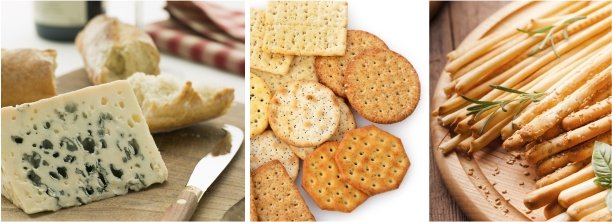
Slices of a crusty baguette complement the intense flavour of Roquefort cheese. Include a variety of breads, breadsticks and crackers to serve alongside your cheese platter.
Choose the Accompaniments
- Assorted fresh or dried fruit and nuts are an excellent complement to most cheese. Try almonds, walnuts, pistachios, figs, clementines, cherries, apples, grapes, pear and olives. Added bonus: these selections naturally cleanse the palate so they’re a good choice to eat between cheeses.
- Sliced breads & rolls, along with crusty baguette, a variety of crackers and grissinis (breadsticks) are a natural choice for pairing with cheese. Like the cheese, offering a variety of these is best, but keep their flavour subtle. After all, you don’t want to overpower the taste of the cheese.
- Add condiments like spicy mustards, fruity chutneys, preserves and sweet honey. Canned or jarred vegetables such as pickled onions, artichokes, roasted red peppers, and a mixture of pepperoncini are also good choices.
- Don’t be afraid to offer cured meats like salami and prosciutto alongside. Just make sure to include strong, bold cheeses that can compete with the meats. Crumbly, hard or soft cheese with a salty, sharp or nutty flavour are the best choices.
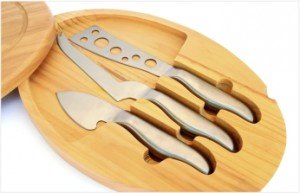
Use the right tools for the job. A starter collection would include a soft cheese spreader, a sharp hard cheese knife, a cheese planer for slicing/shaving the cheese, and a special knife with holes. Cheese knives with holes in them are designed to prevent cheese from sticking to them.
How to serve
- Use a hard surface for serving the cheese. A wooden cutting board, marble cheese platter, or a food-safe natural slate slab make a good cutting surface.
- Have the right tools. Soft cheese does well with a dull, rounded edge spreader knife; firm cheese requires a sharp knife; and aged cheese often requires a cheese plane to shave off slices. Use separate cheese knives for each cheese. You don’t want to mix the flavors.
- Cold temperatures mute the flavors of cheese. Allow the cheese to come to room temperature before serving your guests – an hour before serving is a good rule of thumb.
- Avoid wasting party time discussing the cheese selections with your guests. Simply label each cheese with it’s name and a brief description of it’s flavour and where it’s from. You could also include the milk used – i.e. cow, goat or sheep.
Still unsure? Don’t worry! Our friendly, knowledgeable staff are always there to answer any questions you may have. Enjoy!