Nov 4, 2018
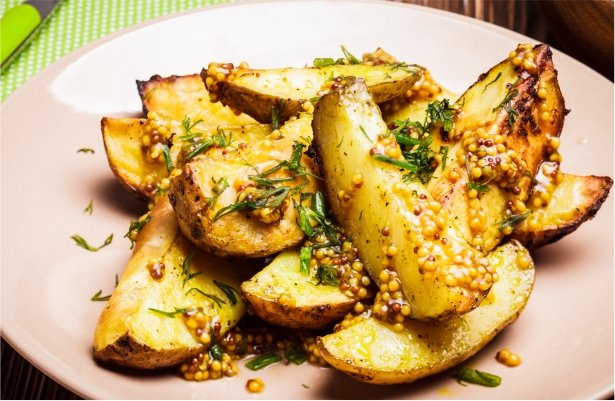
Prep time: 10 min • Cook Time 1 hr • Total Time 1hr 10 min • Makes: 6 servings
An easy side dish that pairs well with chicken, pork or fish. Great for entertaining or a weeknight meal. Delicious!
Ingredients
2 1/2 pounds Yukon Gold potatoes
3 tablespoons olive oil
2 tablespoons whole-grain mustard
Kosher salt
1 teaspoon freshly ground black pepper
1/4 cup chopped fresh dill
Directions
- Preheat the oven to 375°F.
- Cut the potatoes in quarters, and place them on a sheet pan.
- Add the olive oil, mustard, 2 teaspoons salt, and the pepper and toss them together. Bake for 50 minutes to 1 hour, until the potatoes are lightly browned on the outside and tender on the inside. Toss the potatoes from time to time with a spatula so they brown evenly. In the last 10 minutes of baking add half the chopped dill.
- Serve hot sprinkled with remaining chopped dill and more salt, if desired.
Oct 16, 2018


By Stephanie Simons,
Head Pharmacist,
Lindo’s Pharmacy in Devonshire
Have you ever heard people discussing “generic drugs” and not been sure what they were talking about? Helping our customers find the best medicine for them and their budget is one of the great services that your pharmacist can offer you, so we want to make sure that you’re not missing out!
When your doctor gives you a prescription for medication, they will sometimes specify a particular brand of product. However, our Pharmacy Act allows pharmacists to substitute a generic or less expensive equivalent to what your doctor has prescribed, so long as you agree, without having to contact you doctor.
Generic medications contain the same active ingredients as you would find in brand name medicine and will have the same overall effect. The only difference is the packaging, branding and, occasionally, the inactive ingredients. The inactive ingredients are the things in your medicine that don’t usually have an effect on your treatment – for instance, they might affect the superficial aspects of it, such as shape or taste of it.
Most prescription drugs are available as both a brand offering and generic. Our preference is ordinarily to offer our customers the generic option as they are much more cost effective. We would never offer you a medical treatment that we didn’t think would be just as effective as a popular brand or if we thought that there would be a negative trade-off in terms of the quality of the medication.
Generic medication is typically cheaper because the company producing them does not need to invest in research, testing or advertising – the drugs being produced are copies of medicines developed and tested by big names in pharmaceuticals, once their patents have ended.
Additionally, in Bermuda, we import all of our drugs in from different countries, so sometimes we may have sourced a cheaper, brand or alternative from a different market in order to give you access to more affordable medicine.
Generic drugs are not just limited to prescription medication, many over the counter medications, such as allergy and pain relievers, also have generic alternatives.
Your pharmacist has a record of your repeat and continuing medications and by returning to the same pharmacy over and over again, you can develop a productive rapport and work together to make sure that you are taking the medicine that best fits your needs and is affordable.
If you are on a long course of medication we also encourage you to give us feedback. If you feel that one type of generic or brand medication is working more effectively than another, then let us know. We are always happy to work with you to manage your health and budget.
To find out more about generic medications and to find out if there’s one you should be using, please speak to your pharmacist.
Stephanie Simons is the head pharmacist at Lindo’s Pharmacy in Devonshire. She earned her Bachelor of Science in Pharmacy at Massachusetts College of Pharmacy and has been practicing for over 20 years. She is a registered pharmacist with the Bermuda Pharmacy Council and is a member of the Bermuda Pharmaceutical Association.
Oct 1, 2018

Catalan style cooking comes from Spain but this way of preparing lobster is a popular and traditional recipe from the west coast of Sardinia. Simple ingredients pair with delicate lobster meat to make a fresh, lighter offering suitable for an elegant dinner party or a weeknight meal.
Ingredients
1 Spiny Lobster, cooked, and cut in half lengthwise
1 small onion, thinly sliced
1 celery stalk, thinly sliced
1 large tomato, cut into chunks
1/2 cup olive oil
1/4 cup lemon juice, about 2 lemons
Salt and freshly ground black pepper, to taste
Directions
- Place live lobster in a large stock pot; fill with water; cover tightly and cook over medium-heat until lobster shell turns bright pink and the meat is firm and opaque; about 20 minutes.
- Drain water, rinse lobsters in cold water, and allow lobster to cool.
- Cut shell in half, remove lobster meat from shell. Set shells aside.
- Place lobster meat, onion, celery and tomato in a bowl. Gently mix.
- In a small bowl, whisk together olive oil and the lemon juice. Add salt and pepper to taste. Pour dressing over the lobster and vegetables. Mix gently and then return lobster mixture to reserved shells. Serve.
Oct 1, 2018

Toad-in-the-hole is a classic English dish consisting of a light, crispy, batter (similar to Yorkshire Pudding) and plump, meaty pork sausages.
Makes: 2 servings • Total Time: 30 minutes
Ingredients
2 eggs
4 ounces self-rising flour
A pinch of baking powder
A splash of milk
A few thyme leaves
Salt and freshly ground black pepper
4 pork sausages, cooked
Directions
- Preheat the oven to 425°F.
- Beat the eggs in a bowl. Continue to whisk and add the flour and baking powder gradually, alternating with enough milk to make a thickish batter the consistency of cream.
- Add the thyme leaves, season with salt and pepper. Pour the batter into a greased 7- inch casserole dish. Place the sausages on top. Bake for 10 to 12 minutes, until the batter is well risen and golden brown. Serve.
Oct 1, 2018

Prep Time: 20 min • Total Time: 6 hrs 5 min • Makes 16 servings
Ingredients
25 ginger snaps, finely crushed (about 2 cups)
1/4 cup finely chopped pecans
1/4 cup butter, melted
3 pkg. (8 oz. each) Philadelphia Brick Cream Cheese, softened
3/4 cup sugar, divided
1 tsp. vanilla
3 eggs
1 cup canned pumpkin
1 tsp. ground cinnamon
1/4 tsp. ground nutmeg
Pinch ground cloves
Powdered sugar, optional
Directions
-
- Heat oven to 350°F.
- Mix cookie crumbs, nuts and butter; press onto bottom of 9-inch springform pan.
- Beat cream cheese, 1/2 cup sugar and vanilla with mixer until blended.
- Add eggs, 1 at a time, beating after each just until blended. Remove 1 cup plain batter.
- Stir remaining sugar, pumpkin and spices into remaining batter.
- Spoon half the pumpkin batter into crust; top with spoonfuls of half the plain batter. Repeat layers; swirl gently with knife.
- Bake 45 min. or until centre is almost set. Cool completely. Refrigerate 4 hours.
- Dust with powdered sugar just before serving, if desired. Store leftover cheesecake in refrigerator.
RECIPE FROM KRAFT FOODS
Sep 16, 2018
By Stephanie Simons,
Head Pharmacist,
Lindo’s Pharmacy in Devonshire
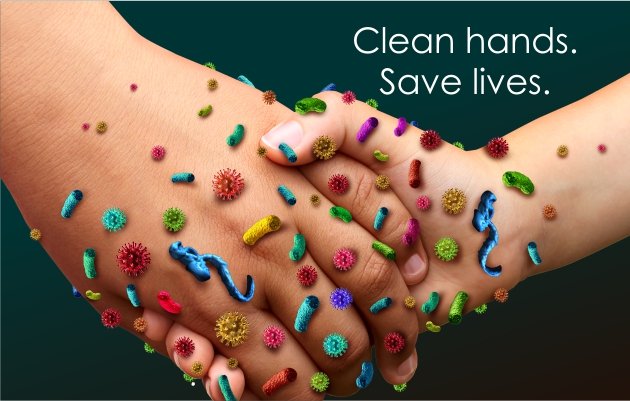
September is the time of school-time and germs! That’s why the Centers for Disease Control (CDC) organisations, Cleans Hands Coalition, is celebrating International Clean Hands Week from September 16.
We are taught from a young age the importance of washing our hands before we eat, after we have used the bathroom and anytime our hands have got dirty. However, many adults lose this conscientiousness: The Royal Pharmaceutical Society found in 2017 that 84 per cent of British adults don’t wash their hands long enough to clean them of bacteria which can cause infections or viruses and that one in five adults does not wash their hands after using the bathroom and a third don’t before preparing food.
When we don’t wash our hands of bacteria, we leave ourselves open to all kinds of diseases and infections through the transference of fecal, mucus and other matter. This can result in illnesses such as salmonella, norovirus and conjunctivitis. The best way to avoid this is to instill a proper handwashing regimen any time you come into contact with dirty material, so: after the bathroom, after using public transport, after interacting with a sick person and throughout food preparation.
The Royal Pharmaceutical Society recommends that hands must be washed for 20 seconds – long enough to hum “Happy Birthday to You” through twice – in order to effectively remove germs from them. There are also a number of useful guides about the method used to wash your hands, in particular this one from the UK’s National Health Service shows how to most effectively scrub yourself clean in the manner of surgeons.
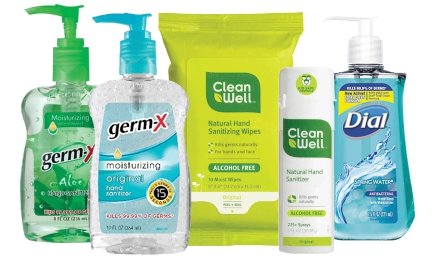 At Lindo’s, we stock a wide range of hand-soaps, including natural ones, soaps for sensitive skin and super effective ones, such as Dial’s products.
We don’t always have the luxury, though, of having the time or facilities needed to wash our hands the old-fashioned way but that’s where hand sanitiser comes in handy! Portable and effective, a hand sanitiser is a great handbag or desk staple.
When choosing a hand sanitiser, you should look for one that has an alcohol content of at least 60 per cent, that you don’t dislike the smell of – the smell of hand sanitisers can be surprisingly long lasting – and does not include triclosan. Triclosan is an antibacterial chemical but it has recently been the subject of controversy as it may cause harmful side effects.
The CDC recommends that hand sanitisers should have an alcohol content of at least 60 per cent – the higher the alcohol content, the more germs and bacteria are eliminated. Lindo’s stocks Germ-X which is a powerful germ-killing hand sanitiser with an alcohol content of 63 per cent and comes in a range of handy sizes and scents. However, many people find that the high alcohol content in hand sanitiser can result in dry hands or may have sensitivities that that the alcohol can aggravate. To combat dry hands, it is worth investing in a hand cream (such as Nivea Hand Cream). For those who find alcohol-based sanitisers too harsh or for the very young, alcohol-free sanitisers can work, although they may be slightly less effective. CleanWell hand sanitisers are conveniently available as a foam cleanser and in wipe form and are formulated from natural ingredients designed to kill germs and leave hands soft.
When it’s not possible to wash your hands easily, such as when you’re out and about or using public transport – always a hotspot for bacterial transfer – then hand sanitiser is a great second option. Washing your hands will remove the germs from you altogether, whereas a hand sanitiser will kill them. However, there are certain bacteria that hand sanitisers are not effective against, including norovirus.
Using a hand sanitiser or washing your hands regularly can have a positive effect on your health but also on your productivity: a study in 2010 by BMC Infectious Disease Review found that office workers who used an alcohol-based sanitiser five times a day were two thirds less likely to get sick than the rest of their co-workers.
If you have any questions about how to keep your hands cleans or want product recommendations, please don’t hesitate to speak your Lindo’s pharmacist!
Stephanie Simons is the head pharmacist at Lindo’s Pharmacy in Devonshire. She earned her Bachelor of Science in Pharmacy at Massachusetts College of Pharmacy and has been practicing for over 20 years. She is a registered pharmacist with the Bermuda Pharmacy Council and is a member of the Bermuda Pharmaceutical Association.