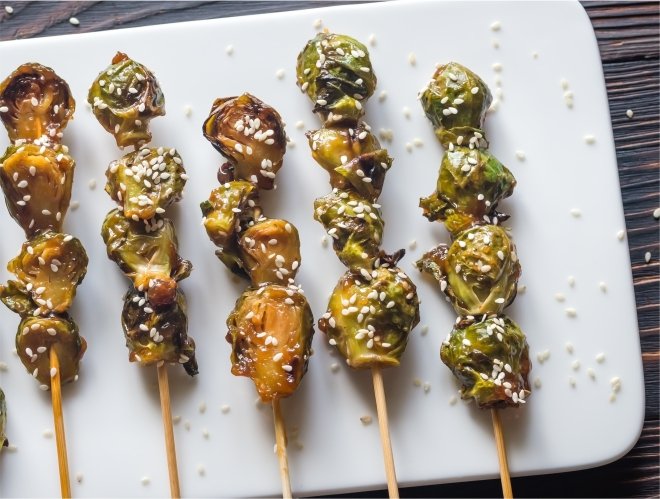
These glazed Brussels sprouts are delicious enough to convert even the pickiest of eaters and sprout haters.
Serve as a side dish or as an appetizer.
Ingredients
1 1/2 pounds Brussels sprouts 3 tablespoons extra-virgin olive oil 1 tablespoon balsamic vinegar Salt, to taste Freshly ground black pepper, to taste 2 tablespoons rice wine vinegar 3 tablespoons water 1/4 cup soy sauce 2 tablespoons brown sugar 1/2 tablespoon fresh grated ginger
Directions
Preheat oven to 400°F.
Try to select Brussels sprouts of the same size for even cooking. Prepare the sprouts by removing any outer leaves that are browned or damaged. Trim the end, then cut any very large Brussels sprouts in half or quarters.
In a large bowl, whisk together the olive oil, balsamic vinegar, salt, and pepper. Add the Brussels sprouts to the oil mixture and toss to coat evenly. Either line a baking sheet with parchment paper or lightly oil the baking sheet. Spread the Brussels sprouts evenly on the baking sheet. Roast for 15 minutes, then turn the sprouts over. Roast for an additional 10-15 minutes, or more, or until lightly browned.
Meanwhile, prepare the teriyaki glaze. In a saucepan, add rice wine vinegar, water, soy sauce, brown sugar, and grated ginger. Stir constantly until the brown sugar has dissolved completely. Bring glaze mixture to a simmer over medium-high heat. Continue to simmer for about 5 minutes, stirring occasionally, then remove from heat.
When Brussels sprouts are finished roasting, gently toss them with the teriyaki sauce. Serve immediately.
Alternatively, once the sprouts have finished roasting, you can carefully thread them onto skewers and then brush each assembled skewer with the teriyaki glaze. Sprinkle sesame seeds over the sprouts and then serve.
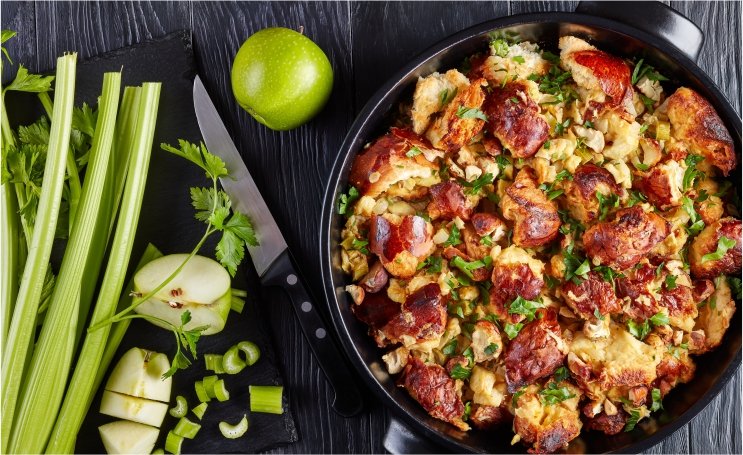
This sweet and savory stuffing is a delicious accompaniment for duck, chicken, turkey or pork.
Active Time: 40 mins • Cook Time: 1 hr 15 mins
You can either bake this stuffing separately or use it for stuffing a 12 to 18-pound turkey. Makes about 16 servings.
Ingredients
1 lb. loaf challah bread or 6 cups King’s Hawaiian Dinner Rolls, cut into 3/4-inch cubes
1/4 cup extra virgin olive oil
3 medium garlic cloves, minced
7 tablespoons unsalted butter
2 onions, diced
2 celery stalks, diced
3 Granny Smith apples, cut into 1/4-inch dice
300 gm whole roasted & peeled chestnuts, diced
1 tablespoon freshly chopped sage
1 tablespoon freshly chopped thyme
1/4 cup fresh parsley, finely chopped
Salt and pepper
2 large eggs
1 1/2 cups chicken broth, plus more as needed
Directions
Preheat oven to 375°F.
Toss together the bread cubes, olive oil, and minced garlic in a bowl, until the bread is evenly coated.
In a shallow baking pan, arrange the bread pieces in one layer, bake them in the oven, stirring occasionally, for 10 to 12 minutes, or until they are golden. Transfer bread to a large bowl.
In a large skillet, melt 4 tablespoons of the butter over medium heat. Add the onions and celery and cook, stirring often until tender; about 10 minutes. Add to the bread.
Return skillet to the cooktop and melt 2 tablespoons of butter over medium heat.
Add the apples and cook, stirring often until tender and golden brown, about 4 -5 minutes. Add the apples to bread.
Melt the remaining 1 tablespoon of butter in the skillet, add the chestnuts and cook, stirring often, until lightly browned, about 4-5 minutes. Add to bread mixture. Add parsley, sage, thyme, 2 teaspoons salt, and 1 teaspoon pepper. Stir well to combine, taste, and season with more salt and pepper, if necessary.
Butter a 9×13-inch baking dish.
In a small bowl whisk the eggs. Add the chicken broth and whisk until combined. Pour egg mixture over bread and gently toss to combine. Let the mixture sit for 10 minutes to allow the liquid to be absorbed into the bread. Add additional broth if stuffing is too dry.
Transfer stuffing mixture to the buttered baking dish and bake at 325°F until lightly browned; about 40 minutes.
By Stephanie Simons, Head Pharmacist, Lindo’s Pharmacy in Devonshire
Tis
the season to be jolly! For some this means stockings full of gifts, for others
it means carolling, and – let’s be honest – for most of us it means indulging
in our favourite tipple. And while there’s nothing wrong with enjoying a few
festive drinks, it’s important that we’re careful not to damage our health in
the process.
Alcohol
can be enjoyed safely in small amounts, but when the drinks start to add up, it
takes its toll on our bodies. Everyone tolerates different levels of alcohol –
we all have that friend who seems to drink the bar dry and get up bright-eyed the
next morning nonetheless. However, consuming more than four units, (such as two
beers or glasses of wine) in one sitting is enough to trigger problematic
symptoms in most people.
When
you start drinking alcohol, it begins to affect the part of your brain
associated with judgement and decisions, while also impairing your reaction
time and coordination. These symptoms worsen the more you drink, impairing your
speech and making you light headed and dizzy. After ten units, you are at risk
of alcohol poisoning, which can result in confusion, vomiting, seizures,
diarrhoea and, in some cases, unconsciousness.
This
level of alcohol not only makes you vulnerable to accidents, but also significantly
disrupts your sleep, leaving you in a far-from-festive state the next day. As
your liver tries to expel the alcohol from your body as soon as possible, you
become dehydrated, often leading to headaches, muscle cramps and nausea.
There
are, however, ways to avoid the dreaded hangover. Eating carbohydrates such as
rice or pasta beforehand can slow your body’s absorption of alcohol. Fight the
dehydration too by drinking a non-carbonated soft drink between each alcoholic
beverage, and drinking at least a pint of water before bed.
If you do overindulge (it happens to
the best of us) there are remedies available to help you feel human again. Mild
painkillers such as Tylenol or Panadol or Advil can combat your headache, while
antacids like Tums or Alka-Seltzer or Pepcid will help settle your stomach. Be
careful to follow the package directions on the pain relievers – too much
Tylenol can be harmful to the liver which has already been stressed by too much
alcohol and the Advil can cause stomach upset if taken without food. Rehydrate
as much as you can with water, soda water or, if you’re experiencing vomiting
or diarrhoea, it may help to take a rehydration tablet like Nuun or sachet like
DIoralyte. If you’re partial to a drink or two, make sure to stock up on some
of these remedies before the celebrations kick off – just in case!
So when does drinking become a
problem? It’s very easy to turn to alcohol during the holidays when emotions
are running high. However, while the initial effects may make you feel good,
alcohol is actually a depressant that disrupts the balance of chemicals and
process in the brain and influences our moods and emotions. This can cause
sadness, confusion and often aggression – not feelings we want to crop up at
the Christmas party!
If you’re worried that you or someone
you know may be abusing or becoming dependent on alcohol, it’s important to
seek help as soon as you can. Signs range from irritability and mood swings to
problems at work or in
personal relationships. Your pharmacist or GP will be happy to offer advice on any
alcohol problem, big or small, and help you take the first steps towards recovery.
The festive season
can be stressful and it’s important to be kind to yourself – and your body.
Raise a glass by all means, but be aware of your own limits in order to have a
happy holiday season this year.
Stephanie Simons is the head pharmacist at Lindo’s Pharmacy in Devonshire. She earned her Bachelor of Science in Pharmacy at Massachusetts College of Pharmacy and has been practicing for over 20 years. She is a registered pharmacist with the Bermuda Pharmacy Council and is a member of the Bermuda Pharmaceutical Association.
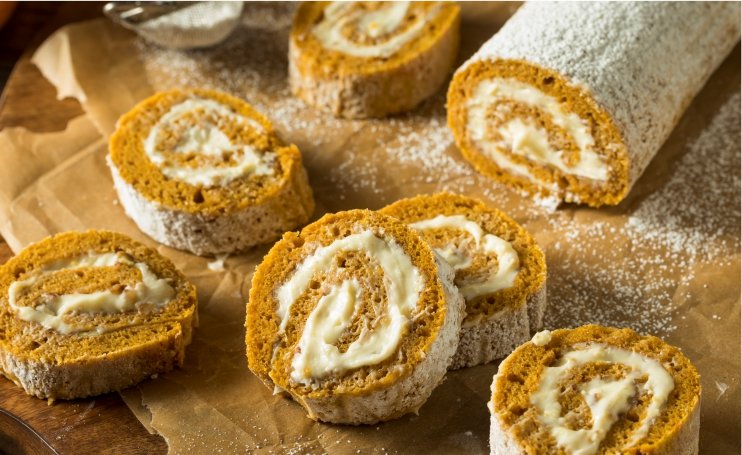
This spiced pumpkin cake with sweet cream cheese filling is a great dessert for the holiday season.
Ingredients
3/4 cup all-purpose flour 1/4 teaspoon salt 1/2 teaspoon baking soda 1/2 teaspoon baking powder 2 teaspoons pumpkin pie spice 1 cup granulated sugar 3 large eggs 2/3 cup canned pumpkin 1 teaspoon pure vanilla extract
Filling:
1 pkg. (8 ounces) cream cheese, at room temperature 6 Tablespoons butter, softened 1 teaspoon pure vanilla extract 1 cup powdered sugar, sifted
Instructions
Preheat the oven to 350 degrees F. Grease a jelly roll pan (15 x 10”) and then line with parchment paper. Grease and flour parchment paper.
In a large bowl, whisk together the flour, salt, baking soda, baking powder, and pumpkin pie spice.
In a separate bowl mix the eggs, sugar, vanilla, and pumpkin until smooth. Add dry ingredients to the bowl and stir just until combined.
Spread the batter evenly in the prepared jelly roll pan.
Bake for 13-15 minutes until a toothpick inserted in the center comes out clean or when cake springs back when touched.
Immediately remove from pan with the parchment paper. Starting at one of the short ends, slowly roll the cake with the parchment paper, all the way up. Place the rolled cake on a wire rack and allow to cool completely.
Meanwhile, mix the cream cheese, butter, vanilla, and powdered sugar together with an electric mixer until it is smooth and creamy.
Once the cake roll is cooled completely, unroll it very carefully. Gently remove the parchment paper. Spread the filling in an even layer over the cake.
Re-roll the cake. Cover with plastic wrap and refrigerate for at least 1 hour, before serving.
By Stephanie Simons, Head Pharmacist, Lindo’s Pharmacy in Devonshire
While
many of us take great care of our skin, our muscles, our minds – few realise
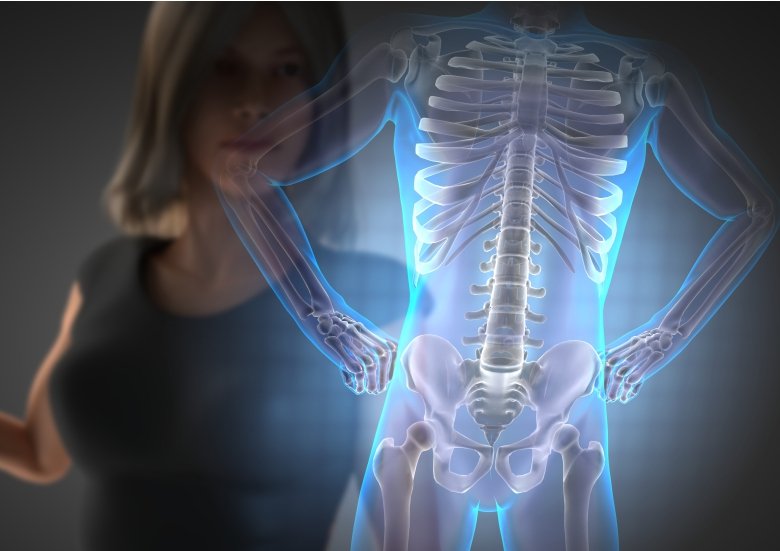
how important it is to care for our bones, at all stages if life. Your skeleton
provides the whole structure of your body, protecting your vital organs and
anchoring muscles where they need to be, and there is a lot we can do to keep
our bones strong and healthy.
From
the moment you’re born, your bones are constantly changing: new bone is made
and old bone is broken down. Until the age of thirty, your body makes new bone
faster than it breaks down old, causing your bone mass to increase. As you get
older however, you begin to lose more than you gain, and your bone mass slowly
decreases over time.
That
said, there is much we can do along the way to improve our bone mass – starting
with our calcium intake. Research shows that calcium deficiency leads to diminished bone
density, early bone loss and an increased risk of fractures. However, you can boost
your calcium levels by eating a wide range of foods including dairy products,
almonds, green vegetables such as broccoli and kale, and soy products like
tofu. Supplements such as Caltrate, Viactiv and Nature’s Bounty (or Nature’s
Truth) Calcium tablets can be used if and when your diet may be insufficient.
Vitamin
D is also needed to allow calcium be absorbed. You can increase your vitamin D
intake with food such as oily fish like salmon and tuna, as well as mushrooms,
eggs and fortified foods like cereal. Sunlight contributes to the production of
Vitamin D too, so do try to get out and about when the sun decides to shine!
Lesser
known, but equally important, Vitamin K2, particularly MK-4 and MK-7, supports
bone health by modifying osteocalcin, a protein involved in bone formation. You
can find MK-4 in liver and eggs, while Mk-7 is found in fermented food like
cheese, miso and sauerkraut – as well as supplements such as Smarty Pants
Organics vitamins. There are formulas specific for men, women, pregnancy, kids
and toddlers. There are also a wealth of combined supplements available like
Rainbow Light, Centrum and One-A-Day, which combine nutrients and vitamins to
give your bones everything they need in one quick and easy capsule.
Bones
are made from 50% protein so it’s good to make sure foods such as meat, dairy,
beans and pulses form a good proportion of your diet – especially as you get
older. Studies have shown that in postmenopausal women, higher protein intake is
linked to a lower risk of forearm fractures and significantly higher bone
density in the hip, spine and total body. Weight-bearing exercises, such as
walking, jogging, and climbing stairs, have great benefits too: people
who are physically active have a much lower risk of bones problems.
Those
with low bone density may be suffering from osteoporosis, a health condition
that weakens bones, making them fragile and more likely to break. If you are
concerned about osteoporosis, do speak to your GP as soon as possible. In
addition to lifestyle options, there are also medications that can strengthen
bones and reduce the risk of fractures, and your GP can give advice on the best
treatment for you.
If you have any
questions about bone health, your GP or indeed your pharmacist will be happy to
help.
Stephanie Simons is the head pharmacist at Lindo’s Pharmacy in Devonshire. She earned her Bachelor of Science in Pharmacy at Massachusetts College of Pharmacy and has been practicing for over 20 years. She is a registered pharmacist with the Bermuda Pharmacy Council and is a member of the Bermuda Pharmaceutical Association.
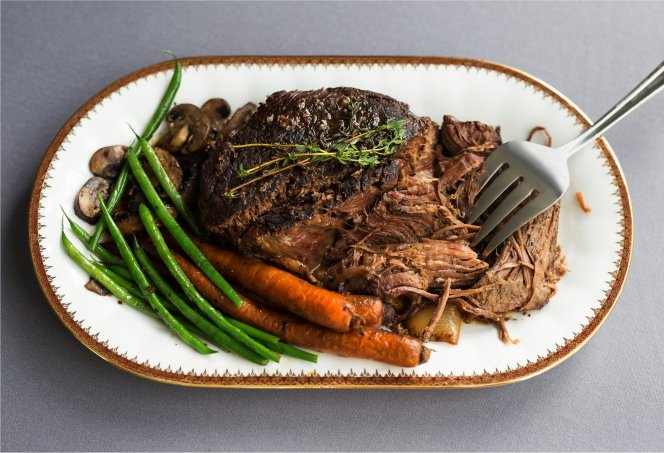
Chuck roast is a less tender, but flavourful cut of beef that is ideal for slow cooking, braising or pot roasting.
Browning, or searing, the meat and vegetables before slow cooking locks in juices and flavour and adds color to the finished dish.
Prep time: 20 mins Cook Time: 10 hours
Ingredients
3 potatoes, peeled and diced into bite-size cubes
4 carrots, peeled and sliced
2 medium onion, cut into quarters
2 celery ribs, sliced
3 lb. chuck roast
salt and pepper
1 1/2 tablespoons olive oil
3/4 cup water
1 tablespoon Worcestershire sauce
1 teaspoon beef bouillon granules
1 teaspoon dried basil
2 cloves garlic, minced
2 or 3 sprigs fresh thyme, for garnish
Directions
Spray slow cooker with cooking spray.
Season roast with salt and pepper.
Heat oil in a saucepan on medium-high heat.
Add the onions to the saucepan, browning them on both sides. Remove the onions to a plate.
Add the carrots and celery to the hot pan and toss until slightly browned, about a minute or so. Reserve the carrots and celery with the onions.
If needed, add a bit more olive oil to the hot pan. Place the meat in the pot and sear it for about a minute on all sides until it is nice and brown all over.
Place potatoes, carrots, onion and celery on the bottom of the slow cooker. Place seared and browned roast on top of the vegetables.
In a small bowl, combine water, Worcestershire sauce, bouillon, garlic, and basil. Pour over meat and vegetables.
Cook on LOW for 7-8 hours, or until the beef can be shredded very easily and vegetables are fork-tender.