
Ah, peppers. You either love them (we all know one or two “chili heads”) or hate them. From the innocent Sweet Bell pepper to the ‘holy smokes’ Habanero, there’s a variety of peppers found worldwide that run the gamut when it comes to pungency and heat intensity.
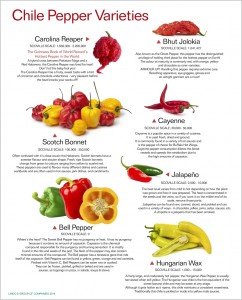
Did you know short-term studies suggest that capsaicin aids in the decrease of weight regain? Click image to read more interesting facts.
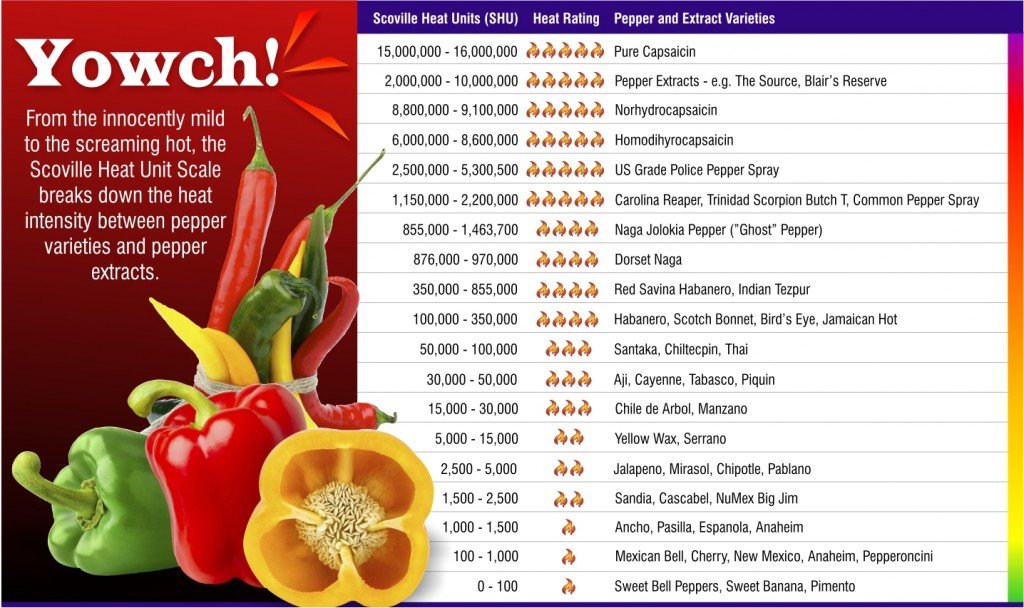
We use peppers to add a little zip in salsa, on pizza, jams and jellies, in our fish chowder, and oodles of other ways, but have you ever really wondered just how hot some peppers are? Well, in 1912 an American chemist by the name of Wilbur Scoville developed a test to answer that burning question. The Scoville Scale is a measure of the heat of a chile pepper or anything derived from chile peppers, such as: extracts, sauces, or pepper spray.
Officially named the Scoville Organoleptic Test, the test, unlike it’s name, was very simple. A panel of volunteers drank a concoction of of sugar water mixed with ground chile peppers. Both substances were measured out very precisely and then sugar water was added to the ground pepper until the taster no longer detected any heat or burning sensation in their mouth. The final measure was recorded for that particular pepper species.
Today, and luckily for mouths everywhere, there’s a more advanced test – High Performance Liquid Chromatography (or HPLC). This test measures the chemical capsaicin in chili peppers. It’s actually this chemical that causes the heat! One part of capsaicin per one million equals approximately fifteen Scoville heat units. And yes, regardless of high tech HPLC testing, modern-day science still converts back to Scoville units. Now that’s respect!
The chart below gives you any idea of how different varieties of peppers and extracts add up on the Scoville Heat Unit Scale (click image to enlarge).
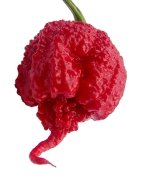
The Carolina Reaper: Insane Heat! Maybe there’s no coincidence the Carolina Reaper has a scorpion-like tail. Looks like a warning to us!
What’s the hottest pepper in the world? That would be the Carolina Reaper. The Carolina Reaper weighs in at a whopping, blistering range between 1,400,000 to 2,200,000 Scoville heat units. The top end measure is just as hot, if not hotter, than standard pepper spray! Whoa, Mama!
CAUTION! That’s too hot to handle! When it comes to peppers as hot as the Carolina Reaper, or even in the moderately hot range, you need to take some precautions when handling them.
HANDLING HOT CHILE PEPPERS:
Hot chiles, such as jalapeno, Habanero, and yes, the Carolina Reaper, contain capsaicin oils that can burn your skin, eyes, lungs, and other mucous membranes. If ingested in large amounts the capsaicin in peppers can produce nausea, vomiting, abdominal pain, and burning diarrhea. Our advice: avoid direct contact with them as much as possible.
- When working with fresh chiles, wear rubber gloves or disposable plastic gloves.
- Work in a well-ventilated area.
- Wear protective goggles.
- When handling peppers measuring high on the Scoville scale, wear proper hazardous material suits (Yup, you need to wear a HAZMAT Suit!) and wear a respirator in addition to gloves and goggles.
- Remember: Oils from chiles can transfer to knives and cutting surfaces, so wash tools and surfaces with hot, soapy water after use to prevent the oils from transferring to other foods.
FIRST AID:
- Remove yourself quickly from the source of exposure.
- Remove contaminated clothing and seal in airtight bags to prevent further exposure.
- Wash the skin using soap, shampoo or other detergents.
- If you get some of the oils in your eyes, flush them with cool water.
- Surfaces can be cleaned with detergents or alcohol.
- Burning symptoms can be relieved by cooling – i.e. from ice, cold water, fans, or wind. Aloe gel can be very helpful and soothing. For serious injury seek medical help.