
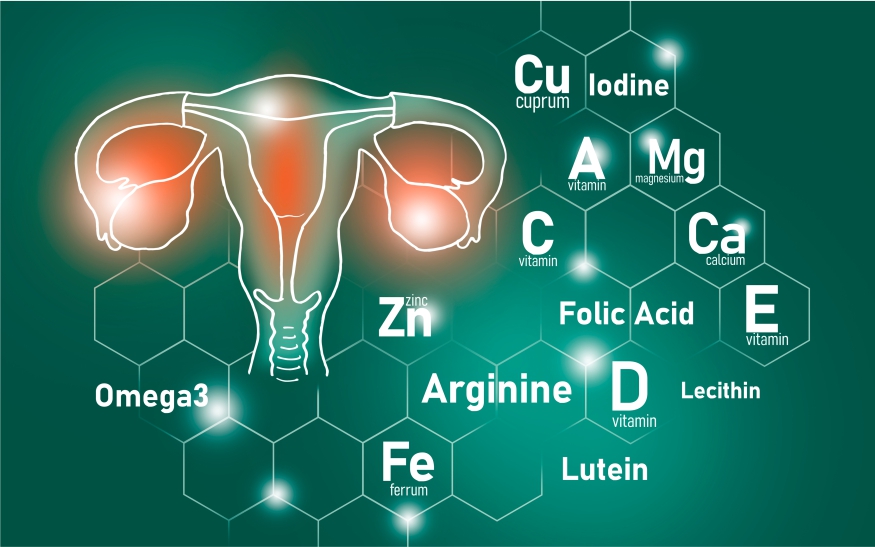
Vitamins and minerals are particularly vital in women’s reproductive health too, impacting ovulation, thyroid function, egg quality, and more.

By Stephanie Simons,
Head Pharmacist,
Lindo’s Pharmacy in Devonshire
We sing it in the playground – first comes love, next comes marriage…and what comes next? You’ve guessed it – the baby. These days, we’ve progressed far from this old schoolyard chant – families come in all kinds of shapes and sizes. But with so many conflicting stories circling from friends, relatives, and across social media, it can be hard to know what advice to follow when it comes to conceiving your baby. Luckily, we’re here to help.
The first step in conceiving is to halt your method of contraception. It might sound obvious but different kinds require different amounts of time before you can conceive. If you stop using condoms, for example, you can conceive straight away, whereas ending hormonal contraception such as the combined pill or implant can take a little longer for your body to allow conception. Speak to your pharmacist or GP if you’re unsure how long you might need.
It’s also a good time to check you’re ready too – in body and mind. If you have any pre-existing health issues such as diabetes or hereditary conditions you’re concerned may pass to your child, now’s the time to seek support. Your GP or pharmacist can help navigate health conditions and how they may impact your attempts to conceive.
It’s equally important to check your mental health too. Serious conditions such as schizophrenia can be triggered by pregnancy so it’s good to have a plan in place with your health care provider before conceiving. If you take any medication for your mental health, it’s important to discuss this with your GP so you can work out the best way forward – never stop taking medication without the supervision of your GP.
When you’re up to speed and ready to go, it’s helpful to know when you’re ovulating. This is the process when an egg leaves the ovaries and travels toward the uterus, occurring 24-36 hours after a surge of luteinizing hormone (LH). Ovulation tests can track the levels of LH present in your urine, thus helping you measure when you’re most likely to conceive. Simple and easy to use, tests like Clearblue or First Response make the process much run smoothly.
To maximise your chances, both men and women need to eat a healthy, nutritious diet, exercise regularly, and avoid alcohol, smoking, and recreational drugs. Vitamins and minerals are particularly vital in women’s reproductive health too, impacting ovulation, thyroid function, egg quality, and more. A folic acid supplement like N.B. Folic Acid or N.T. L-Methylfolate is vital for anyone looking to get pregnant, while iron (Ferrograd), Vitamin C (N.B. Vitamin C 1000mg), and Vitamin D (N.B. Vitamin D 2000IU) are all beneficial during this time. Vitabiotics also has a line of supplements called Pregnacare with formulas for pre-conception through to breastfeeding.
It’s also helpful to minimise stress however that works for you. Try a yoga class, a quick online meditation, or even some aromatherapy with a product like Nature’s Truth Calming blend. Your pharmacist and GP can advise on simple ways to improve your health, and thus your chances of conception.
If you struggle to conceive at first – there’s no need to panic. Everyone’s different, and approximately eight out of ten couples conceive naturally during the first year if the woman is under 40 years old. If you have undergone treatment such as chemotherapy, previously had a sexually transmitted disease, or you’re a woman in your mid-thirties or older, it’s a good idea to seek advice if you’re having trouble conceiving. Specialists can help identify what might be causing the difficulty and suggest the best options going forward from lifestyle tweaks to IVF treatment.
Whatever your family set-up, trying to conceive can be a tricky process to navigate. The most important thing is to look after yourself, both mentally and physically. Your pharmacist or GP is a great place to start these conversations and will help you find the support that’s right for you.
Stephanie Simons is the head pharmacist at Lindo’s Pharmacy in Devonshire. She earned her Bachelor of Science in Pharmacy at Massachusetts College of Pharmacy and has been practicing for over 20 years. She is a registered pharmacist with the Bermuda Pharmacy Council and is a member of the Bermuda Pharmaceutical Association.