Nov 6, 2017
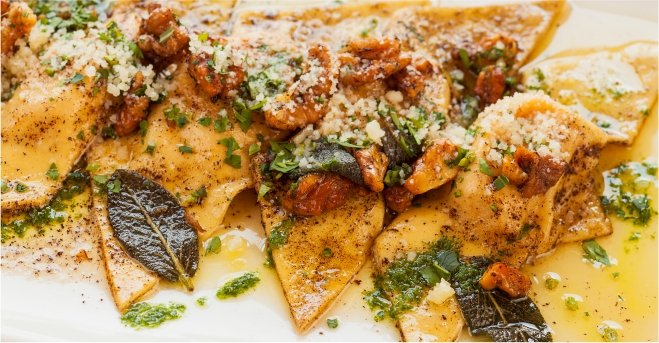
Enjoy the flavours of Fall with homemade butternut squash ravioli in a rich sage-infused brown butter sauce and topped with walnuts and shaved parmesan cheese.
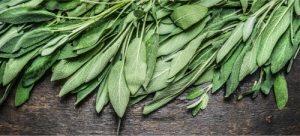
When buying fresh sage, look for leaves that smell aromatic and have no soft spots or dry edges. Sage stands up well to heat, and pairs wonderfully with dairy foods and foods high in oil and fats.
Ingredients
For the Ravioli Filling
1 butternut squash
1/4 cup freshly grated parmesan cheese
salt and pepper to taste
For the Ravioli Dough
14 oz all-purpose flour
5 large eggs
For the Sauce
6 tablespoons salted butter
2 cloves garlic, minced
1/2 cup raw walnuts
Fresh sage leaves
Directions
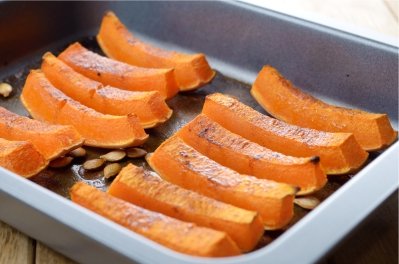 Preheat the oven to 400°F. Drizzle olive oil in the bottom of a shallow baking dish.
For the filling: Cut squash into 8 pieces. Remove the seeds, and place the squash, skin-side down, in the baking dish. Bake for about 45 minutes, or until fork tender. Remove from oven and allow to cool enough to handle. Remove skins from squash. Transfer squash to a bowl, season with salt and pepper and mash. Stir in parmesan cheese; set aside.
For the ravioli:
Mound the all-purpose flour in the center of a clean work surface and form a well in the middle. In a small bowl, lightly beat the eggs together, then pour into the well. With a fork, work the flour into the eggs. Then use your hands to work the rest of the flour into mixture, just until a sticky dough is reached. Form a rounded mass for kneading. Knead together for about ten minutes, or until smooth and elastic. Wrap the dough in plastic and let it rest about 45 minutes to 1 hour.
Fill a large pot with water, add a little salt, and bring to a boil.
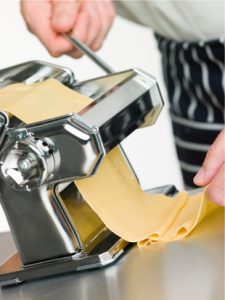
Fold dough in thirds and rotate 90 degrees before each pass through the pasta machine.
Divide dough into 6-8 pieces. Flatten each piece into a rectangle about a quarter inch thick. Using a pasta roller on the thickest setting (number 1), start working your dough through the roller, gradually decreasing the thickness with each pass. Ravioli dough should be almost transparent so stop on the thinest setting of your machine. Let the dough rest for a few minutes.
Lay out one sheet of pasta and put one teaspoon of filling about one inch apart. To seal the ravioli, brush around the filling with egg wash and place another pasta sheet on top and press down. Press down to make sure pasta is secured around the filling, making sure there are no air pockets. Use a crimp pastry wheel to cut the ravioli. Set aside the sealed and cut ravioli on a surface lightly dusted with flour.
Cook the ravioli in the boiling water in batches – about 10-15 ravioli at a time. The ravioli will float to the top of the water when almost cooked through. Allow to cook another minute, then remove, drain, and set aside in a warm bowl.
For the sauce:
Melt 2 tablespoons butter in a skillet over medium low heat. Add the minced garlic and let it cook until the garlic is just softened and golden brown. Remove the garlic from skillet and set aside. Add remaining 4 tablespoons of the butter to the skillet. Add about 20 sage leaves and the walnuts. Cook over low heat, stirring occasionally, until the butter has browned and the sage leaves are crisp and fragrant. Remove from heat and stir in the garlic.
To serve, place some ravioli in a shallow bowl, spoon some of the browned butter sage sauce over the top, and garnish with shaved parmesan cheese.
Nov 6, 2017
Beef Chili
Lemon Pepper Salmon
Beef Ribs
Buffalo-Style Tenders
Baked Salmon
Smoked Beef Sausage with Sauerkraut
Apricot Chicken
Lamb Chops
Tequila Chicken Wings
Chicken Pie
Baked Chicken
Mac-n-Cheese
Starches & Veggies
Salad Bar
Nov 6, 2017


By Stephanie Simons,
Head Pharmacist,
Lindo’s Pharmacy in Devonshire
As we head into November, with Halloween candy still littering our homes, our thoughts begin to drift towards the holiday season. However, November is also Diabetes Awareness Month and includes Universal Children’s Day, on November 20. As such, I thought this would be a good time for us to discuss diabetes in children.
Diabetes is a very serious problem in Bermuda, particularly among young people. The island has a diabetes rate of 14 per cent – nearly double global average – and spends more on healthcare per person than any other country in the region, with much of this going towards treating complications of diabetes. Type 2 Diabetes is particularly prevalent, and this form of diabetes is largely avoidable, with proper lifestyle and nutrition.
Taking control of your diet is a fundamental part of managing your health. Children who have diabetes do not need to be on strict diets but do need to pay close attention to what they eat and when. This will enable them – and you – to monitor their sugar levels and it is best to start this self-awareness early on.
Children have different diet requirements to adults, regardless of whether or not they have diabetes, and require plenty of fuel to keep them going throughout the day. While snacks for adults are often discouraged, they can allow children to restore their energy, self-manage their blood glucose levels and keep them going until their next meal. When providing snacks, it is best to include a variety of food groups, such as bread, dairy, fruit and vegetables.
When packing school lunches, it is important to ensure that your children are getting enough fresh fruit and vegetables, protein and wholegrain fibres. These will help your child sustain themselves while making sure they are getting the vital nutrients to keep them healthy. The Bermuda Diabetes Association has a helpful guide to packing lunchboxes for diabetic children here.
As mentioned earlier, many of us still have Halloween candy in our homes. For children, or even the young-at-heart, this can be a trying time, but there are ways in which we can reduce temptation. The easiest way to do this is to ensure that an abundance of candy isn’t kept in the home. It is much easier to avoid reaching for unhealthy snacks if they’re not within reach at all. Excess candy could be donated to a local care home or taken to church for refreshments. Children can even be incentivised in this by being offered an alternate gift in exchange for the sweets. This is not to say that you cannot have any treats at all: in fact, small candies can be used as a source of sugar for diabetics in case of lows.
The diabetes epidemic in Bermuda is an issue of great importance to Lindo’s and we are proud that our annual Lindo’s to Lindo’s event this year raised $25,860 for the Bermuda Diabetes Association. Lindo’s stores stock a number of healthy and sugar-free foods which are diabetes friendly and delicious. Our pharmacies supply blood glucose metres, testing strips and other testing supplies as well as glucose tablets – which can be used when blood sugars drop too low. If you have any questions about diabetes, please ask a pharmacist.
To find out more useful information about diabetes, the treatment and the prevention of it, please visit the Bermuda Diabetes Association website: http://www.diabetes.bm.
Stephanie Simons is the head pharmacist at Lindo’s Pharmacy in Devonshire. She earned her Bachelor of Science in Pharmacy at Massachusetts College of Pharmacy and has been practicing for over 20 years. She is a registered pharmacist with the Bermuda Pharmacy Council and is a member of the Bermuda Pharmaceutical Association.
Nov 3, 2017
Pork Loin
Lamb Chops
Curry Chicken
Fried Grouper
Breaded Scallops
BBQ Chicken Wings
Breaded Shrimps
Garlic Shrimps
Chicken Tenders
Italian Shrimps
Garlic & Rosemary Chicken
Chicken Noodle Soup
Mac-n-Cheese
Starches & Veggies
Salad Bar