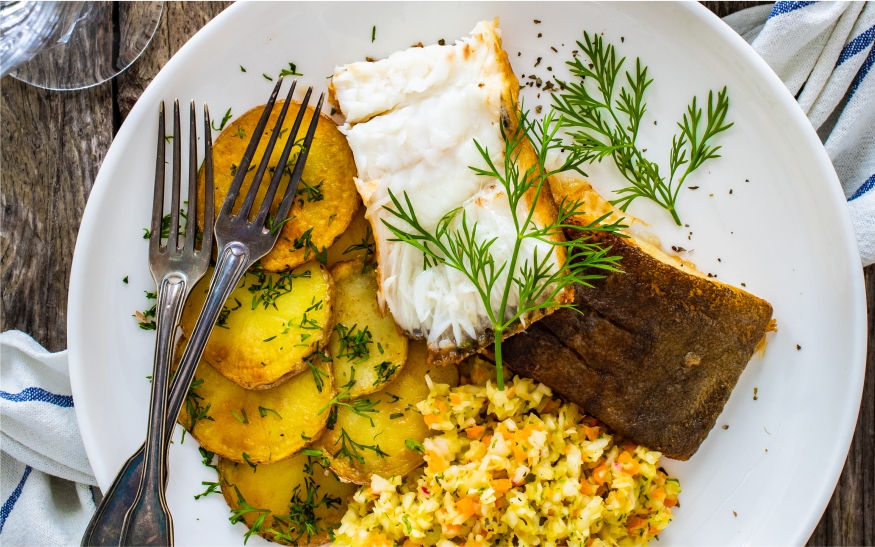
Pan-Seared Halibut with Crispy Potato Coins & Cabbage Salad

Make this pan-seared, crispy-crusted Halibut and serve with Crispy Potato Coins and a flavourful, Indian-inspired Warm Cabbage Salad.


Crispy Pan-Seared Halibut

This technique will ensure a crispy skin on any fish—red snapper, salmon, cod, etc.

INGREDIENTS

  • 1 lb halibut fillets (or other white fish)
  • kosher salt
  • 2 tablespoons clarified butter or canola oil

DIRECTIONS

    1. Salt the halibut fillets early in the day or the night before. Salt the flesh side of the fish lightly. Then turn over and salt the skin side more heavily. Place the fillets on a rack, skin side up, and put in the refrigerator until one hour before using.
    2. Heat a skillet over medium-high heat. Add the oil or butter, and heat just until smoking point. Add fish skin side down. Do not overcrowd the skillet. Gently press down on the fish fillets with a spatula to ensure the center of the skin also gets crispy.
    3. Cook for approximately 3 minutes, or check after two minutes to see if the skin is crisp enough. Baste the fish by tilting the pan and spooning the fat from the bottom of the pan over the fish. Continue doing this until you see the color become more opaque on the fleshy side of the fish.
    4. Once the skin has reached the desired crispiness, turn the fish over, turn off the heat, and move the skillet off of the burner. Do NOT cover the pan. Let the fish rest in the hot pan for 5 to 7 minutes (time depends on the size and thickness of the fillets) until the fish is fully cooked through.
    5. Garnish the top with dry herbs and lemon zest, if desired.

Crispy Fried Potato Coins

These potato coins are baked in the oven until crispy and crunchy.

INGREDIENTS

  • 5 small russet potatoes
  • olive oil
  • 1 teaspoon sea salt
  • ½ teaspoon pepper
  • 1 teaspoon garlic powder
  • 1 teaspoon onion powder
  • ½ teaspoon cumin
  • ½ teaspoon chili powder

DIRECTIONS

  1. Cut the russet potatoes into thin slices.
  2. Line a large baking sheet with parchment paper.
  3. Using a brush, spread a thin layer of olive oil over both sides of the potato slices.
  4. In a small bowl, combine the salt, pepper, garlic powder, onion powder, cumin, and chili powder. Sprinkle the mixture evenly over potato slices, coating both sides.
  5. Bake at 450°F for 25-35 minutes, flipping halfway through, until crispy.

Warm Cabbage Salad

This flavorful cabbage salad can be enjoyed with any meal.
INGREDIENTS

  • 1 head cabbage, shredded (preferably Napa cabbage)
  • 1 large carrot, shredded
  • ¾ cup to 1 cup toasted almonds, chopped
  • ¼ cup unsweetened shredded coconut, toasted
  • 1 teaspoon minced garlic
  • 2 –3 teaspoons mustard seed
  • ¼ tsp salt and black pepper (or more, to taste)
  • 1–2 tablespoons coconut oil
  • 2–3 green or spicy red chili peppers, sliced
  • ½ – 1 tablespoon apple cider vinegar
  • 1 tbsp coconut sugar, optional

DIRECTIONS

  1. Place the shredded cabbage in a bowl. Remove excess water by squeezing with a paper towel.
  2. Add the shredded carrot to the cabbage mix. Add the salt, pepper, and minced garlic. Mix well.
  3. Toast the shredded coconut and almonds on a parchment paper-lined baking sheet in a preheated 400°F oven. Toast for about 3-5 minutes, or until the coconut is golden brown. Remove from oven and set aside.
  4. Heat oil in a large skillet over medium heat.
  5. Add the mustard seeds and cover slightly so they don’t pop out of the skillet. Cook for about 30 seconds or until they begin to pop). Add the cabbage/carrot mix to the skillet, and stir to mix.
    Add the coconut sugar, apple cider vinegar, and 3/4 cup of the toasted coconut and almonds (save the rest for garnish/topping the salad).
  6. Stir and cook for 3-4 minutes on medium heat.
  7. Remove from heat and place in a large bowl. Top with the remaining toasted coconut and almond. Serve with the pan-seared halibut and crispy potato coins.


Crispy Fried Coconut Shrimp

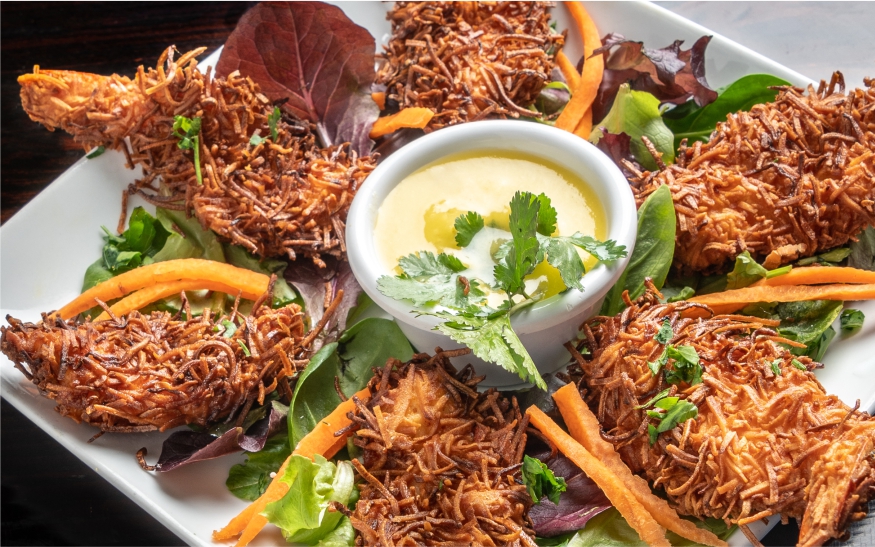
These Fried Coconut Shrimp are plump, juicy, and crispy! Serve with a sweet chili sauce or a lemon garlic aioli.


INGREDIENTS

  • 1 lb large shrimp (peeled and deveined, with tails on)
  • 2 teaspoons salt
  • 1 large egg
  • 2 tablespoons water
  • 1/3 cup all-purpose flour
  • 1 cup shredded unsweetened coconut
  • vegetable oil (for frying)

DIRECTIONS

  1. Add the salt and 1 cup of water to a bowl and stir until the salt has dissolved. Add the shrimp to the bowl of brine water, and let soak for 10 minutes.
  2. In a small bowl, whisk the egg and water together until smooth, and then add the flour and whisk until the batter is free of lumps.
  3. Preheat a deep skillet with about one inch of oil until it reaches 360°F. Line a wire rack with paper towels.
  4. Fill a small bowl with the shredded coconut.
  5. Rinse the shrimp in cold water. Drain, and use paper towels to pat the shrimp dry.
  6. Hold each shrimp by the tail and dip it in the batter to coat it evenly. Let excess batter drip off, and then place the shrimp in the bowl of shredded coconut. Scoop some coconut on top of the shrimp and pat it into the shrimp, so it sticks. Transfer to a tray and repeat with the remaining shrimp.
  7. Gently lower the coconut-covered shrimp into the hot oil and fry until golden brown (about 2-3 minutes). Work in batches, if necessary, to avoid overcrowding and soggy shrimp. Flip them over mid-way through so they brown evenly.
  8. Drain the shrimp on the prepared rack.
  9. Serve while hot with a sweet chili or lemon garlic aioli dipping sauce.


The most important organ

By Stephanie Simons,
Head Pharmacist,
Lindo’s Pharmacy in Devonshire

 
The brain is the most important and complex organ in the body. It regulates and controls every process and function, from breathing and vision, to our thoughts, emotions and memories. So, what happens when this vital organ is damaged?

March is Brain Injury Awareness Month, a campaign which aims to help the general public bridge the gaps between our knowledge of this issue and the reality for those with brain injuries and their friends and family. While we all have some understanding of common conditions like a concussion, the majority of us know little about the long-term physical, emotional, behavioural, and cognitive effects people with brain injuries are battling every day.  It’s therefore important that the wider public becomes more aware of this issue so we can better understand and support those around us who are impacted.

Minor injuries

Smaller brain injuries are often referred to as ‘mild’ or ‘minor’ traumatic brain injuries (mTBI). A common example is concussion, which refers to the brain shaking inside the skull resulting in mild damage. Usually occurring due to a bang to the head from a fall or vigorous sport, symptoms of concussion include a brief period of unconsciousness, nausea, or dizziness. These incidents make up approximately 95% of all brain injuries.

It’s important to remember many concussions or similar injuries do not result in unconsciousness, so look out for other symptoms too. If you are concerned you may have suffered a minor injury, speak to your pharmacist or GP straight away to assess your symptoms, and ascertain whether further medical assistance is needed. You should also make sure you’re not alone for 48 hours following the injury in case symptoms escalate.

Traumatic brain injuries

 Resulting from external causes such as car accidents, viruses or physical assault, or internal health conditions like stroke, encephalitis or tumours – traumatic brain injuries (TBIs) incur more significant damage.

Strokes are a widespread issue in the US: someone has a stroke every 40 seconds – that’s more than 795,000 people a year. Stroke occurs when the blood supply to the brain’s network of blood vessels is disrupted. In an ischemic stroke, a blood clot blocks the blood flow, while a haemorrhagic stroke involves a leak of blood in the brain due to weakened blood vessels. Both starve the brain cells of oxygen, leading to serious damage.

Encephalitis, meanwhile, is the term for the inflammation or swelling of the brain. While less common than stroke, it is also life threatening and requires urgent medical attention. The causes of encephalitis are widely unknown, though some cases occur when viruses like herpes simplex (cold sores) or chickenpox spread to the brain.

Every TBI is different and can result in a unique combination of symptoms. Physically, you may experience a loss of sensation in the face, altered sense of smell or taste, dizziness and/or loss of hearing or vision. Many experience cognitive difficulties in attention, concentration or memory, while others may suffer from impaired communication skills such as problems following a conversation.

Seeking help

 We can all do more to better understand brain injury and support those affected. Whether it’s for yourself, a family member or friend, or simply to boost your own awareness, your pharmacist is a great place to learn more about brain injury, the symptoms and how to seek support. We can offer advice and information, as well as provide gentle painkillers like Tylenol or Paracetamol, and equip you with first aid essentials like assorted bandages, smelling salts and gauze or a good First Aid Kit (like Curad brand) for all of life’s smaller accidents.

If you suspect concussion or more serious injury, contact your GP or medical professional as soon as possible – or, as for any emergency, call 911 straight away.

Stephanie Simons is the head pharmacist at Lindo’s Pharmacy in Devonshire. She earned her Bachelor of Science in Pharmacy at Massachusetts College of Pharmacy and has been practicing for over 20 years. She is a registered pharmacist with the Bermuda Pharmacy Council and is a member of the Bermuda Pharmaceutical Association.