July 20th, 2016 Specials





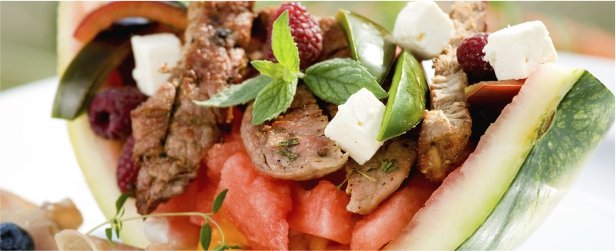 Seasoned slices of pan-seared beef tenderloin nestled in watermelon ‘boats’. A healthy and flavourful entree for summer entertaining. Can you say très chic?
Serves: 4
INGREDIENTS
1 tablespoon vegetable or canola oil
4 beef tenderloin steaks, cut 1 1/2 inches thick
1 tablespoon rosemary
2 tablespoons whole peppercorn blend, slightly crushed
1 teaspoon salt
1 very small watermelon, quartered
1 large green Bell pepper, thinly sliced
4 ounces feta, cubed
1 cup fresh raspberries
1 lime, juice and zest
1/2 lb. Prosciutto or Parma Ham, optional
Fresh blueberries, optional
MARINADE
1 cup dry red wine
1 tablespoon Dijon mustard
2 tablespoons soy sauce
1 tablespoon minced garlic
1 cup olive oil
DIRECTIONS
1. In a small bowl, whisk together red wine, soy sauce, Dijon mustard, garlic, and oil. Place steaks in a sealable plastic bag. Cover with marinade and refrigerate for 45 minutes.
2. Preheat oven to 350ºF.
3. Heat oil in heavy skillet over medium-high heat. Place the peppercorns in a Ziploc bag, and with a meat tenderizer or a large, heavy can, smash the peppercorns to break them up a bit. Combine rosemary, peppercorn blend and salt in a small bowl.
4. Remove steaks from marinade and season with peppercorn mixture, lightly pressing mixture to steak. When oil is very hot (almost smoking), sear steaks 1 to 2 minutes on each side. Place in oven to continue to cook; about 5 – 10 minutes for medium rare or until steaks reach desired doneness. Allow steaks to rest at least 5 minutes before slicing.
5. While the steak is resting, remove carve out watermelon flesh from the quarters and cut into bite size cubes. Combine cubed watermelon, green pepper, feta, and raspberries in a large mixing bowl, season with salt and pepper, and toss to combine. Add the lime juice and zest, and toss to coat evenly.
6. When the steak has rested, cut it into thin slices, against the grain.
7. To serve, arrange each watermelon quarter on a plate. Divide the salad mixture among each watermelon ‘boat’, and top each with equal amounts of sliced steak. Arrange a few slices of Prosciutto on each plate and top with fresh blueberries. Enjoy!
Beef Pot Roast
Chicken Nuggets
BBQ Turkey Meatballs
Hot Dogs
Honey Chicken Wings
Fried Chicken Wings
Sweet & Sour Grouper
Curry Chicken
Fried Chicken
Roast Chicken
Mac-n-Cheese
Starches & Veggies
Salad Bar
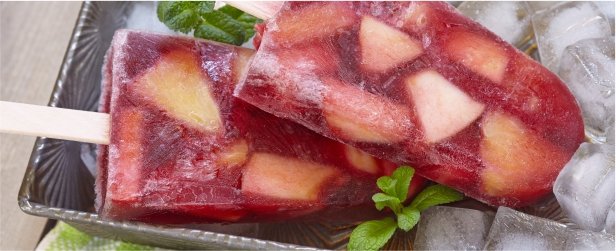 Ice cold, fruity wine pops – they’re the perfect refreshment on a hot summer day. Serve as a sophisticated dessert, enjoy on a quiet night on the patio, or at happy hour!
INGREDIENTS
– 1 bottle of fruity red wine
– 1/2 cup fresh orange juice
– 2 tablespoons of lime juice
– 1 shot of Brandy
– 2 tablespoons of sugar
– Your choice of sliced & chopped fruit – orange, lemon, lime, melon, apple, peach, nectarine, pineapple, grape, berries, kiwi and mango – juicier fruit works best
– mint leaves, optional
DIRECTIONS
Combine wine, orange juice, lime juice, brandy and sugar; stir until sugar is dissolved. Add sliced and chopped fruit; stir the mixture and refrigerate for at least an hour.
Using a slotted spoon, remove the fruit and add to popsicle molds. Pour sangria mixture over fruit. Tap molds gently on the countertop to remove any air bubbles. Freeze for an hour, insert popsicle sticks, and then freeze until completely firm (at least 8 hours). Run popsicle molds under warm water to dislodge pops before serving.
TIP: If you are planning to make the Sangria solely for drinking, you can add 1 cup of lemon-lime or ginger ale soda to the mixture just before serving. Serve over ice. Garnish with mint leaves, if desired.

By Stephanie Simons,
Head Pharmacist,
Lindo’s Pharmacy in Devonshire
As summer in Bermuda continues, with temperatures regularly in the 80’s, we are able to enjoy the many outdoor activities that our climate allows, including tennis, golf, gardening or simply taking a walk on our lunchtime break. While these activities benefit our minds and bodies, the risk of dehydration increases, especially for the younger and senior members of our population.
Dehydration takes hold when our bodies lose more fluid that they take in. You may have heard the recommendation to drink eight glasses of water a day, but the actual amount of fluids that you need to consume could be more, depending on your lifestyle, health and environment.
Why We Need to Hydrate
Our systems (skeletal, nervous, cardiovascular, endocrine and muscular, and integumentary – skin and its appendages) depend on water to function. Water also serves to flush toxins from our organs, which are comprised mostly of water, and also helps carry nutrients to cells.
In hot and humid weather, and when we are exercising, our bodies may sweat more than normal. During our humid Bermuda summers, it is difficult for sweat to evaporate and cool us off, thereby increasing our body temperature. When we breathe, sweat and urinate, we lose water. We also lose fluids when we are ill, especially when suffering from fever, vomiting or diarrhoea.
Higher Risk for Dehydration
Infants and young children, pregnant and breastfeeding mothers, and older adults need to be especially cautious of their fluid intake, as they can become dehydrated quickly, wit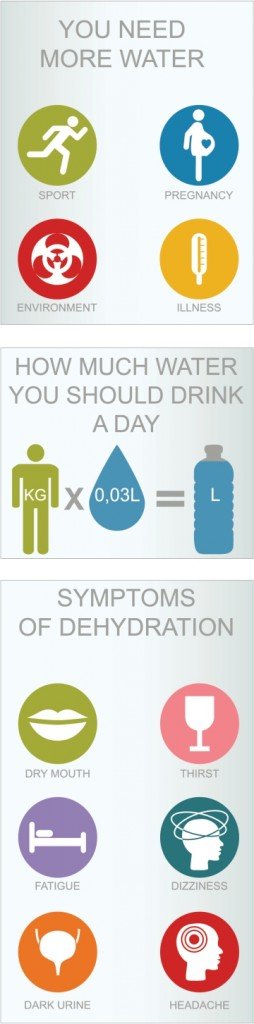 h potentially serious outcomes.
As we age, the water content in our body decreases, as does our sense of thirst. People who have incontinence or mobility issues may be inclined to reduce their fluid intake, without knowing how quickly their bodies can become dehydrated.
Symptoms of Dehydration
Mild to moderate symptoms of dehydration include a dry mouth, fatigue, thirst, dry skin, headache, constipation and dizziness. In infants and toddlers, fewer wet diapers is a common indicator.
Severe dehydration shows itself with sunken eyes, extreme thirst, rapid heartbeat and breathing, fever and low blood pressure. Infants may be extremely fussy and the soft spots on their heads may appear shrunken in. Senior citizens may become very confused and irritable.
The most straightforward way to know if someone is dehydrated is to consider the colour of his or her urine. If it is pale or clear, he or she is likely well-hydrated. If the amount of urine output has significantly decreased, or if it is dark yellow or amber, dehydration may be to blame.
Water Isn’t the Only Option
Regardless of how fluids are lost, it is important that we compensate for the loss, and rehydrate.
Most fluids will help hydrate our bodies, including milk, juice, tea and coffee; however, the additional calories, caffeine and sugar may not be desirable. Caffeine has a diuretic effect, so watch the amounts of tea and coffee consumed as they can actually cause you to become dehydrated. For optimal hydration, opt for low sugar, low sodium beverages.
Coconut water has become a popular beverage in Bermuda, with brands including Vita Coco Coconut Water, Coco Libre and Harvest Bay Flavoured Coconut Water. Coconut water has natural electrolytes (including potassium, sodium and magnesium) but the actual amounts will vary by brand. This beverage may be a consideration for those who do not like plain water, but want to consume less sugar that what is found in most sports drinks.
For those of us on the go, a reusable water bottle may be the best choice. Rubbermaid Filler Fresh Water Bottles come equipped with a built in filter and are designed to remove chlorine.
Hydration can also be achieved through consuming common fruits and vegetables with high water content. Watermelon, cucumber, lettuce and spinach, celery, tomatoes, cauliflower, strawberries and broccoli are all comprised of at least 90% water.
In some cases, health professionals may recommend rehydrating with sports drinks such as Gatorade and Powerade, or an oral rehydration solution (such as Dioralyte, Pedialyte and Nuun) following extreme exercise or when suffering from certain health conditions.
As with many health issues, preventing dehydration may be easier than recovering from it. When the weather is warmer and more humid, or when activity levels will be higher, plan to consume more fluids and snack on fruits and vegetables with high water contents.
Stephanie Simons is the head pharmacist at Lindo’s Pharmacy in Devonshire. She earned her Bachelor of Science in Pharmacy at Massachusetts College of Pharmacy and has been practicing for over 20 years. She is a registered pharmacist with the Bermuda Pharmacy Council and is a member of the Bermuda Pharmaceutical Association.